How to Stop Window Condensation in Winter for Good
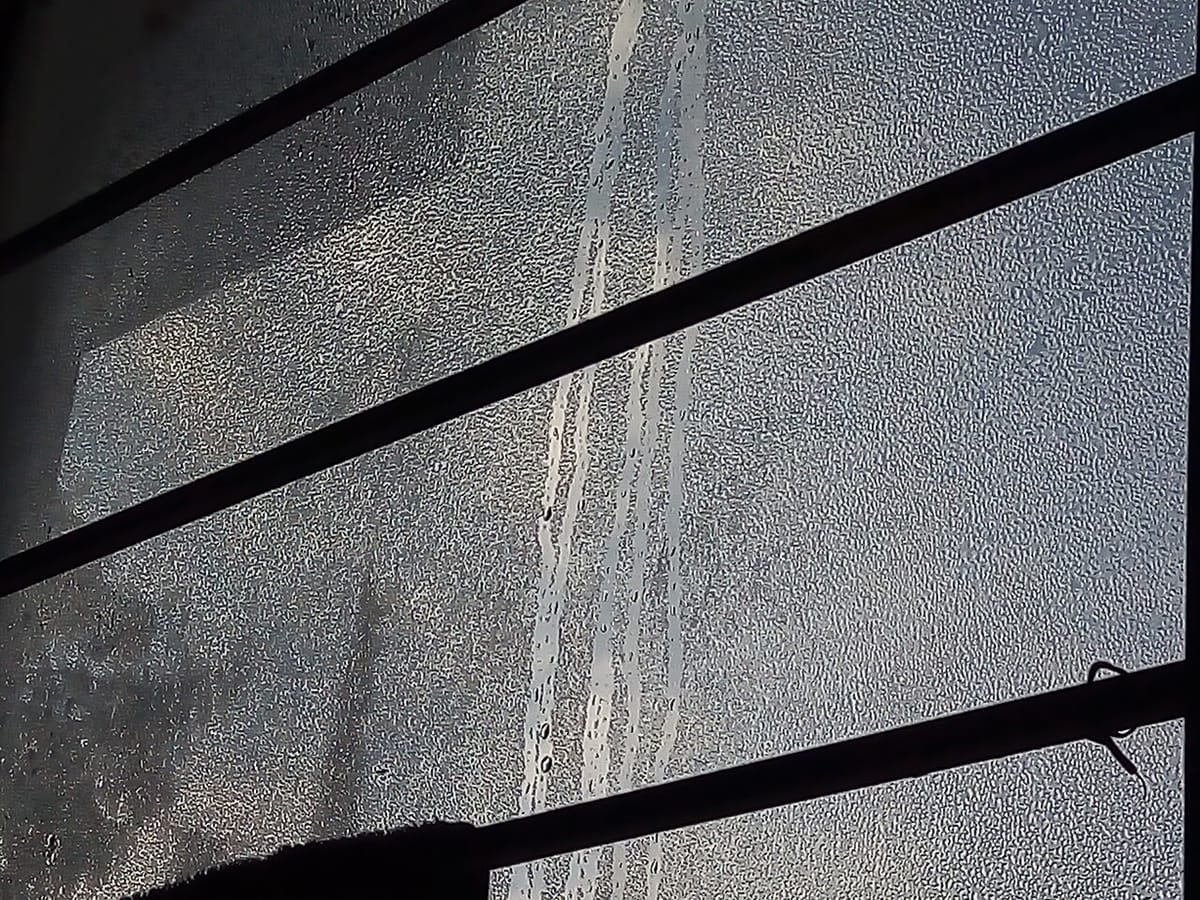
Cover photo by Doggo19292 via Wikimedia Commons, public domain, resized.
If this fix touches water, gas, or power, the guide starts with the shutoff step and says when a licensed pro should take over.
Product links in this guide are affiliate links. If you buy through one, we may earn a small commission at no extra cost to you. It never changes which products we recommend.
You wake up, open the blinds, and the window is running with water. It pools on the sill and the paint under it is starting to bubble. Window condensation looks like a window problem, but the glass is only where the moisture shows up first. The fix is lowering the humidity in the house, and most of that is free.
Quick Answer
Here’s how to stop window condensation: measure indoor humidity with a $10 hygrometer, and bring it down to 30 to 40 percent in winter. Run the bathroom and kitchen exhaust fans during and 20 minutes after showers and cooking, vent the dryer outdoors, open blinds and curtains so warm air reaches the glass, and run a dehumidifier in the dampest room. Wipe off existing moisture with a towel so it doesn’t turn to mold. Window insulation film, $10 to $20, warms the inside surface of the glass. It takes about 30 minutes to set up and a week to see the effect. Condensation between the panes means a failed seal, and that’s a window shop job.
What You’ll Need
- A digital hygrometer, $8–$15, to read the humidity
- A dehumidifier, $150–$250, for a damp room or basement
- Window insulation film kit, $10–$20 for a few windows
- A squeegee or towel to wipe the glass
- White vinegar and a cloth for mold spots
- A hair dryer, to shrink the film
Step-by-Step
Measure the humidity before you change anything
Place the hygrometer in the room with the worst condensation, away from a vent or a bathroom door, and read it after an hour. Many winter homes sit at 50 to 60 percent. Check it at night and in the morning. If it reads 45 percent or higher and the outdoor temperature is under 20°F, you have the cause. Without a number, every other step is a guess.
Remove moisture where it’s made
Run the bathroom fan during a shower and for 20 minutes after, and the range hood while you cook, especially with boiling water. Check that both exhaust to the outdoors, not into the attic. Vent the dryer outside, and don’t dry laundry on indoor racks in the same room as the window. Cover pots, turn off the humidifier if you have one, and fix any leak. These cut the water entering the air before you try to remove it.
Let warm air reach the glass
Condensation forms where the glass is coldest. Closed blinds, heavy curtains, and furniture pushed against the window trap a pocket of cold air against the pane. Open the blinds during the day, pull furniture back a few inches, and run a ceiling fan on low in the room to move air across the glass. A little air movement can clear a window that fogs every morning.
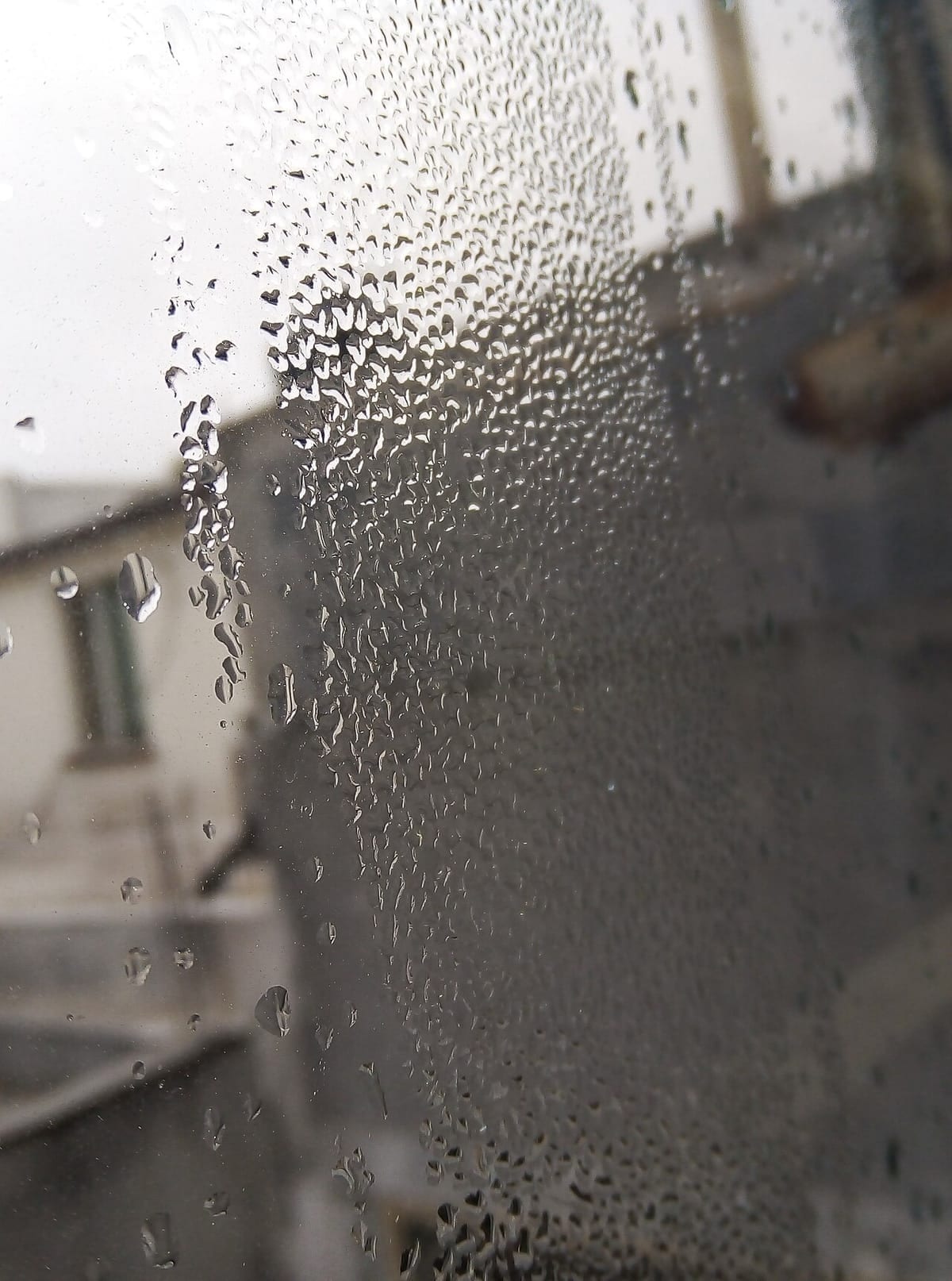 Droplets running down the inside of a pane. When the glass is this wet in the morning, the room is too humid for the window. Photo by Doggo19292 via Wikimedia Commons, public domain, resized.
Run a dehumidifier in the dampest room
If the number stays above 40 percent after the first steps, a dehumidifier pulls water out of the air. A 35-pint unit handles a bedroom or small apartment, and a 50-pint unit a whole floor. Set it to 35 to 40 percent, and empty the bucket or run the drain hose to a sink. A basement or closed bedroom is the usual spot. Expect the humidity to fall over a day or two, and the glass to dry out in the first week.
Warm the glass with film or storm windows
Interior window film, a clear plastic sheet shrunk tight with a hair dryer, adds an air gap that keeps the inside surface closer to room temperature. It’s a $10 to $20 kit for a few windows, and it costs far less than replacing glass. Seal the leaks around the frame at the same time, as in sealing drafty windows. Wipe any mold spots from the sill with vinegar and water, and see removing mold from caulk for the stubborn ones.
Time and Cost
| Fix | Time | Cost |
|---|---|---|
| Hygrometer, fans, and venting | 30 min | $8–$15 |
| Window insulation film | 30 min per window | $10–$20 |
| Dehumidifier | 10 min | $150–$250 |
| New sealed glass unit from a window shop | — | $150–$500 each |
Why This Works
Air can only hold so much water vapor, and the amount it holds drops as it gets colder. When humid room air touches a cold window, the air next to the glass cools below its dew point, can’t keep the vapor, and the vapor condenses as liquid. The inside surface of a window is the coldest surface in most rooms, which is why it fogs first. Lowering the water in the air moves the dew point below the glass temperature, and warming the glass with an air gap or a fan does the same from the other side. Either way, the surface is too warm for the air’s moisture to condense on it. That’s all the fix needs to do.
Mistakes to Avoid
- Running a humidifier in a house that already fogs the windows. Dry skin is not worth wet window frames. Use the hygrometer to set it at 35 percent and no higher.
- Wiping the glass and walking away. The water comes back by morning. Wipe it up to protect the wood, then fix the humidity.
- Exhausting the bathroom fan into the attic. The vapor condenses on the cold roof deck and rots it. The duct has to go outdoors.
- Blaming the window. A new window with the same humidity indoors will fog in the same way. Replace one only if the seal has failed between the panes.
If the room also runs cold, check for drafts around the door, which pull cold air against the glass as well.
FAQ
Why do my windows have condensation on the inside in winter?
Warm indoor air holds moisture, and when it touches cold glass it cools, can't hold the water, and drops it as droplets. The more humid the house and the colder the window, the more condensation you get. Cooking, showers, drying clothes indoors, and tightly sealed homes all push humidity up.
What humidity level stops window condensation?
In winter, 30 to 40 percent indoor humidity is a common target, and 25 to 30 percent when the outside temperature drops below about 10°F. A $10 hygrometer reads it. If the windows fog at 45 percent, the number is too high for the glass in that room.
Is condensation on windows bad for my house?
Occasional morning fog that clears is harmless. Constant wet glass drips onto the sill, rots the wood, grows black mold on the frame and the drywall, and peels paint. Wipe it up, and fix the humidity before the winter is half over.
What if the condensation is between the panes of glass?
That means the seal on a double-pane window has failed and moisture has leaked into the gap. No amount of ventilation or dehumidifying will clear it. The fix is a new sealed glass unit from a window shop, usually $150 to $500 per window, not a new frame.
Related fixes

Outdoors & Seasonal
Fix a Drafty Door in an Hour (Weatherstripping That Lasts)
That draft under the front door costs real heating and AC money. Find the gaps with a flashlight, then seal them with $15 of weatherstripping and a sweep.
Time45–60 min Cost$10–$25 easy
Bathroom
Remove Mold From Shower Caulk (Bleach Won't Do It)
If the black spots don't wipe away, the mold is rooted inside the silicone and no cleaner reaches it. Here is the test, and the two hour recaulk.
Time2–3 hrs plus curing Cost$12–$30 moderate



Outdoors & Seasonal
Seal Drafty Windows Before the First Cold Snap
Find the leak with a smoking incense stick, then match the fix to the gap. And never caulk the weep holes at the bottom of a vinyl window frame.
Time30 min–2 hrs Cost$10–$45 easy