How to Bleed a Radiator and Get the Heat Back
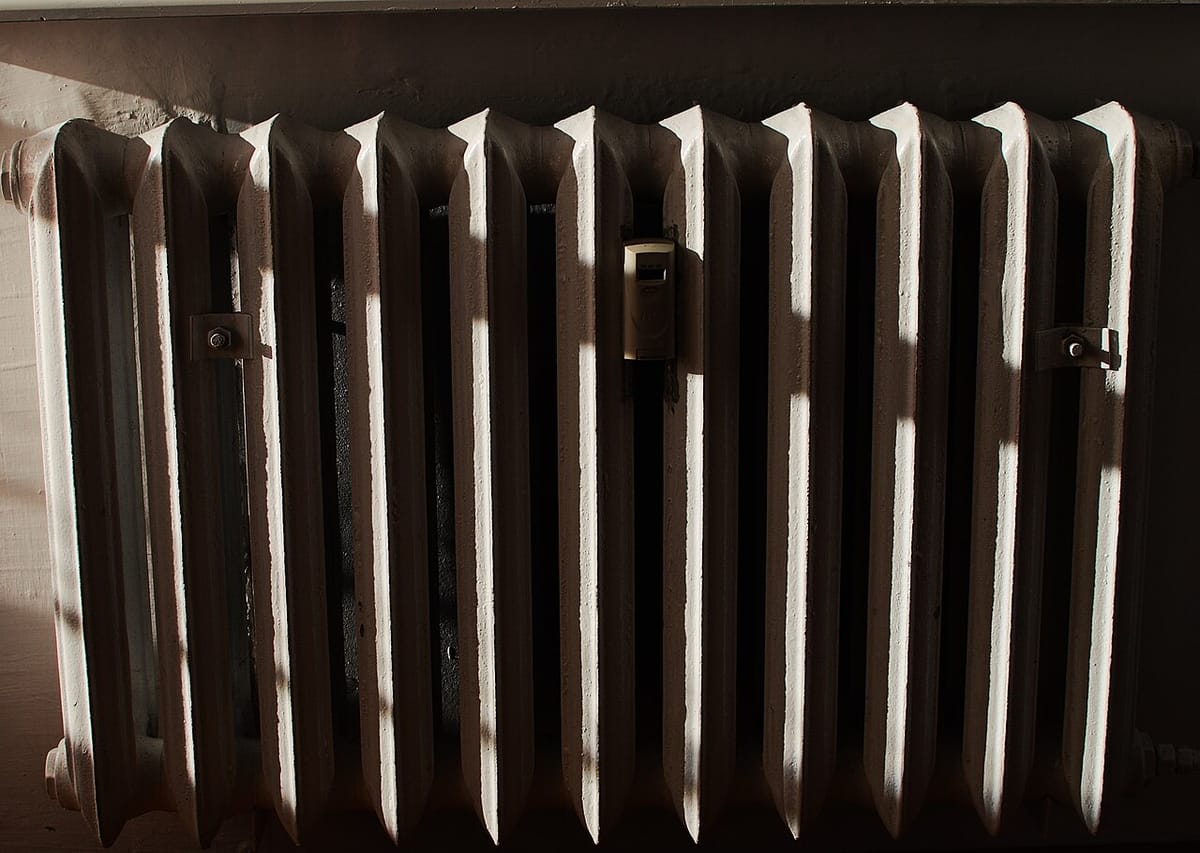
Cover photo by Tarasna0922 via Wikimedia Commons, CC BY-SA 4.0, resized.
If this fix touches water, gas, or power, the guide starts with the shutoff step and says when a licensed pro should take over.
Product links in this guide are affiliate links. If you buy through one, we may earn a small commission at no extra cost to you. It never changes which products we recommend.
A radiator that’s hot at the bottom and cold at the top is a classic sign of trapped air. It’s a ten-minute fix with a tool that costs $3 and one tiny valve at the top of the radiator. This guide covers hot-water radiators and baseboard heating, the kind fed by a boiler, not steam.
Quick Answer
Here’s how to bleed a radiator: turn the heat on until the radiators warm up, then turn the system off and let the pump stop. Find the bleed valve, a small square or slotted screw at the top corner of the radiator. Hold a cloth under it, turn it counterclockwise a quarter turn with a radiator key or flathead screwdriver, and listen for the hiss of escaping air. Close it when a steady stream of water follows. It takes 10 to 20 minutes per radiator and costs under $10. Afterward, check the boiler pressure gauge, and top up the system if the needle has dropped below the range in your boiler manual. A radiator with no bleed valve is steam, and one that needs bleeding every week points to a leak.
What You’ll Need
- A radiator bleed key, $3–$6, or a flathead screwdriver for slotted valves
- A cloth or a small cup to catch drips
- A towel for the floor
- Your boiler manual, for the correct cold pressure
- A flashlight, to find the valve on a dark radiator
Step-by-Step
Find the cold radiators
Run the heat for 20 to 30 minutes, then feel each radiator. A healthy one is evenly hot, top to bottom. One that’s cold at the top, or has cold patches, or gurgles, has air in it. Note which ones. If they’re all cold, the problem isn’t air. It’s the boiler, the pump, or the thermostat, and the furnace checklist or no hot water guide is the place to begin.
Turn the heating off and let the system settle
Switch the heating off at the thermostat and wait 20 to 30 minutes. This stops the pump from pushing water, so air doesn’t get drawn in while the valve is open, and lets the water cool enough not to scald. Put a towel under the radiator. It also lets the air settle at the top of each unit.
Open the bleed valve a quarter turn
Fit the key onto the bleed valve and turn it counterclockwise about a quarter turn, with a cloth held under the valve. You’ll hear a hiss, which is the trapped air escaping. Don’t unscrew the valve completely. Turn it just enough for the hiss.
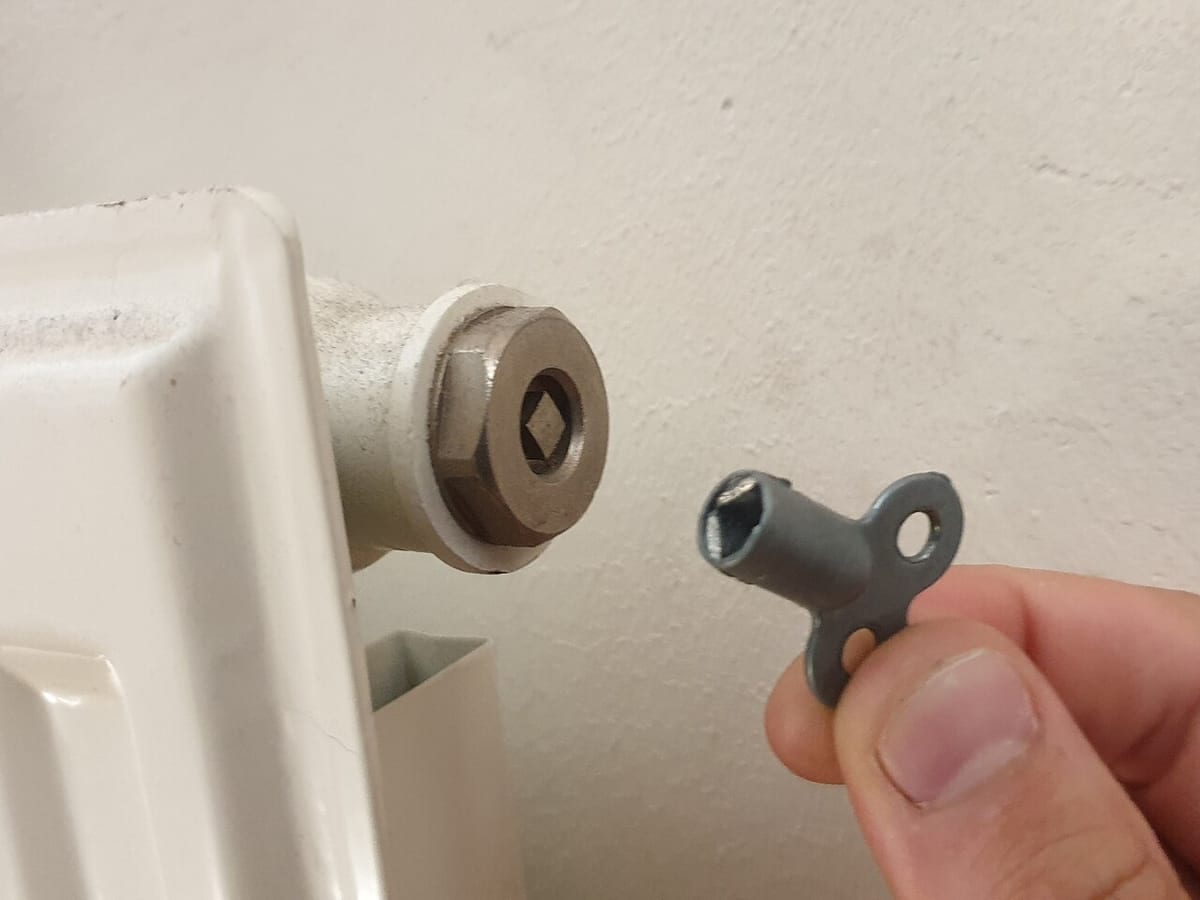 A radiator key beside the square bleed valve. A quarter turn counterclockwise is all it takes. Photo by Sil10napel via Wikimedia Commons, CC BY-SA 4.0, resized.
Close it when water appears
Keep the cloth ready. The hiss will stop, and a few drops of water, sometimes dark, will follow. As soon as a steady trickle of water comes out, close the valve firmly, clockwise, without overtightening. Wipe the valve dry. Move to the next radiator, starting with the one nearest the boiler and working to the farthest, upstairs last.
Check the boiler pressure and refill if needed
Releasing air drops the system pressure. Look at the pressure gauge on your boiler. Most home systems should read about 12 to 15 psi when cold, but follow your manual, as some differ. If it’s low, open the filling loop or fill valve slowly until the needle reaches the target, then close it. A system that keeps losing pressure has a leak or a faulty expansion tank, and that’s the point to call a heating technician. Then run the heat and feel each radiator again.
Time and Cost
| Fix | Time | Cost |
|---|---|---|
| Bleed one radiator | 10–20 min | $0–$6 |
| Whole house, 6–8 radiators | 1–2 hrs | $0–$10 |
| Technician bleeds and tops up the system | — | $100–$200 |
| Power flush for a sludged system | — | $400–$1,000 |
Why This Works
A hot-water heating system fills with water that circulates from the boiler through each radiator and back. Air gets in during refills and repairs, and also from dissolved gas that comes out of the water as it heats. Air is lighter than water, so it rises to the top of each radiator and collects there. A pocket of air blocks hot water from filling that part of the metal, so the top stays cold while the bottom heats. Opening the bleed valve lets the air out, water takes its place, and the whole radiator heats evenly. That’s why the fix is seconds of work and the effect is immediate.
Mistakes to Avoid
- Bleeding with the pump running. The pump pushes water out through the valve and can draw more air in. Turn the heat off and wait.
- Unscrewing the valve all the way. The small screw can come out and hot water sprays. Quarter to half a turn is all it takes.
- Forgetting the boiler pressure. Bleeding drops it. A system below its minimum can shut down on a low-pressure lockout, so check the gauge afterward.
- Bleeding a steam radiator. Steam systems have no bleed valve. A cold steam radiator needs its air vent checked and a level radiator.
Cold rooms can also be a draft problem rather than a heat problem. Before you blame the radiator, check the door and windows.
FAQ
How do I know if my radiator needs bleeding?
It's cold or lukewarm at the top and hot at the bottom, it gurgles or clicks, or the room takes longer to warm than it used to. Trapped air rises to the top and keeps hot water from filling the radiator. Run your hand over the surface with the heat on to find the cold zone.
How often should you bleed a radiator?
Once a year, at the start of the heating season, is typical. Bleed again only if a radiator develops cold spots or gurgling. Needing to bleed the same radiator repeatedly means air is entering the system, which is a leak or a failing air vent for a pro to track down.
Can I bleed a steam radiator?
No, not the same way. Steam radiators use a small air vent on the side, which opens automatically, not a bleed valve. If a steam radiator is cold, check that the vent isn't clogged or stuck and that the valve is fully open. Hot-water radiators and baseboard heaters are the ones that bleed.
What happens if you open the radiator valve too far?
Water pours out, and you have a mess. Turn the bleed screw only a quarter to half turn, never remove it, and keep a cloth under the valve. If water sprays, close the valve at once. Hot water can scald.
Related fixes
Outdoors & Seasonal
Fix a Drafty Door in an Hour (Weatherstripping That Lasts)
That draft under the front door costs real heating and AC money. Find the gaps with a flashlight, then seal them with $15 of weatherstripping and a sweep.
Time45–60 min Cost$10–$25 easy
Heating & Cooling
Furnace Not Turning On: 7 Checks Before You Call for Service
A furnace that won't start is usually a thermostat setting, tripped breaker, power switch, clogged filter, or loose blower door. Check those five first.
Time15–45 min Cost$0–$25 moderate


Heating & Cooling
No Hot Water? Start With the Reset Button or the Pilot
Electric heaters have a hidden red reset button behind the access panel. Gas heaters have a pilot. Both explain most sudden losses of hot water.
Time20–60 min Cost$0–$45 moderate