How to Clean a Dishwasher Filter in 10 Minutes
Cover photo by Infrogmation via Wikimedia Commons, CC BY-SA 4.0, resized.
If this fix touches water, gas, or power, the guide starts with the shutoff step and says when a licensed pro should take over.
Product links in this guide are affiliate links. If you buy through one, we may earn a small commission at no extra cost to you. It never changes which products we recommend.
Your dishwasher stopped grinding food waste years ago, and nobody mentioned it. Around 2010, most manufacturers traded the noisy built-in grinder for a quiet manual filter, which means every meal since then has left a little something behind in a cup you’ve probably never opened. Gritty glasses, cloudy film, a swampy smell when you open the door: all three trace back to that one part.
Quick Answer
To clean a dishwasher filter, pull the lower rack, twist the round filter cylinder in the tub floor a quarter turn counterclockwise, and lift it out along with the flat mesh plate under it. Rinse both under hot running water, scrub the fine mesh with a soft brush and a drop of dish soap until light passes through cleanly, and lock everything back in place. The job takes 10 minutes, costs nothing, and on most machines needs repeating monthly. If the mesh has a white crust that scrubbing won’t move, that’s hard water scale, and a 30-minute soak in white vinegar dissolves it.
What You’ll Need
- An old soft-bristle dish brush or toothbrush, $3–$6
- A drop of regular dish soap
- White vinegar, for scale and smells
- A flashlight for checking the sump once the filter is out
- Dishwasher cleaner tablets, about $8, if the machine also smells (optional)
Step-by-Step
Pull the lower rack and find the filter
Slide the bottom rack all the way out and set it aside. Look at the floor of the tub, under the spray arm: the filter is the round plastic cylinder, usually printed with lock/unlock arrows, sometimes offset toward a back corner. If your machine is loud enough to hear across the house, it may have a grinder and no removable filter, and you’re done before you started. Check the manual if nothing in the tub floor twists.
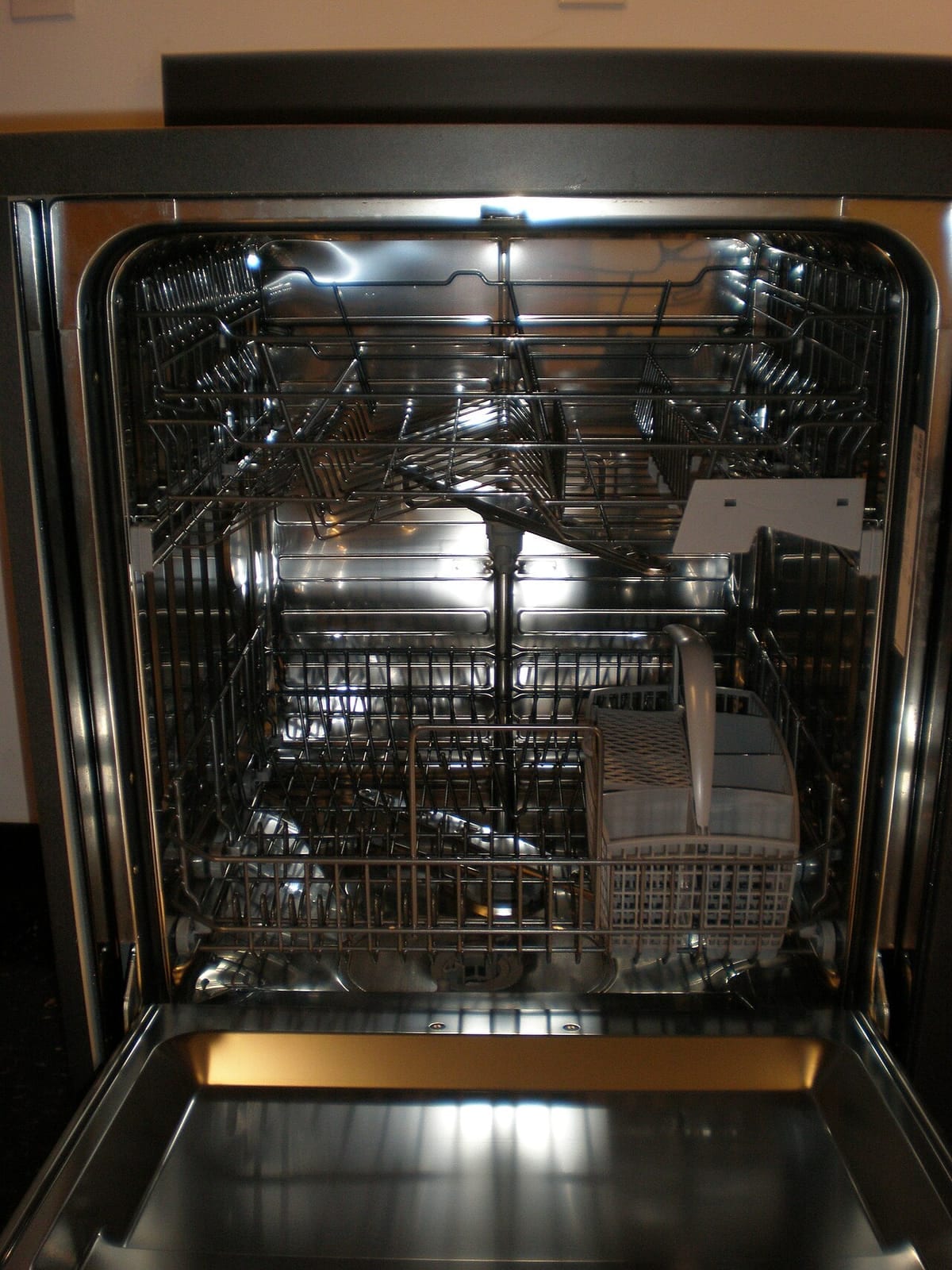 The filter lives in the tub floor below this lower rack, which is why nobody ever sees it. Photo by BrokenSphere via Wikimedia Commons, CC BY-SA 3.0, resized.
Twist out the cylinder and lift the mesh plate
Turn the cylinder a quarter turn counterclockwise and lift it straight up. It should come out with light finger pressure, so if it fights you, look for a locking tab instead of pulling harder. Most models have a flat mesh plate around the opening that lifts out next. Expect the underside to be genuinely gross. That’s the part doing its job.
Rinse, then scrub the fine mesh
Hold both parts under hot running water and knock the loose debris into the trash first, not the sink. Then scrub the fine mesh with the soft brush and a drop of dish soap. The pass/fail test is visual: hold the cylinder up to a light, and you should see through the mesh evenly across the whole surface. A greasy film that water beads on instead of passing through is biofilm mixed with detergent residue, and it needs the soap rather than a plain rinse.
Soak in vinegar if there’s white crust
A chalky white deposit that survives scrubbing is mineral scale, not food. Stand the parts in a bowl of undiluted white vinegar for 30 minutes, then brush again and the crust comes off easily. Skip harsh descalers here. The mesh is fine plastic and a stiff wire brush will tear it, which turns a free cleaning into a $25–$50 replacement part.
Check the sump and lock everything back
Before the filter goes back in, shine a flashlight into the open sump recess and fish out anything solid: glass shards, fruit stickers, olive pits, the occasional twist tie. Reseat the mesh plate, drop the cylinder in, and twist clockwise until the arrows line up or you feel it seat firmly. This part matters: a filter left loose lets food pass straight to the pump. Run a rinse cycle, and the machine should sound slightly quieter than you’re used to.
Time and Cost
| Fix | Time | Cost |
|---|---|---|
| Rinse and scrub the filter | 10 min | $0 |
| Vinegar soak for scale | +30 min | under $1 |
| Replacement filter (torn mesh) | 5 min | $15–$50 |
| Appliance tech doing the same | service visit | $100–$150 |
Why This Works
A filter-style dishwasher reuses its wash water within a cycle, spraying, collecting, and spraying again. The fine mesh is what keeps yesterday’s rice out of that loop. When the mesh blinds over with grease and food paste, the pump recirculates dirty water across your dishes, which is exactly the grit and film you see on glasses. The smell has the same source: trapped food sitting in warm water between runs. Clean mesh restores the one path debris is supposed to take, down into the coarse trap and out the drain.
Mistakes to Avoid
- Assuming the dishwasher cleans its own filter. That was true when machines had grinders. If yours was made in the last fifteen years and runs quietly, the filter is manual and it’s yours to clean.
- Scrubbing the mesh with a stiff or metal brush. The mesh tears, food passes through to the pump, and the fix becomes a replacement part instead of a rinse.
- Knocking the debris into the sink above a garbage disposal you then don’t run. It washes right back down the shared drain line toward the dishwasher. Trash can first, disposal after.
- Running hot cycles with cleaner tablets as the whole fix for smell. A cleaner tablet freshens the tub, but it cannot clear a mesh packed with solids. Hand-cleaning first, tablet after, or the smell comes back in a week.
If the machine is also slow to empty, or you’re finding standing water above the filter housing, work through the drain checklist next. And if the smell seems to come from the sink rather than the machine, it’s probably time to clean the garbage disposal they share a drain with.
FAQ
How often should you clean a dishwasher filter?
Once a month if you scrape but don't rinse plates, every two to three months if you rinse well. The filter on most machines built since about 2010 is manual, so nothing cleans it except you. If glasses come out gritty or the machine smells swampy when you open the door, it's overdue no matter what the calendar says.
Where is the filter in my dishwasher?
In the floor of the tub, under the bottom spray arm. Pull the lower rack and look for a round plastic cylinder about the size of a soup can, usually with lock and unlock arrows printed on the collar. Twist it a quarter turn counterclockwise and it lifts straight out. Many models also have a flat mesh plate around it that lifts out separately.
Why does my dishwasher smell even after cleaning the filter?
The other two usual sources are the door gasket and the drain connection. Wipe the inside fold of the rubber door seal with a soapy cloth, then run an empty hot cycle with a bowl of white vinegar upright on the top rack. If the smell survives that, it's usually coming up the drain line from the garbage disposal, not from the dishwasher at all.
Do dishwashers with a hard food grinder need filter cleaning?
Mostly no. Machines with a grinder (many older units and some current Maytag and GE models) chop food waste and flush it out, so there's no fine filter to clog. The tradeoff is noise. If your dishwasher is quiet enough to talk over, it almost certainly has a manual filter that needs cleaning by hand.
Related fixes
Kitchen
Garbage Disposal Smells? Clean It in 10 Minutes (3 Steps)
A stinky disposal is rotting film on the splash guard and chamber walls, not a broken unit. Scrub, flush, and deodorize it with $2 of pantry staples.
Time10–15 min Cost$0–$5 easy


Kitchen
Dishwasher Not Draining? Work This List in Order
Standing water in a dishwasher is usually the filter, the air gap, or a disposal plug nobody knocked out. Here is the order that finds it fastest.
Time30–60 min Cost$0–$25 moderate