No Hot Water? Start With the Reset Button or the Pilot
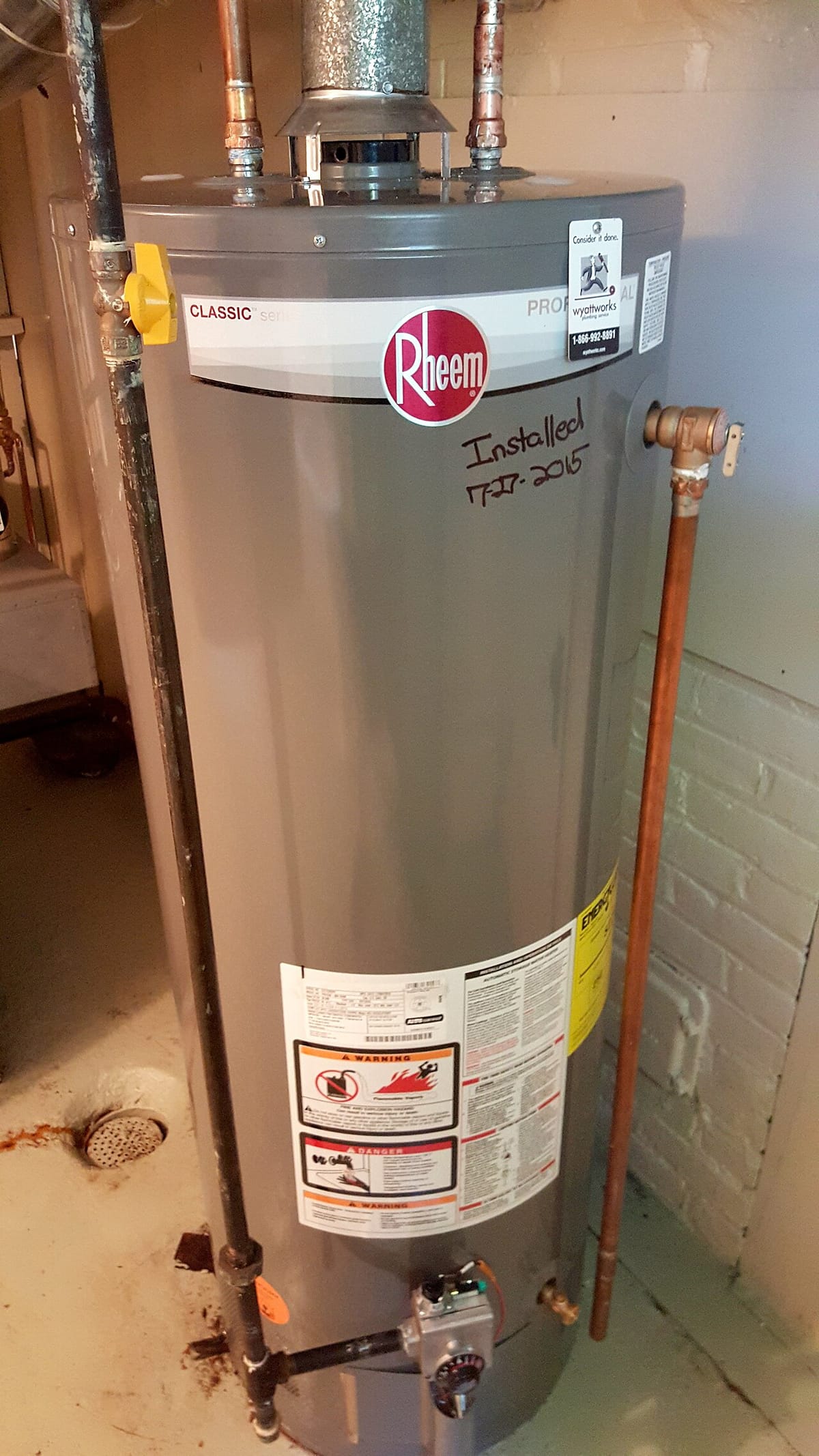
Cover photo by Tim Evanson via Wikimedia Commons, CC BY-SA 2.0, resized.
If this fix touches water, gas, or power, the guide starts with the shutoff step and says when a licensed pro should take over.
Product links in this guide are affiliate links. If you buy through one, we may earn a small commission at no extra cost to you. It never changes which products we recommend.
Losing hot water always seems to happen on a weekday morning with somebody already in the shower. The reassuring part is that a sudden total loss usually traces to a single safety device that has done its job and switched something off, and both the gas and the electric version of that device are things you can check yourself in about twenty minutes.
Quick Answer
With no hot water at all, the fix depends on which kind of heater you have. For an electric water heater, shut off its breaker, pull the upper access panel, and press the red reset button on the thermostat, which is the high-limit switch and the single most common cause of a sudden cold shower. For a gas water heater, look through the sight glass for the pilot light and relight it following the label on the tank. If the pilot lights but dies as soon as you release the knob, the thermocouple has failed and it is a $20 part. If you smell gas at any point, leave the house and call the gas company from outside. Most of these fixes cost under $45.
What You’ll Need
- A flashlight
- A screwdriver, and a nut driver for the access panel
- A replacement thermocouple, around $15–$20, for a gas unit that won’t stay lit
- A water heater element wrench, $12, only if you get as far as replacing an element
- A garden hose, if you end up flushing sediment
Step-by-Step
Rule out the easy things first
Check whether the loss is total or partial, and whether it affects the whole house or one fixture. Only one tap running cold usually means a mixing valve or cartridge at that fixture, not the heater. Also confirm nobody knocked the thermostat down, and that a gas or power outage is not the real story. Recommended setting is 120 degrees, which is hot enough for household use and low enough to avoid scalding.
For an electric heater, kill the breaker first
This is not optional. An electric water heater runs on 240 volts and the terminals behind that panel are exposed and lethal. Switch the double-pole breaker for the water heater fully off before a screwdriver goes anywhere near the tank. If the breaker itself was tripped, that alone may be your answer, so reset it fully off and back on and give the tank an hour before going further.
Press the reset button
With the breaker off, unscrew the upper access panel on the side of the tank, fold back the insulation, and lift the plastic safety cover. You are looking for a red button on the thermostat block. If it has tripped it will be sticking out, and it clicks firmly when you push it in. That switch is a high-limit cutout, designed to shut everything down if water temperature gets dangerously high. Reassemble the cover, insulation, and panel before restoring the breaker.
If it trips again, don’t keep resetting it
A high-limit switch that trips repeatedly is reporting a real fault, usually a thermostat stuck closed or a shorted element that heats without stopping. Resetting it over and over defeats the one device protecting you from scalding water and a pressure event. Two trips means it is time for a proper diagnosis rather than a third press.
For a gas heater, check and relight the pilot
Look through the small sight glass near the bottom of the tank for a small blue flame. If it is dark, follow the lighting instructions printed on the label, which vary by model and are worth reading rather than guessing. On modern sealed-combustion units there is a piezo igniter button rather than an open flame to light. Turn the gas control to pilot, hold the knob down, click the igniter, and keep holding for the time the label specifies, usually 30 to 60 seconds.
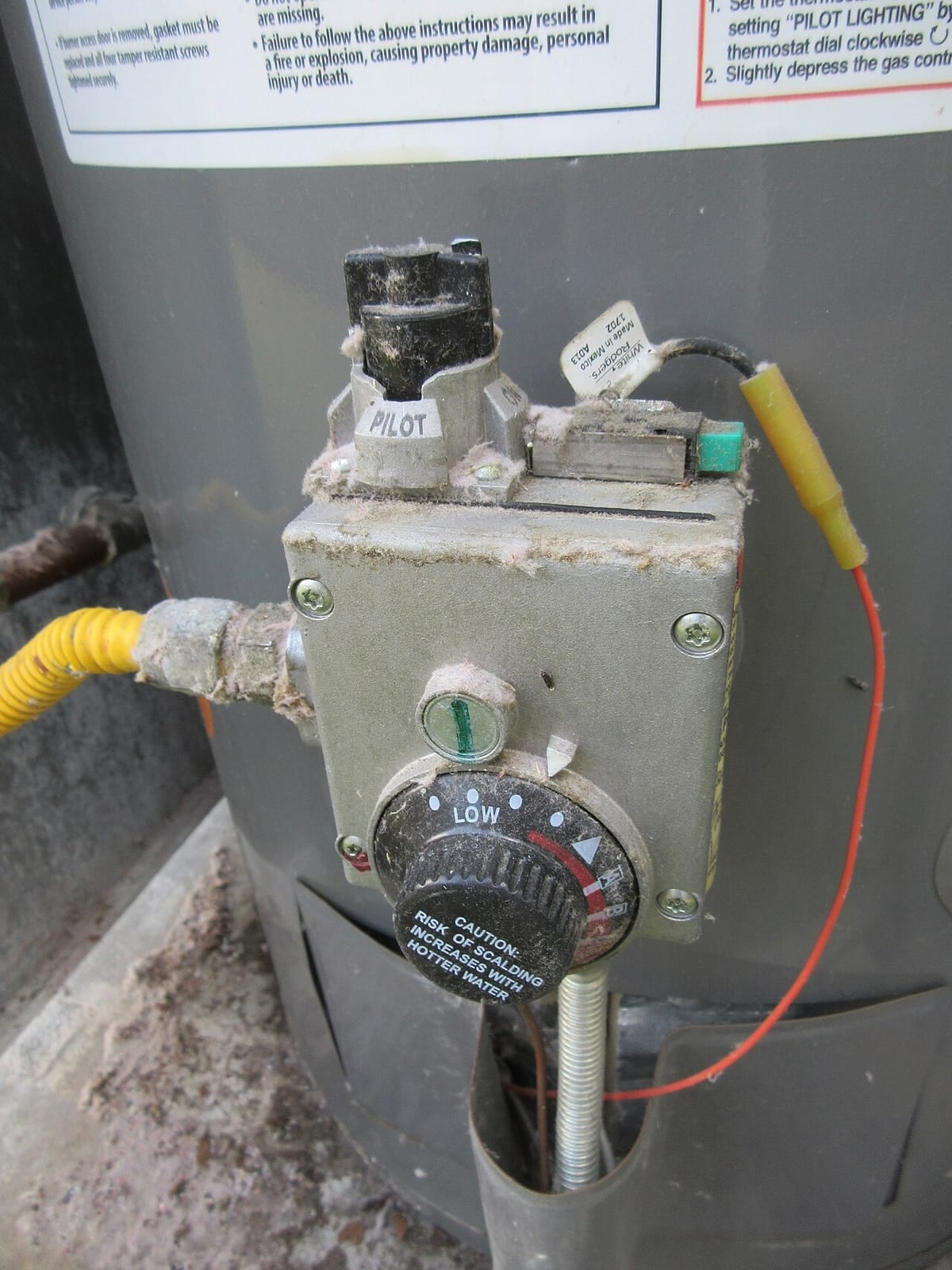 The gas control valve. The knob turns to the pilot setting for relighting, and the dial below sets temperature. Photo by Infrogmation of New Orleans via Wikimedia Commons, CC BY-SA 4.0, resized.
If the pilot dies when you release the knob, replace the thermocouple
That behavior is the classic signature of a failed thermocouple. It is a thin metal probe sitting in the pilot flame that generates a tiny voltage while hot, which is what tells the gas valve it is safe to stay open. When it weakens, the valve closes the moment you stop holding the override. Replacing one means shutting off the gas, unthreading the old probe from the valve and its bracket, and fitting the new one in the same position, and it costs about $20. If you are not fully comfortable working on a gas appliance, this is a fair and inexpensive call to a plumber.
For hot water that runs out too fast, look at the tank
A tank that produces hot water but not enough of it points somewhere different. On electric units, a failed lower element means only the top of the tank is being heated, giving you a short burst that fades. On any unit, a cracked dip tube dumps incoming cold water at the top of the tank instead of the bottom, where it mixes straight into your supply. Years of sediment on the tank floor cause the same shortage by taking up volume and insulating the burner from the water, which is what a yearly flush is meant to prevent.
Time and Cost
| Fix | Time | Cost |
|---|---|---|
| Press the high-limit reset | 20 min | $0 |
| Relight a pilot | 15 min | $0 |
| Replace a thermocouple | 45–60 min | $15–$20 |
| Replace a heating element | 1–2 hrs | $20–$45 |
| Flush sediment from the tank | 1 hr | $0 |
| Plumber diagnostic visit | 1 hr | $150–$300 |
| New water heater installed | 3–5 hrs | $1,200–$2,500 |
Why This Works
A water heater is mostly a tank with one heat source and several devices whose entire job is to shut that heat source off when something is wrong. The electric high-limit switch and the gas thermocouple are both interlocks, and they fail toward safety, meaning they cut the heat rather than risk running unsupervised. That is why a sudden total loss of hot water is so often a device doing exactly what it should rather than a component that broke. It also explains why resetting repeatedly is the wrong instinct: the interlock is not the problem, it is the messenger. Partial loss, by contrast, is a capacity problem rather than a safety one, which is why it points at elements, dip tubes, and sediment instead.
Mistakes to Avoid
- Opening an electric heater’s panel without killing the breaker. 240 volts across exposed terminals. This is the one step in this article with no margin.
- Resetting the high-limit switch again and again. Twice is the limit. After that you are overriding a safety device to hide a fault that is still there.
- Relighting a pilot when you smell gas. Leave the building, then call the gas utility from outside. Do not flip switches on your way out.
- Turning the thermostat above 120 degrees to compensate. It does not fix a capacity problem, it just adds a scalding risk, especially with kids in the house.
- Ignoring water pooling around the base. A leak from a fitting is repairable. A leak from the tank body means the tank is finished, and it will not improve.
If the complaint is really about weak flow rather than temperature, the cause usually sits somewhere else in the plumbing entirely, which is the ground low shower water pressure covers.
No hot water and no heat on the same morning points at the gas supply rather than two failures. The furnace guide covers that check and the six that follow it.
FAQ
Where is the reset button on an electric water heater?
Behind the upper access panel on the side of the tank, under a piece of insulation and a plastic cover. It is a red button on the thermostat assembly, and it trips when the water gets too hot. Always shut the water heater breaker off before removing that panel, because the wiring behind it carries 240 volts.
Why does my hot water run out so fast now?
Usually a broken dip tube or a failed lower heating element. The dip tube carries incoming cold water to the bottom of the tank, and when it cracks, cold water mixes in at the top and goes straight to your shower. A failed lower element leaves you heating only the top third of the tank, which produces the same short supply.
Why won't my water heater pilot light stay lit?
Almost always a failing thermocouple, the small sensor sitting in the pilot flame that tells the gas valve the flame is present. When it weakens, it stops signaling and the valve shuts the gas off as a safety measure within seconds of you releasing the knob. The part costs about $20.
How long should a water heater last?
Eight to twelve years for a standard tank, longer if it was flushed regularly and the anode rod was replaced. If yours is past twelve, is leaking from the tank body rather than a fitting, or needs a second repair in a year, replacement makes more sense than another part. Budget $1,200 to $2,500 installed.
Related fixes
Bathroom
Low Shower Water Pressure? Fix It in One Evening
Weak shower pressure is usually a mineral-clogged head, not your pipes. Soak it in vinegar, check the inlet screen, and know when it's something bigger.
Time20 min active + 1–2 hr soak Cost$2–$25 moderate
Heating & Cooling
Furnace Not Turning On: 7 Checks Before You Call for Service
A furnace that won't start is usually a thermostat setting, tripped breaker, power switch, clogged filter, or loose blower door. Check those five first.
Time15–45 min Cost$0–$25 moderate


Heating & Cooling
How to Replace an HVAC Filter the Right Way
A dirty HVAC filter cuts airflow and raises bills. Find the size, point the arrow toward the unit, and replace it in under 10 minutes today.
Time5–10 min Cost$8–$25 easy