How to Fix a Sticking Door (Tighten the Hinges First)

Cover photo by Jörg Blobelt via Wikimedia Commons, CC BY-SA 4.0, resized.
If this fix touches water, gas, or power, the guide starts with the shutoff step and says when a licensed pro should take over.
Product links in this guide are affiliate links. If you buy through one, we may earn a small commission at no extra cost to you. It never changes which products we recommend.
A door that scrapes the frame or needs a shoulder to latch feels like a job for a plane and an afternoon. Skip that. In most houses the door hasn’t grown at all, it has drooped, and the fix is one screw in the top hinge that reaches somewhere the original screws never did. Try that before you take wood off anything.
Quick Answer
To fix a sticking door, find where it rubs first, because the location names the cause. Rubbing at the top corner of the latch side means the door is sagging, and the fix is replacing one screw in the top hinge with a 3-inch screw long enough to bite the framing behind the jamb, which pulls the whole door back square. Rubbing evenly along the whole latch edge in humid weather is seasonal swelling, and it usually resolves itself. A door that closes but won’t latch needs the strike plate adjusted, not the door touched. The screw fix costs about fifty cents and takes twenty minutes, and planing is the last resort rather than the first move.
What You’ll Need
- A #2 Phillips screwdriver, ideally a hand driver rather than a drill
- Three-inch wood screws, about $6 for a box, matching your existing screw heads
- A metal file for the strike plate, around $8
- Wood glue and golf tees or wooden matchsticks, for stripped screw holes
- A block plane, $25–$40, only if you genuinely reach that step
Step-by-Step
Find exactly where it rubs
Close the door slowly and watch the gap all the way around. Look for a shiny burnished stripe on the door edge or the jamb, which is the contact point wearing the finish. If it isn’t obvious, slide a dollar bill into the gap and run it around the perimeter: where it binds, that’s your spot. Do this before touching anything, because the location is the entire diagnosis and every fix below depends on it.
Tighten every hinge screw
Open the door, brace it with a book or a shim under the outer corner so it isn’t hanging on the hinges, and hand-tighten every screw in both leaves of every hinge. Use a hand driver so you can feel the moment a screw stops biting. Some will snug up nicely. Any that spin freely without grabbing have stripped their hole, and those are the ones causing your problem.
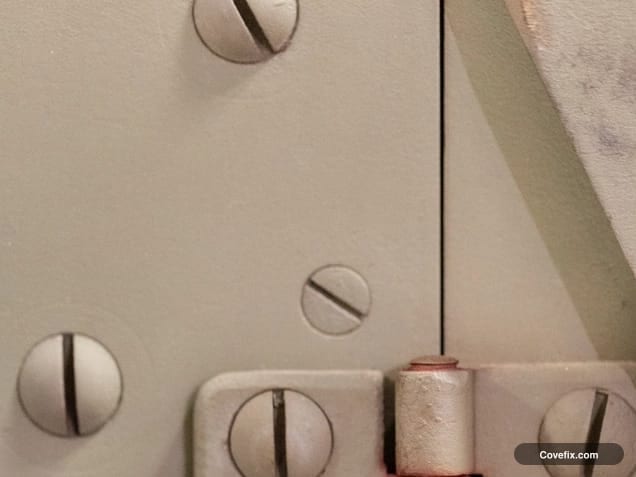 The screws in the jamb leaf are the ones that matter. A standard one is about three-quarters of an inch and never reaches framing.
Swap one top-hinge screw for a long one
This is the fix that solves most sticking doors. Take out one screw from the jamb side of the top hinge and replace it with a 3-inch screw. A standard hinge screw is about three-quarters of an inch, long enough to hold the jamb but not long enough to reach the framing stud behind it. A 3-inch screw goes through the jamb and bites solid framing, and as you drive it, it pulls the top of the door frame slightly tighter and lifts the sagging corner of the door with it. Drive it firm but stop when it seats, since cranking further can bow the jamb and cause a new problem. Do the same on the middle hinge if the sag is significant.
Pack any stripped holes
If a hole is chewed out and won’t hold even a long screw, fill it. Coat golf tees or a few wooden matchsticks with wood glue, tap them into the hole, snap them off flush once the glue sets, and drive the screw into fresh wood. This is a genuinely permanent repair and costs nothing.
Fix a latch problem at the strike plate
If the door closes but the latch won’t catch, color the tip of the latch bolt with a marker, pull the door shut until it stops, and open it again. The transferred mark on the strike plate shows precisely where the bolt is landing. High or low by an eighth of an inch or less, file the plate opening in that direction until the bolt drops in. Further off than that, unscrew the plate, move it, and fill the old screw holes with glued matchsticks so the new screws have something to grip.
Only then, consider planing
If the hinges are tight, the door is square, and it still binds year-round, remove material. Pull the hinge pins and take the door down. Mark the rub area with pencil, and plane the hinge side rather than the latch side, because the cut hides behind the hinge leaf and you can deepen the mortise instead of leaving a visible taper. Take off very little at a time and re-hang to check. Seal any bare wood you expose, especially the top and bottom edges, or the door will pull in moisture and swell right back.
Time and Cost
| Fix | Time | Cost |
|---|---|---|
| Tighten hinges and fit a long screw | 20–30 min | $0–$6 |
| Pack stripped holes with glue and tees | 30 min plus drying | $2 |
| File or move the strike plate | 20 min | $0–$8 |
| Plane and reseal the door | 1–2 hrs | $25–$40 in tools |
| Carpenter to rehang a door | 2–3 hrs | $150–$350 |
Why This Works
A door hangs entirely from a few short screws holding the hinge leaves to a jamb, and that jamb is usually a thin board shimmed inside a rough opening with air behind it. Every swing pulls on those screws, and over years they work their way loose in soft pine. When the top hinge gives up even an eighth of an inch, the door pivots down and the far corner swings out and into the frame, which is why sticking almost always shows up diagonally opposite the loose hinge. A long screw skips the weak jamb entirely and anchors into structural framing, so it restores the geometry rather than compensating for it. Planing, by contrast, treats the symptom permanently, and it is the only step here that you cannot undo.
Mistakes to Avoid
- Reaching for the plane first. Wood you remove never comes back, and a door planed in humid weather rattles in winter with daylight showing through the gap.
- Driving hinge screws with a drill on high torque. That’s how holes get stripped in the first place. Finish by hand so you feel the screw seat.
- Using a screw that’s too long for the location. Three inches is right for a jamb into framing. Much longer risks hitting wiring or plumbing running in the wall beside the opening.
- Moving the strike plate when the door is the thing that’s sagging. You’ll get it latching, then it drifts again next season because the underlying sag was never addressed.
Once the door swings true, any noise it makes is a separate issue with its own quick fix, covered in stopping a squeaky door hinge for good. If the problem was really a draft rather than a rub, the gap at the bottom is the usual suspect and a new door sweep handles it.
A door that swings free but won’t catch has the opposite problem: the bolt is missing the strike plate. Fixing a door that won’t latch starts with a lipstick mark on the bolt.
FAQ
Why is my door suddenly sticking?
Either the door sagged or the wood swelled. Sagging is far more common and shows up as rubbing at the top corner of the latch side, caused by hinge screws pulling loose from the jamb over years of use. Swelling affects the whole edge at once, arrives with humid weather, and often goes away on its own when the air dries out.
How do I fix a door that won't latch?
Mark the latch bolt with a marker or lipstick, close the door until it stops, and look at where the color transferred onto the strike plate. That shows you exactly how far off the alignment is. If it's an eighth of an inch or less, file the strike plate opening larger. More than that and the plate should be unscrewed and moved.
Should I plane a sticking door?
Only after tightening the hinges and confirming it isn't seasonal swelling. Planing removes wood permanently, so a door planed during a humid August will have visible gaps every January. If you do plane, take material off the hinge side where the cut is hidden, and seal the bare wood afterward or it will drink moisture and swell worse.
Why does my door stick only in summer?
Wood absorbs moisture from humid air and expands across its width. A door with tight clearances will bind in July and swing freely in February. The right response is patience plus a coat of sealant on the top and bottom edges, which are usually left bare and are where doors take on the most moisture.
Related fixes
Walls, Doors & Floors
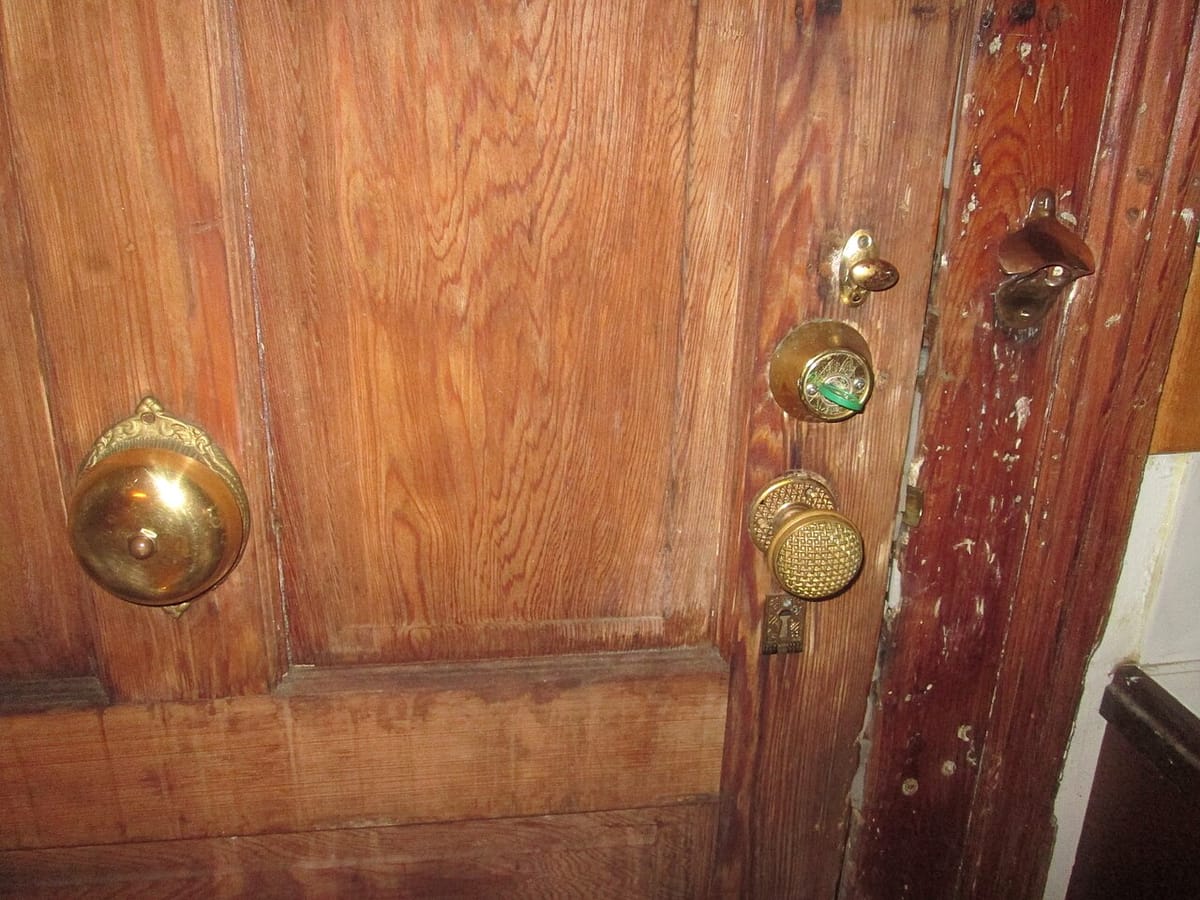
How to Fix a Door That Won't Latch or Stay Closed
A door that won't latch has a strike plate out of line with the bolt, usually by under 1/4 inch. Mark it with lipstick, then file, shim, or move the plate.
Time15–45 min Cost$0–$12 easy
Walls, Doors & Floors
Fix a Squeaky Door Hinge for Good (WD-40 Isn't Enough)
WD-40 quiets a hinge for a week. Pulling the pin and coating it with silicone or lithium grease fixes it for years. Here is the 5-minute method.
Time5 min per door Cost$6–$8 easy

Outdoors & Seasonal
How to Replace a Worn Door Sweep Before Winter
If cold air comes in under the door, the sweep is probably torn or missing. Replace it in 20 minutes for $8–$15 and stop the floor-level draft.
Time20 min Cost$8–$15 easy