How to Unclog a Toilet Fast, With or Without a Plunger
If this fix touches water, gas, or power, the guide starts with the shutoff step and says when a licensed pro should take over.
Product links in this guide are affiliate links. If you buy through one, we may earn a small commission at no extra cost to you. It never changes which products we recommend.
The water is rising, your hand is hovering over the flush handle, and the next ten seconds decide whether this is a five-minute fix or a mop job. Take your hand off the handle. Nearly every clogged toilet clears with a plunger or a bucket of soapy water, and none of them clear faster because you panicked. Here’s how to unclog a toilet with a plunger, without one, and how to tell when the clog isn’t yours to fight.
Quick Answer
To unclog a toilet, stop the bowl from filling first: lift the tank lid and press the flapper down over the drain hole. Then plunge with a flange plunger (the kind with a rubber sleeve extending from the cup): one gentle push to expel the air, then 15 to 20 firm strokes without breaking the seal. No plunger in the house? Half a cup of dish soap in the bowl, ten minutes of waiting, then a bucket of hot tap water poured from waist height clears most soft clogs. The whole job runs $0 to $25 and 5 to 30 minutes, and a $150 plumber visit is only warranted when an auger fails or other drains back up too.
What You’ll Need
- A flange plunger, $10–$15. The flat-bottomed cup plunger under most sinks can’t seal a toilet drain
- Rubber gloves
- Dish soap and a bucket, for the no-plunger method
- A toilet auger, $15–$25, only for clogs a plunger can’t move
Step-by-Step
Stop the water before anything else
If the bowl looks like it wants to overflow, don’t touch the flush handle. Lift the tank lid, reach in (the tank water is clean), and press the flapper down over the drain opening. If the tank is refilling, lift the float on the fill valve until it stops, or close the shutoff valve at the wall. The bowl can’t rise another inch once the tank stops feeding it.
Check the bowl level
Plunging works best with enough water to cover the plunger cup and not so much that every stroke slops over the rim. Too full: wait five minutes for the level to seep down, or bail a few cups into a bucket. Nearly empty: add water until the cup will be submerged. Compressing water moves the clog. Compressing air just burps around it.
Plunge like you mean it, after one gentle push
Seat the flange into the drain opening at an angle that traps as little air as possible. First push slow and easy, since the cup is still full of air and a hard first stroke sprays. Then, without lifting the cup off the drain, give it 15 to 20 firm strokes and pull up sharply on the last one. The water should drop away with a glug. Flush once with your hand hovering near the flapper, just in case.
No plunger? Dish soap and hot water
Squirt about half a cup of dish soap into the bowl and let it sink into the drain for ten minutes. Then pour a bucket of hot tap water (hot to the touch, never boiling) into the bowl from waist height. The height matters: the falling water’s weight is what shoves the lubricated clog through. Give it 15 to 20 minutes before judging. For a mild paper clog, even a toilet brush pumped in the drain opening like a plunger can finish the job.
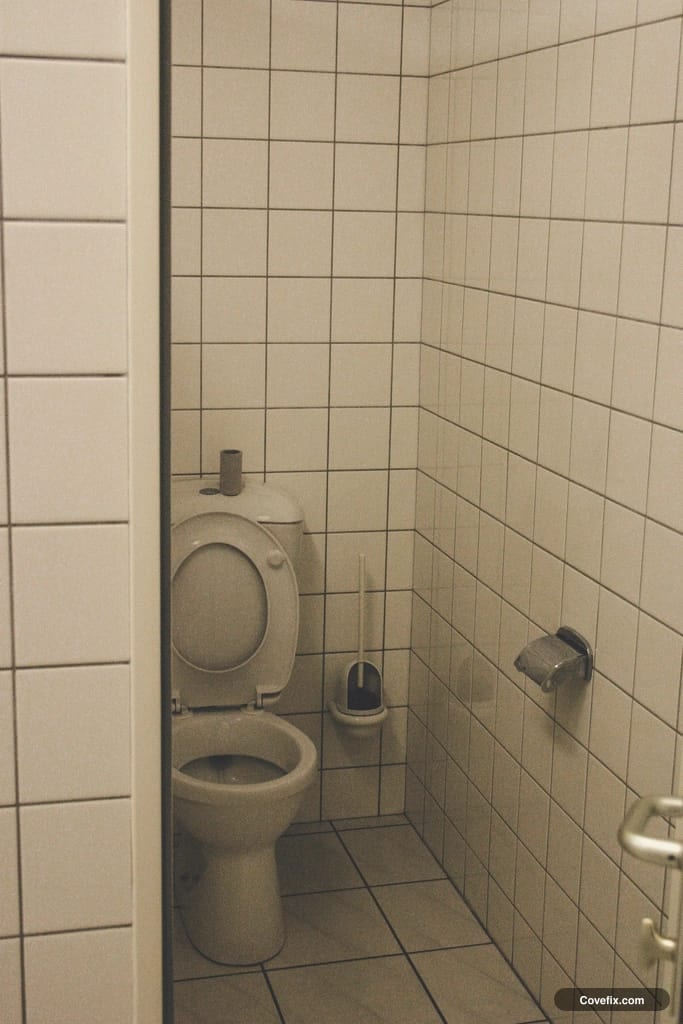 No plunger, no problem: for light paper clogs, the humble toilet brush can stand in.
Bring in the auger for a clog that won’t move
A toilet auger is a hand-cranked cable inside a plastic-sleeved elbow, made so the metal never scrapes the porcelain. Feed the cable in, crank until you feel it bite, then either push through or pull the obstruction back out. This is the tool that retrieves the toys, wipes, and floss wads a plunger only packs tighter.
Recognize the plumber’s half of the job
One toilet, one clog, cleared: you’re done. But a toilet that clogs every week, drains that gurgle elsewhere in the house, or sewage appearing in the tub means the blockage is past the toilet, in the branch or main line. That’s power-snake territory. Stop and make the call rather than augering at a symptom.
Time and Cost
| Fix | Time | Cost |
|---|---|---|
| Flange plunger | 5–10 min | $0–$15 |
| Dish soap and hot water | 30–45 min, mostly waiting | $0 |
| Toilet auger | 15–30 min | $15–$25 |
| Pro clearing the same clog | Service call | $150–$350 |
Why This Works
Every toilet has a serpentine trap molded into the porcelain, the same water-seal idea as the P-trap under your sink, and nearly every clog sits in one of its two bends. Water doesn’t compress, so a sealed plunger stroke slams the full force of each push directly into the clog, working it loose in both directions. Soap and hot water attack the same spot chemically instead: soap slicks the mass and the pipe walls while heat softens the paper holding it together, which is why the method needs 20 minutes where the plunger needs five.
Mistakes to Avoid
- Flushing again to “test it.” The bowl holds exactly one flush’s worth of margin. The second flush is the flood. Press the flapper down and test only after the level drops.
- Boiling water. Porcelain is ceramic. A kettle’s worth of boiling water can crack the bowl, and the crack doesn’t announce itself until the floor is wet. Hot tap water only.
- Chemical drain cleaner in a toilet. It rarely reaches the clog in a toilet trap, it turns the bowl into a caustic hazard for the plunging you’ll still have to do, and the heat it generates can damage the wax ring or the bowl.
- Plunging with a cup plunger. The flat sink plunger can’t seal a curved toilet drain, so your strokes push water around the cup instead of into the clog. The flange kind costs $12 and works the first time.
Once the water goes down, listen for a minute. A toilet that clears but then hisses or refills on its own has a second, cheaper problem: how to fix a running toilet covers it in fifteen minutes.
FAQ
Will a clogged toilet eventually unclog itself?
Sometimes. Toilet paper and waste are water-soluble, so a soft clog can break down on its own over a few hours. Anything that doesn't dissolve, like wipes, floss, or a dropped toy, will sit there until you remove it, and waiting only delays the plunger you'll need anyway.
How do you unclog a toilet without a plunger?
Squirt about half a cup of dish soap into the bowl, wait 10 minutes, then pour a bucket of hot (not boiling) tap water in from waist height. The soap lubricates the clog while the falling water's weight pushes it through. This clears most soft clogs within 20 to 30 minutes.
Why shouldn't I flush a clogged toilet a second time?
Each flush sends another full tank of water toward a bowl that can't drain, and the second flush is usually the one that puts water on the floor. Take the tank lid off and press the flapper closed instead. That stops more water from entering the bowl.
When should I call a plumber for a clogged toilet?
When both a plunger and a toilet auger fail, when the same toilet clogs week after week, or when other drains gurgle or back up at the same time. Water rising in the tub or shower while the toilet is clogged points to a main line blockage, and that is a job for a pro with a power snake.
Related fixes
Bathroom
How to Fix a Running Toilet in 15 Minutes (No Plumber)
A running toilet is usually a worn flapper or misadjusted float. Diagnose it with a dye test and fix it yourself in 15 minutes for under $12.
Time15–30 min Cost$5–$18 easy
Bathroom
Toilet Flapper Replacement: Get the Right Size the First Time
Most toilets take a 2-inch flapper, while newer high-efficiency models need 3-inch. Tell which yours needs and install it in 10 minutes flat.
Time10 min Cost$5–$15 easy
Bathroom
Why Your Toilet Refills Randomly, and How to Stop It
A toilet that refills on its own is leaking tank water into the bowl. Run a dye test, fix the flapper or water level, and stop the phantom flush.
Time10–20 min Cost$0–$15 easy