Dishwasher Not Draining? Work This List in Order
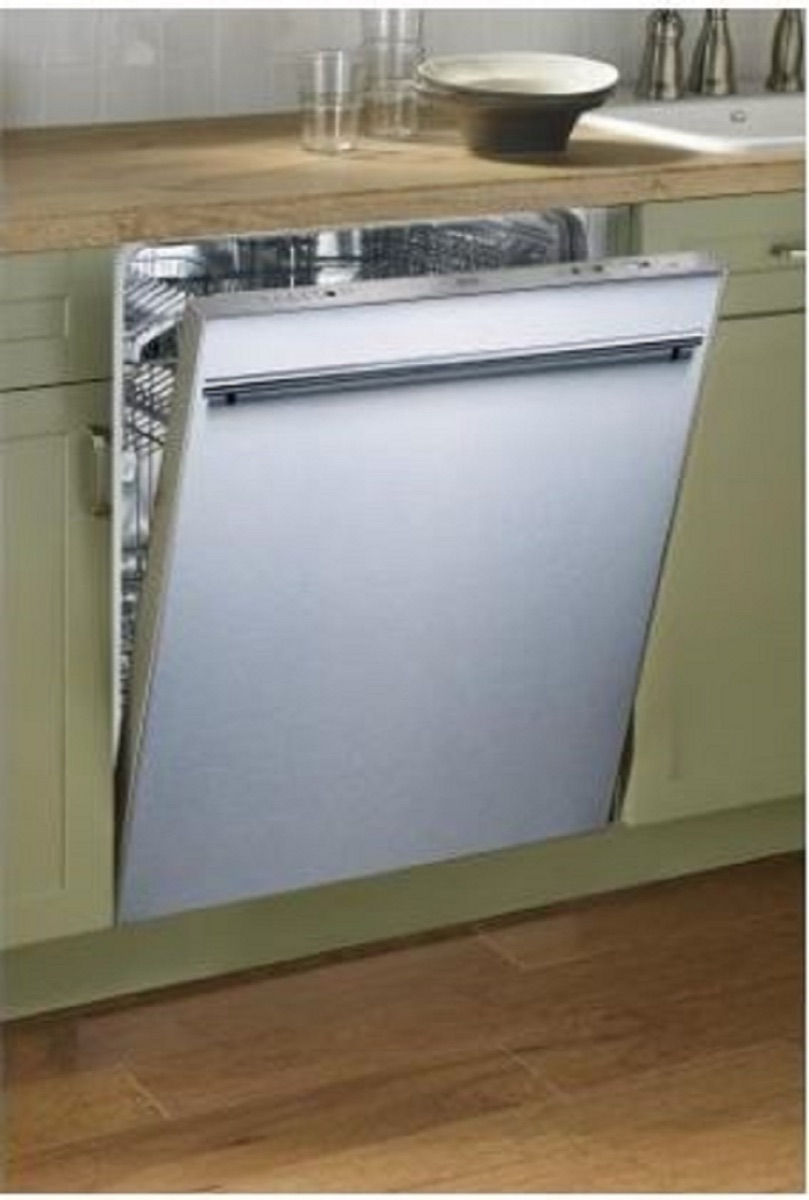
Cover photo by Storerichmond via Wikimedia Commons, CC BY-SA 4.0, resized.
If this fix touches water, gas, or power, the guide starts with the shutoff step and says when a licensed pro should take over.
Product links in this guide are affiliate links. If you buy through one, we may earn a small commission at no extra cost to you. It never changes which products we recommend.
You open the dishwasher expecting clean dishes and find a puddle sitting in the bottom instead. Here’s the good news before you call anyone: a dishwasher that won’t drain is almost always blocked somewhere you can reach, and three of the five likely causes cost nothing but an hour. The catch is checking them in the right order, because the most common one takes two minutes and everybody starts with the hard stuff.
Quick Answer
A dishwasher not draining has a blockage in one of five places: the filter in the floor of the tub, the air gap on the sink deck, the knockout plug inside a newly installed garbage disposal, a kinked drain hose, or the drain pump itself. Cut power at the breaker, bail the standing water so you can actually see, then pull and rinse the filter, which is the culprit roughly half the time. If a disposal or dishwasher went in during the last month and the machine has never drained since, skip straight to the knockout plug. Budget an hour and $0 for the common fixes, or $40 to $90 for a replacement drain pump against $150 to $350 for a repair visit.
What You’ll Need
- Old towels and a cup, or a wet/dry shop vac at $40–$70 if you’d rather bail the tub in 30 seconds
- A turkey baster, about $5, for the last inch the cup can’t reach
- A flashlight
- A flathead screwdriver, and a hammer plus a stiff wire if the knockout plug is your problem
- Dishwasher cleaner tablets, around $8, for after it drains again
Step-by-Step
Cut the power, then bail the tub
Flip the dishwasher’s breaker off before your hands go anywhere near the sump. Then get the standing water out with a cup and towels, or a shop vac if you own one, finishing the last inch with the turkey baster. This step feels like a chore rather than a repair, and people skip it constantly. You cannot diagnose a drain you can’t see, and every later step gets messier with four inches of gray water in the way.
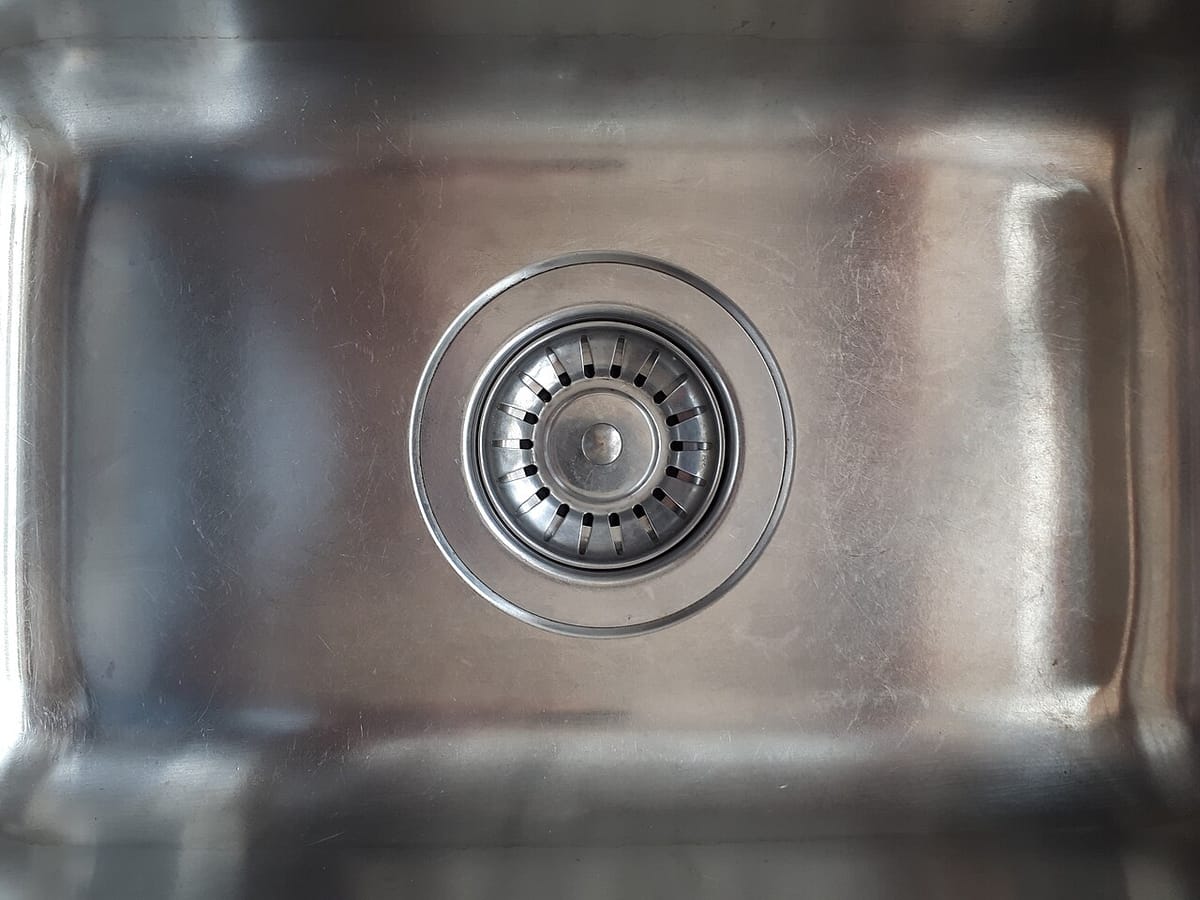
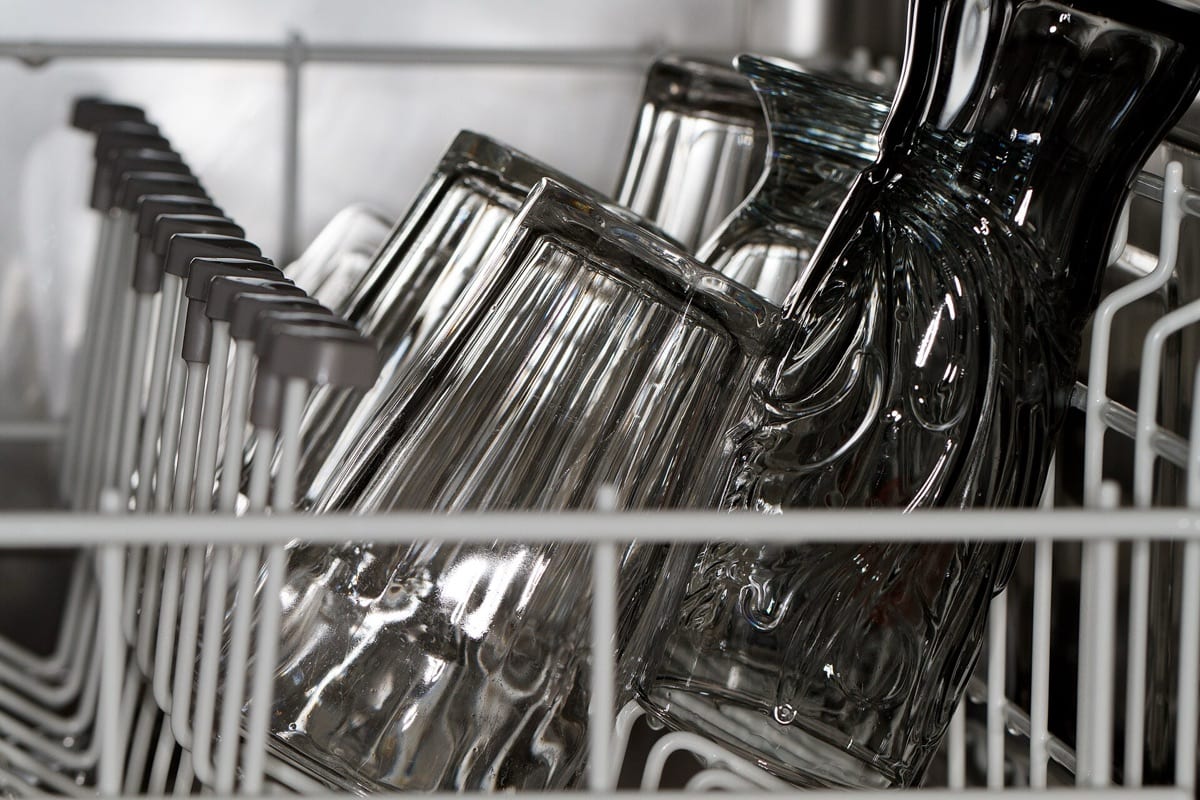 Everything that rinses off these ends up in the filter below. That is why it clogs first. Photo by Sander van der Wel from Netherlands via Wikimedia Commons, CC BY-SA 2.0, resized.
Pull the filter and rinse it
Look at the floor of the tub for a cylindrical filter, usually with an arrow showing which way to twist. Turn it a quarter turn, lift it out, and pull the flat mesh screen underneath if your model has one. Rinse both under hot water and scrub the mesh with an old toothbrush until light passes through it cleanly. Any dishwasher built in the last fifteen years or so has this filter and no food grinder, which means whatever comes off your plates sits there until you remove it by hand. Owners’ manuals say clean it monthly. Almost nobody does. The full routine, including the vinegar soak for scale, is in how to clean a dishwasher filter.
Check the disposal knockout plug
This one only applies if a garbage disposal was installed recently, but when it applies it’s the whole answer. Every new disposal ships with a solid plug sealing the dishwasher inlet, and the installer is supposed to punch it out. If yours didn’t, the dishwasher has been draining into a closed wall since day one. Look for the inlet nipple on the upper side of the disposal, pull the dishwasher hose off it, and shine a light inside. Solid disc means you’ve found it. Tap it through with a screwdriver and a hammer, then fish the loose disc out of the disposal chamber with pliers before it goes anywhere.
Clear the air gap
That small chrome cylinder on the sink deck next to the faucet is the air gap, and it exists to stop dirty sink water from siphoning back into the dishwasher. Twist the cap off, lift the plastic cover underneath, and look for gunk in the chamber. If water spits out of it during a cycle, it’s clogged. Clean it with a bottle brush and reseat both hoses. Not every kitchen has one, since some regions allow a high loop instead.
Straighten the drain hose and check the high loop
Follow the corrugated hose from the dishwasher to the disposal or drain line. Look for a hard kink where a cabinet shelf or a stored bucket has crushed it. The hose also has to rise up under the counter and loop back down before it connects, which is what stops sink water from running backward into the machine. A hose that runs flat along the cabinet floor will drain badly forever. Zip-tie it up to the underside of the countertop.
Listen to the drain pump
Power back on, start a cycle, and put your ear near the bottom of the door during the drain phase. A healthy pump makes a steady whirring hum for about a minute. A loud grinding buzz usually means a shard of glass or a fruit sticker is jammed in the impeller, which you can sometimes reach after removing the filter housing. Total silence during the drain phase, with everything upstream clear, points to a dead pump. That is the honest end of the DIY line for most people, and where an appliance tech earns the visit.
Time and Cost
| Fix | Time | Cost |
|---|---|---|
| Clean the filter | 10 min | $0 |
| Punch out the knockout plug | 15 min | $0 |
| Clear the air gap | 10 min | $0 |
| Reroute or replace the drain hose | 30 min | $15–$25 |
| Replace the drain pump yourself | 60–90 min | $40–$90 |
| Appliance repair visit | 1–2 hrs | $150–$350 |
Why This Works
A dishwasher drains by pumping water uphill through a narrow hose into your sink drain line, and every part of that path is a place for food to settle. The filter catches debris on purpose, so it clogs first and clogs most. The air gap and the high loop both exist for the same reason, keeping sink water from flowing backward into a machine that sits lower than the drain, and both fail closed when they fill with grease. The knockout plug is a different animal entirely: nothing is broken or dirty, the path was simply never opened. Working the list from cheapest and most common toward the pump means you almost never reach the expensive end.
Mistakes to Avoid
- Running the cycle again to see if it clears itself. It won’t, and the pump keeps straining against a blockage until it fails. That’s a free fix turning into a paid one.
- Pouring chemical drain cleaner into the tub. It sits in the sump against rubber seals and plastic impellers, doing nothing to a filter clogged with olive pits. It also makes the eventual hand cleanup genuinely hazardous.
- Skipping the filter because the dishes look clean. Clean dishes and a clogged filter go together fine right up until the water stops leaving.
- Reaching into the sump with the breaker on. Broken glass hides in that recess more often than you’d think, and the pump can cycle without warning.
If the sink beside it drains slowly too, the blockage is further down the line than the appliance, and the fix is the same one that clears a clogged kitchen sink: plunge, pull the trap, snake. A funky smell that survives a successful drain usually means the disposal needs a proper cleaning rather than another rinse cycle.
FAQ
Is a little water in the bottom of the dishwasher normal?
A small amount in the sump recess, roughly a cup or less, is normal on most models and keeps the seals from drying out. What is not normal is water covering the filter or pooling across the flat floor of the tub. If you can see standing water above the filter housing after a finished cycle, something is blocking the drain.
Why won't my dishwasher drain even though the garbage disposal works fine?
They share a drain line but not a blockage. The most common cause is the knockout plug inside the disposal's dishwasher inlet, a solid disc that ships in place and has to be punched out during installation. If your disposal was replaced recently and the dishwasher has not drained since, that plug is the answer nine times out of ten.
Can I run a dishwasher that isn't draining?
No. Running it again just adds water on top of water and can burn out the drain pump, which turns a free fix into a $40 to $90 part. Bail the standing water out first, find the blockage, then run a short cycle to confirm it drains.
What does a plumber charge to fix a dishwasher that won't drain?
An appliance repair visit runs $150 to $350 depending on whether the drain pump needs replacing. Since the three most common causes (filter, air gap, knockout plug) cost nothing but your time, it's worth an hour of checking before you book anyone.
Related fixes
Kitchen
How to Clean a Dishwasher Filter in 10 Minutes
Gritty glasses and a swampy smell mean the filter is overdue. Twist it out of the tub floor, scrub it under hot water, and put ten minutes on it.
Time10–15 min Cost$0–$10 easy
Kitchen
Garbage Disposal Smells? Clean It in 10 Minutes (3 Steps)
A stinky disposal is rotting film on the splash guard and chamber walls, not a broken unit. Scrub, flush, and deodorize it with $2 of pantry staples.
Time10–15 min Cost$0–$5 easy
.jpg)
_Clean_(6141780580).jpg)
Kitchen
How to Unclog a Kitchen Sink Drain Without Calling a Plumber
A kitchen sink that won't drain is almost always grease packed in the P-trap. Plunge it right, pull the trap, and snake the line in under an hour for $15.
Time20–60 min Cost$0–$40 easy