How to Winterize Outdoor Faucets Before the First Freeze
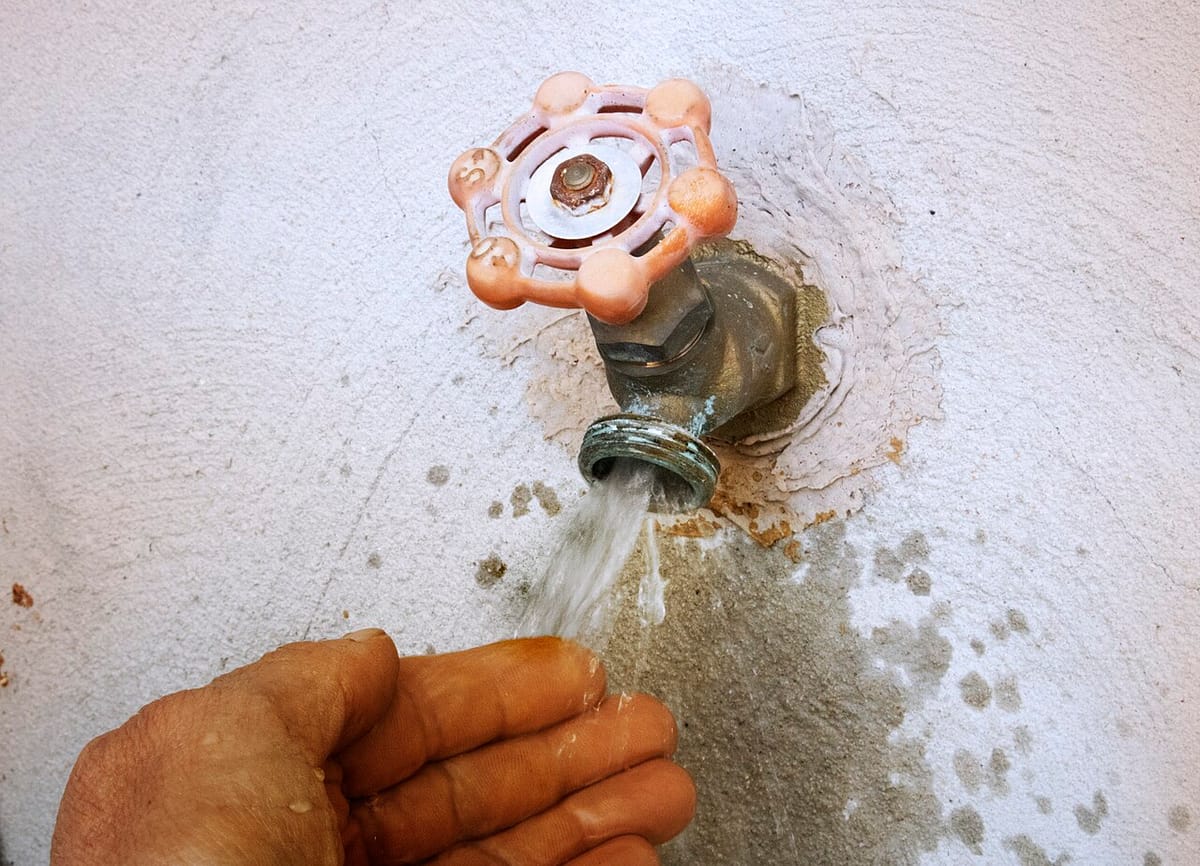
Cover photo by NIAID via Wikimedia Commons, CC BY 2.0, resized.
If this fix touches water, gas, or power, the guide starts with the shutoff step and says when a licensed pro should take over.
Product links in this guide are affiliate links. If you buy through one, we may earn a small commission at no extra cost to you. It never changes which products we recommend.
The first hard freeze shows up on the forecast and the outdoor faucet is still wearing the garden hose from August. That hose is the single biggest reason outdoor spigots burst, and the fix takes less time than reading about it. Winterizing an outdoor faucet is a four-step, fifteen-minute job, and the only part you might need to buy costs $3.
Quick Answer
Here’s how to winterize outdoor faucets: unscrew and drain every garden hose, then find the indoor shutoff valve for each spigot (usually on the pipe just inside the wall, in the basement or crawl space) and close it. Go back outside, open the faucet fully, and let it run dry. Back inside, open the small bleeder cap on the side of the shutoff with a cup under it to drain the last of the line, then close the cap. Leave the outdoor faucet cracked open and slip a $3 to $8 foam cover over it. A frost-free spigot needs only the hose off and a cover, since its valve sits inside the warm wall. A faucet with no indoor shutoff gets a cover and a hose-free winter, and a plumber can add a shutoff for $150 to $250 if you want real protection. Do all of this before the first night forecast in the 20s.
What You’ll Need
- A foam outdoor faucet cover, $3–$8 each
- A cup or bowl to catch water at the bleeder cap
- A flashlight for the basement or crawl space
- Pipe insulation sleeves, $5 for 6 feet, for any exposed pipe run to the spigot
- Optional: a frost-free sillcock, $25–$40, if you’re replacing a plain hose bib, which is a soldering or push-fit job
Step-by-Step
Take the hose off, every faucet, every fall
Unscrew each hose, including the splitter, timer, or quick-connect fitting on the spigot. Those fittings trap water the same way a hose does. Drain the hose by walking its length, coil it, and bring it into the garage. A frost-free spigot with its hose removed will drip from the spout for a few seconds as the stem drains, and that drip is the sound of the job half done.
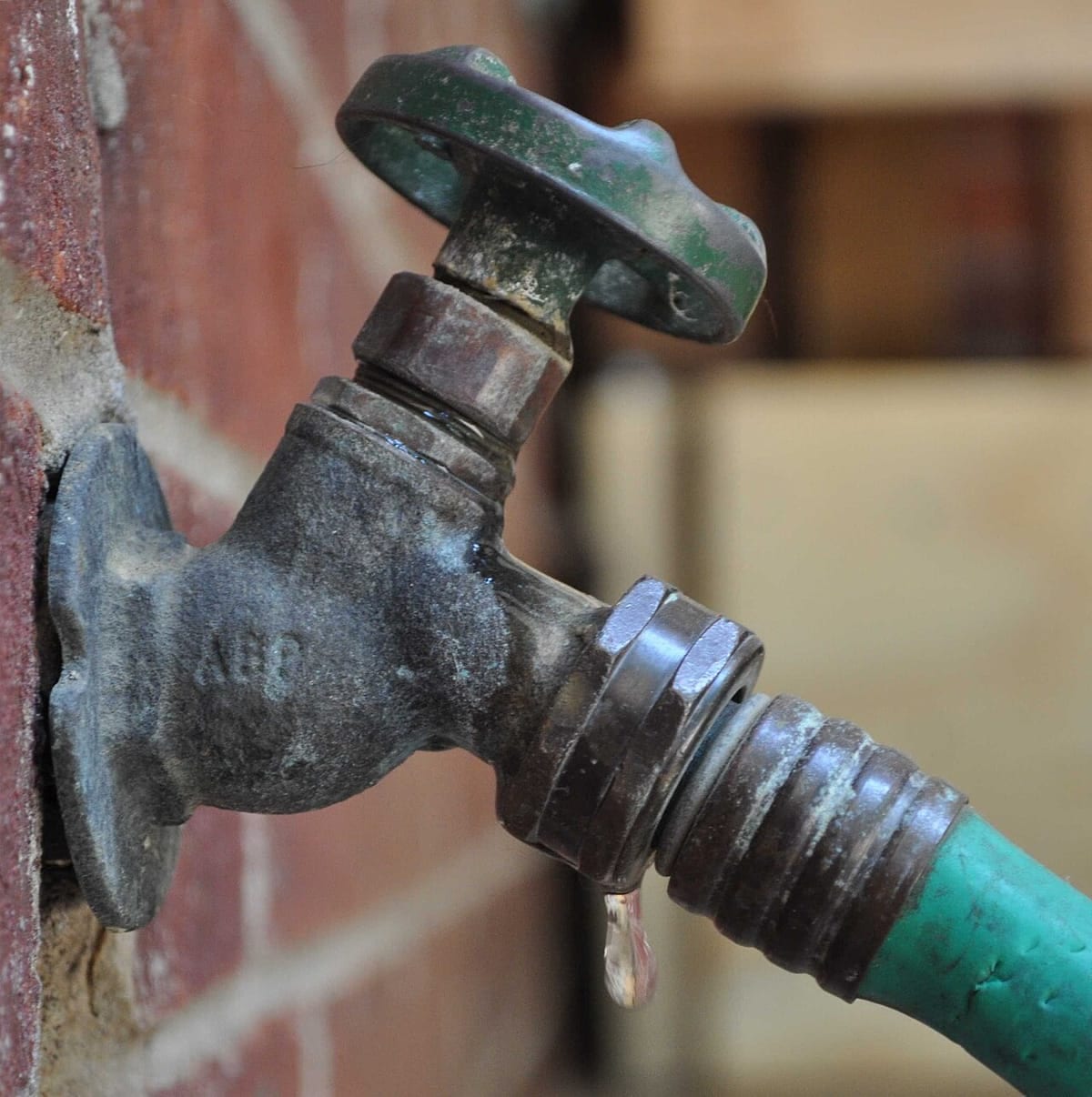 The mistake in one photo: a hose left on the spigot holds water in the faucet body all winter. Photo by I schyler via Wikimedia Commons, CC BY-SA 3.0, resized.
Find and close the indoor shutoff
Trace the spigot’s pipe back inside. Within a few feet of the wall you’ll often find a small valve, a round handle or a lever, and sometimes a second small cap on its side. Turn the handle clockwise until it stops, or swing the lever perpendicular to the pipe. No valve anywhere on the line is common in milder states and in newer homes with frost-free spigots. If that’s you, skip to the cover step.
Drain the faucet from outside and in
With the indoor valve closed, go outside and open the faucet all the way. Water will run, slow, and stop within a minute. Leave it open. Inside, hold a cup under the shutoff’s bleeder cap, loosen it a turn, and let the few ounces trapped between the valve and the faucet drain out. Snug the cap back on. The expected result is an empty pipe between the warm house and the cold wall, with nothing left to freeze.
Cover the spigot and insulate any exposed pipe
Hook the cover’s loop over the faucet handle, pull the dome snug against the wall, and cinch it. The cover traps house heat leaking through the wall around the faucet, which is enough to keep a drained spigot above freezing in most of the country. Any length of supply pipe that runs through an unheated garage, crawl space, or along a cold exterior wall gets a foam sleeve. Seal the gap where the pipe passes through the wall with caulk while you’re there. The drafty window and drafty door jobs use the same tube.
Reverse it in spring, in the right order
When nights stay above freezing, close the outdoor faucet first, then open the indoor shutoff, then crack the faucet and watch the wall behind it for a minute. Water showing up inside the wall means the pipe split during the winter, and the indoor valve goes right back to closed. That’s a plumber call, and it’s a much cheaper one in April than the flood would have been. A spigot that drips at the handle after the first spring use usually just needs its packing nut snugged.
Time and Cost
| Fix | Time | Cost |
|---|---|---|
| Hose off, drain, and cover one faucet | 15 min | $3–$8 |
| Foam sleeves on exposed pipe | 15 min | $5–$10 |
| Plumber adds an indoor shutoff | — | $150–$250 |
| Plumber replaces a burst spigot | — | $150–$300 |
Why This Works
Water expands by about 9 percent when it freezes, and it does so inside a rigid pipe with nowhere to go. The pressure climbs until the weakest point, usually a copper or brass section inside the wall, splits along its length. Draining the pipe removes the water, and leaving the faucet cracked gives any residue a place to push toward. A frost-free spigot solves the same problem by geometry: its long stem puts the actual valve a foot inside the heated wall, and the barrel slopes down to the spout so it empties itself every time you shut off. A hose defeats that by holding water in the barrel, which is why the hose, not the cold, is what bursts those faucets.
Mistakes to Avoid
- Leaving a splitter or timer on the spigot. They trap water exactly like a hose and freeze the same way. Everything comes off the threads.
- Covering a faucet that still has a hose attached. The cover insulates a barrel full of water. It freezes anyway, just slower.
- Closing the indoor shutoff but never draining the faucet. The water between the valve and the spigot is the water that bursts the pipe. Open the faucet outside, open the bleeder inside.
- Trusting the “frost-free” label on an unheated wall. A frost-free spigot on a garage or shed wall with no heat behind it has no warm side to protect the valve. Those get a shutoff and a drain like any other.
Fall is the same weekend for the other cold-weather job that saves a wall: cleaning the gutters before the leaves freeze into them.
FAQ
Do I need to cover outdoor faucets if I have frost-free spigots?
A frost-free spigot protects itself only if its hose is off and it can drain. The valve seat sits 6 to 12 inches inside the warm wall, and the stem drains out the spout after you shut off. With a hose attached, that water can't drain, freezes in the stem, and splits the pipe inside the wall. Pull the hose, let it drain, and a cover becomes cheap insurance rather than a requirement.
Should I leave the outdoor faucet open in winter?
If there's an indoor shutoff valve, yes. Close the indoor valve, open the outdoor faucet to drain the line, and leave it cracked open so any water that does freeze has room to expand. If there's no indoor shutoff, keep the faucet closed, hose off, and covered, since an open faucet with live pressure behind it just runs.
At what temperature do outdoor faucets freeze?
Water in an exposed spigot can freeze at 32°F, but the pipe is at real risk once outdoor temperatures hold below about 28°F for several hours, which is a hard freeze. Water expands about 9 percent as it turns to ice, and that expansion is what splits brass and copper. Winterize before the first forecast of a night in the 20s, not after.
What happens if I leave a hose connected in winter?
The hose traps water in the faucet stem, the water freezes and expands, and the pipe splits where it passes through the wall, usually without any sign until spring. The first time you turn the faucet on in April, water pours into the wall or basement behind it. A split frost-free spigot costs $150 to $300 to have replaced. The hose costs nothing to unscrew.
Related fixes
Outdoors & Seasonal
How to Clean Gutters Without Falling Off the Ladder
Clogged gutters dump water at your foundation. Here is the safe ladder setup, the scoop-and-flush method, and the downspout test most people skip.
Time2–4 hrs Cost$0–$60 moderate
Outdoors & Seasonal
Outdoor Faucet Leaking? Where It Drips Tells You Why
A spigot that drips from the spout needs a washer. One that weeps around the handle needs the packing nut. Two different fixes, both under $10.
Time20–45 min Cost$3–$25 easy


Outdoors & Seasonal
Seal Drafty Windows Before the First Cold Snap
Find the leak with a smoking incense stick, then match the fix to the gap. And never caulk the weep holes at the bottom of a vinyl window frame.
Time30 min–2 hrs Cost$10–$45 easy