How to Unclog a Kitchen Sink Drain Without Calling a Plumber
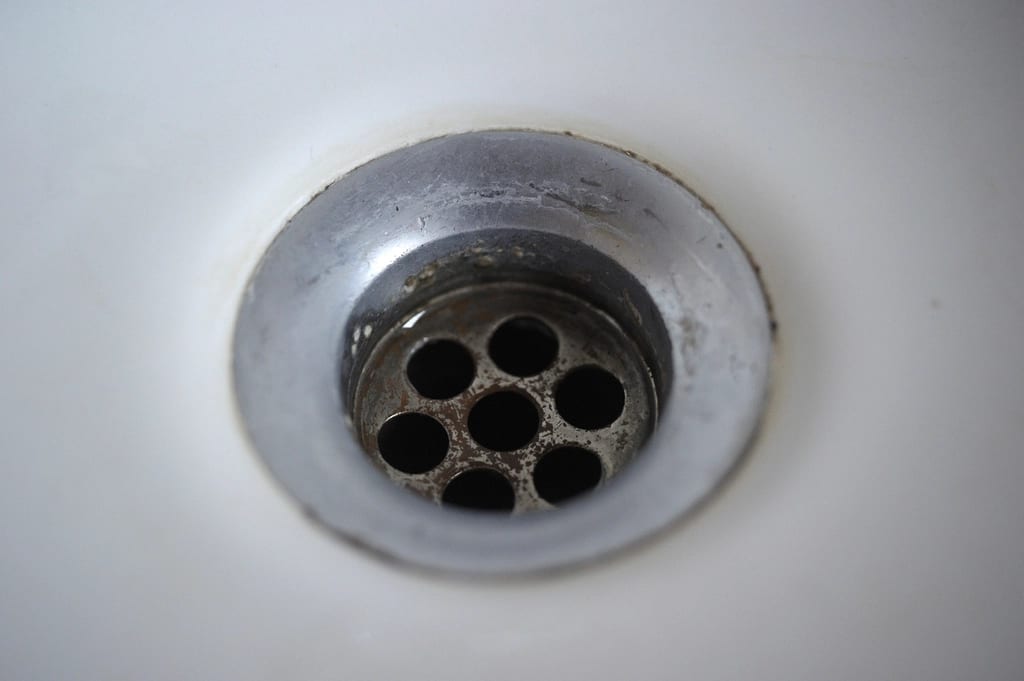
Cover photo by Fructibus via Wikimedia Commons, CC0, resized.
If this fix touches water, gas, or power, the guide starts with the shutoff step and says when a licensed pro should take over.
Product links in this guide are affiliate links. If you buy through one, we may earn a small commission at no extra cost to you. It never changes which products we recommend.
Dinner dishes are stacked, the sink is holding four inches of gray water, and the garbage disposal just hums at it. A clogged kitchen sink is the most common drain problem in a house and the one people reach for chemicals on first. Don’t. Grease is the culprit nine times out of ten, and grease responds to pressure and a wrench, not a bottle.
Quick Answer
Here’s how to unclog a kitchen sink in the order that works: bail the standing water down to an inch, seal the second bowl and clamp the dishwasher hose, then work a cup plunger hard for 20 strokes. If the water doesn’t drop, put a bucket under the cabinet, unscrew the P-trap by hand, and scoop out the grease plug that’s almost certainly sitting in the bend. Still slow after the trap is clean? Feed a 25-foot drain snake into the pipe at the wall. Total cost $0 to $40 and 20 to 60 minutes. Skip chemical drain openers entirely: they rarely clear a grease clog and they turn the trap into a burn hazard when you open it. If the snake comes back clean and every drain in the house is slow, the clog is in the main line and that’s the plumber’s job.
What You’ll Need
- A cup plunger, $8–$15 (the flat-bottom kind, not the toilet flange plunger)
- A bucket and an old towel
- Channel-lock pliers for stubborn slip nuts
- A 25-foot drum auger, $25–$40, if the clog is past the trap
- Rubber gloves. Trap water is foul.
- A basket strainer, $8–$12, if yours is missing, so this doesn’t happen again next month
Step-by-Step
Bail the water and run the disposal
Scoop out standing water until about an inch covers the drain. A plunger needs water to push, not air, but four inches of it just splashes. If you have a disposal, run it for ten seconds with cold water. A disposal that hums and doesn’t spin is jammed, which is a different fix, covered in garbage disposal not working. If it spins and the water still sits, the blockage is downstream and plunging comes next.
Seal the second bowl and the dishwasher line
On a double sink, stuff a wet rag into the other drain and hold it down, or have someone press a second plunger flat over it. Plunging one bowl of an open double sink just pushes water up the other side. Then look under the sink for the dishwasher drain hose, the ribbed line that connects to the disposal or the tailpiece. Pinch it shut with a small clamp or a pair of locking pliers over a rag. Skip this and your first hard stroke sends dirty water into the dishwasher.
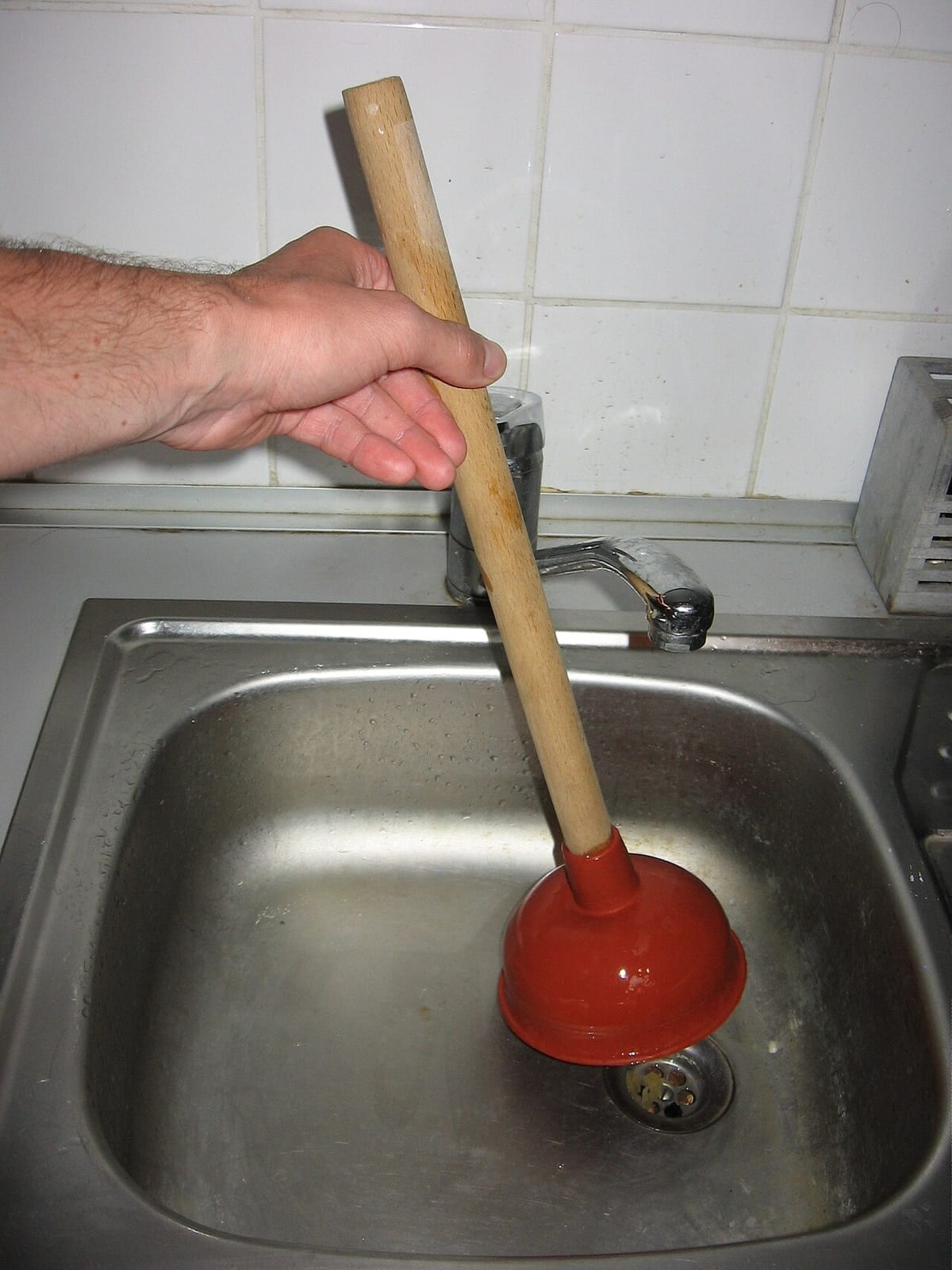 A cup plunger seated over the drain. The cup has to be full of water, not air, before the first stroke. Photo by M.Minderhoud via Wikimedia Commons, CC BY-SA 3.0, resized.
Plunge with the water, not against it
Set the cup over the drain, tilt it to burp the air out so it’s full of water, then push and pull in short fast strokes. Twenty strokes, then yank the plunger off. You’ll hear a gulp, and the water should drop fast if the grease plug broke loose. No change after three rounds means the plug is packed too hard to move, and that’s fine. The trap is next, and it’s a 15-minute job.
Pull the P-trap and clear it by hand
Put the bucket under the trap. Loosen the two slip nuts by hand (channel-locks if they fight you), counterclockwise, and lower the U-shaped section into the bucket. Gloves on. Scoop out what’s inside. The usual find is a gray plug of cooled grease with coffee grounds and rice bound into it. Rinse the trap in another sink, check the washers for cracks, and put it back finger-tight plus a quarter turn with the pliers. Run water for a minute and watch the joints. Dry means done. (The bathroom version of this job has a pop-up stopper in the way, which is why the bathroom sink guide starts differently.)
Snake past the trap if it’s still slow
With the trap off, you’re looking at the trap arm going into the wall. Feed the auger cable in, tighten the thumbscrew, and crank while pushing. When it stops, you’ve hit either the bend into the wall stack or the clog. Crank through resistance, pull back a foot, push again. When the cable goes in freely for several more feet, pull it out, wipe the gunk off, and reassemble the trap. Run hot water for two full minutes. A sink that was holding water should now drain with a visible whirlpool.
Time and Cost
| Fix | Time | Cost |
|---|---|---|
| Plunge | 10 min | $0–$15 |
| Clean the P-trap | 20 min | $0 |
| Snake the drain line | 30–45 min | $25–$40 |
| Plumber clears a kitchen drain | — | $150–$350 |
Why This Works
Kitchen drains clog at the P-trap because that’s where warm, grease-laden water slows down, cools, and gives up what it’s carrying. Fat that was liquid at dishwater temperature solidifies against the pipe wall at the trap’s low point and the trap arm’s elbow, then catches everything else: rice swells, coffee grounds pack, and the slick biofilm that grows on it holds the whole mass together. A plunger works by moving the standing column of water as a piston against that plug. Hand-clearing the trap removes the one spot where most of the mass lives. The snake handles the only other stop before the main stack, the elbow where the trap arm enters the wall.
Mistakes to Avoid
- Pouring a chemical drain opener in first. Lye and sulfuric openers rarely dissolve a hard grease plug, and now the trap is full of caustic water that splashes when you open it. If you already poured some, flush with lots of cold water and wear eye protection at the trap.
- Plunging a double sink with the other drain open. The pressure takes the easy way out through the second bowl. Seal it, or you’re just moving water in a circle.
- Running the snake through the garbage disposal. The cable chews up the disposal’s splash guard and can jam in the grind chamber. Always enter from the trap arm with the trap removed.
- Cranking the slip nuts down with pliers. The plastic threads strip and the washer deforms, and the “fixed” sink now drips in the cabinet. Hand-tight plus a quarter turn is the whole spec.
If you noticed a sewer smell or tiny fuzzy flies around the drain while you had it open, the same grease film is feeding them. Drain flies leave once the trap stays clean. And a sink that’s slow again every few weeks is often a dishwasher problem: see why a dishwasher stops draining.
FAQ
Can I use Drano in a kitchen sink with a garbage disposal?
Most disposal makers say no, and the warning isn't about the blades. Caustic drain openers sit in the grind chamber and attack the rubber seals and the splash guard, and a disposal that then jams becomes a splash hazard when you reach in with a wrench. Plunge first, then open the P-trap. Both work better on grease than chemicals do.
Why does my kitchen sink keep clogging every few weeks?
Grease is going down the drain in small amounts and rebuilding the same plug in the trap. Scrape pans into the trash, run cold water for 20 seconds after the disposal, and pour a kettle of hot water down the drain once a week to keep the fat moving. If both bowls back up when the dishwasher drains, the clog is forming past the trap and needs a snake once more, then the same habits.
Does baking soda and vinegar unclog a kitchen sink?
Not a real clog. The fizz is carbon dioxide and it has no force behind it, so a packed grease plug doesn't move. It's a fine monthly freshener for a slightly slow drain and a sour smell. For standing water, the order that works is plunger, P-trap, snake.
Why does water come up in my kitchen sink when the dishwasher runs?
The dishwasher pumps its water into the sink drain through the disposal or the tailpiece, and a partial clog past that point sends it back up into the basin. Clear the sink drain first, and check that the knockout plug was removed from a new disposal's dishwasher inlet. If the sink drains fine on its own, the dishwasher's own drain hose or filter is the clog.
Related fixes
Kitchen
Garbage Disposal Smells? Clean It in 10 Minutes (3 Steps)
A stinky disposal is rotting film on the splash guard and chamber walls, not a broken unit. Scrub, flush, and deodorize it with $2 of pantry staples.
Time10–15 min Cost$0–$5 easy
Kitchen
Dishwasher Not Draining? Work This List in Order
Standing water in a dishwasher is usually the filter, the air gap, or a disposal plug nobody knocked out. Here is the order that finds it fastest.
Time30–60 min Cost$0–$25 moderate


Bathroom
Unclog a Slow Bathroom Sink in 15 Minutes, No Chemicals
A slow bathroom sink is almost always hair caught at the pop-up stopper. Pull it, clear it with a $4 zip tool, and clean the P-trap if needed.
Time15–30 min Cost$3–$5 easy