What Is a Hinge Pin?
The metal rod a door actually swings on. The squeak lives right there, so that's where the grease goes.
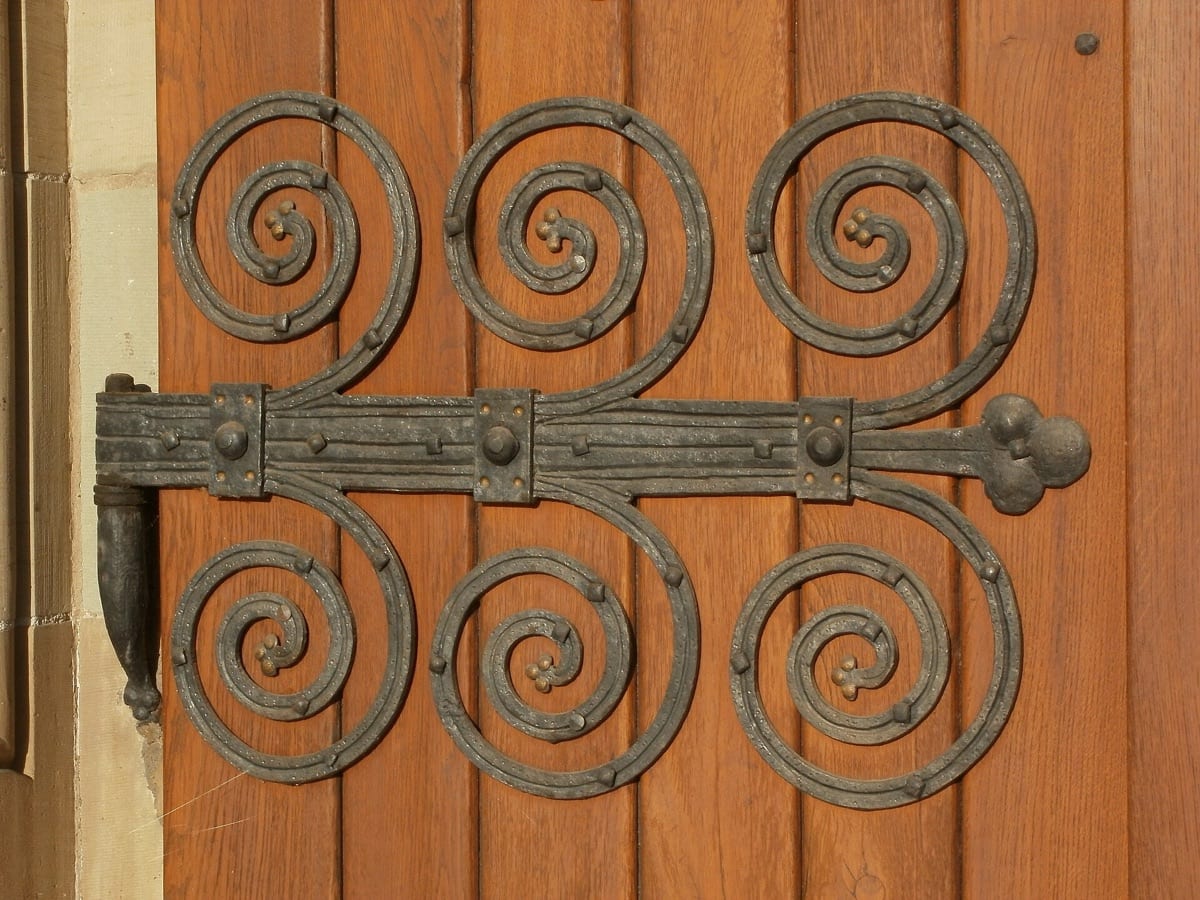
The metal rod that drops down through the interlocking knuckles of a door hinge and acts as the axle the door swings on. Tap it up from below to remove it. Squeaks live between the pin and the knuckle bore, so lubricant has to reach the pin itself.
Getting one out: close and latch the door first (it hangs steady with a pin missing), set a nail or nail set against the pin's bottom tip under the lowest knuckle, and tap upward with a hammer until the head rises enough to pull. Painted-over pins that won't budge take a flathead screwdriver wedged under the head. This is the one legitimate job for penetrating oil like WD-40, which frees stuck metal but is too thin to keep a hinge quiet.
What the pin tells you when it's out: black paste on the rag is metal dust from years of dry grinding. That is normal, and exactly what grease prevents. Deep grooves worn into the pin mean the hinge is past lubrication; new residential hinges cost about $5 each and install with the same screws. Coat a healthy pin with white lithium grease or silicone, work the door a dozen times, and the squeak is gone for years.
Fixes that use this

Walls, Doors & Floors
How to Fix a Sticking Door (Tighten the Hinges First)
Most sticking doors are sagging, not swollen. One long screw in the top hinge pulls the door back square, and it costs about fifty cents to try.
Time20–60 min Cost$0–$15 easy
Walls, Doors & Floors
How to Fix a Door That Won't Latch or Stay Closed
A door that won't latch has a strike plate out of line with the bolt, usually by under 1/4 inch. Mark it with lipstick, then file, shim, or move the plate.
Time15–45 min Cost$0–$12 easy

Walls, Doors & Floors
Fix a Squeaky Door Hinge for Good (WD-40 Isn't Enough)
WD-40 quiets a hinge for a week. Pulling the pin and coating it with silicone or lithium grease fixes it for years. Here is the 5-minute method.
Time5 min per door Cost$6–$8 easy
Related terms
Stick-slip Weatherstripping Door sweep White lithium grease Strike plate