How to Replace a Toilet Fill Valve in 30 Minutes
If this fix touches water, gas, or power, the guide starts with the shutoff step and says when a licensed pro should take over.
Product links in this guide are affiliate links. If you buy through one, we may earn a small commission at no extra cost to you. It never changes which products we recommend.
A fill valve is the part that makes the quiet refill sound after every flush. When it starts hissing, filling slowly, or overshooting the water line, adjustment may buy a few days. Replacement is usually faster than trying to nurse a worn valve back to life.
Quick Answer
To replace a toilet fill valve, shut off the water, flush the tank empty, disconnect the supply line, remove the old valve’s plastic locknut, and install a universal fill valve set to the right height. The tank water should stop about one inch below the overflow tube. This takes about 30 minutes and costs $12–$20. Stop if the shutoff valve will not close or starts leaking.
What You’ll Need
- Universal toilet fill valve, $12–$20
- Sponge or small cup
- Towel
- Bucket
- Adjustable wrench or channel lock pliers, used gently
Step-by-Step
Shut off and empty the tank
Turn the shutoff valve clockwise until it stops. Flush and hold the handle down to drain most of the tank, then sponge the last inch of water into a bucket. If the shutoff will not close fully, stop here and use the home main shutoff or call a plumber.
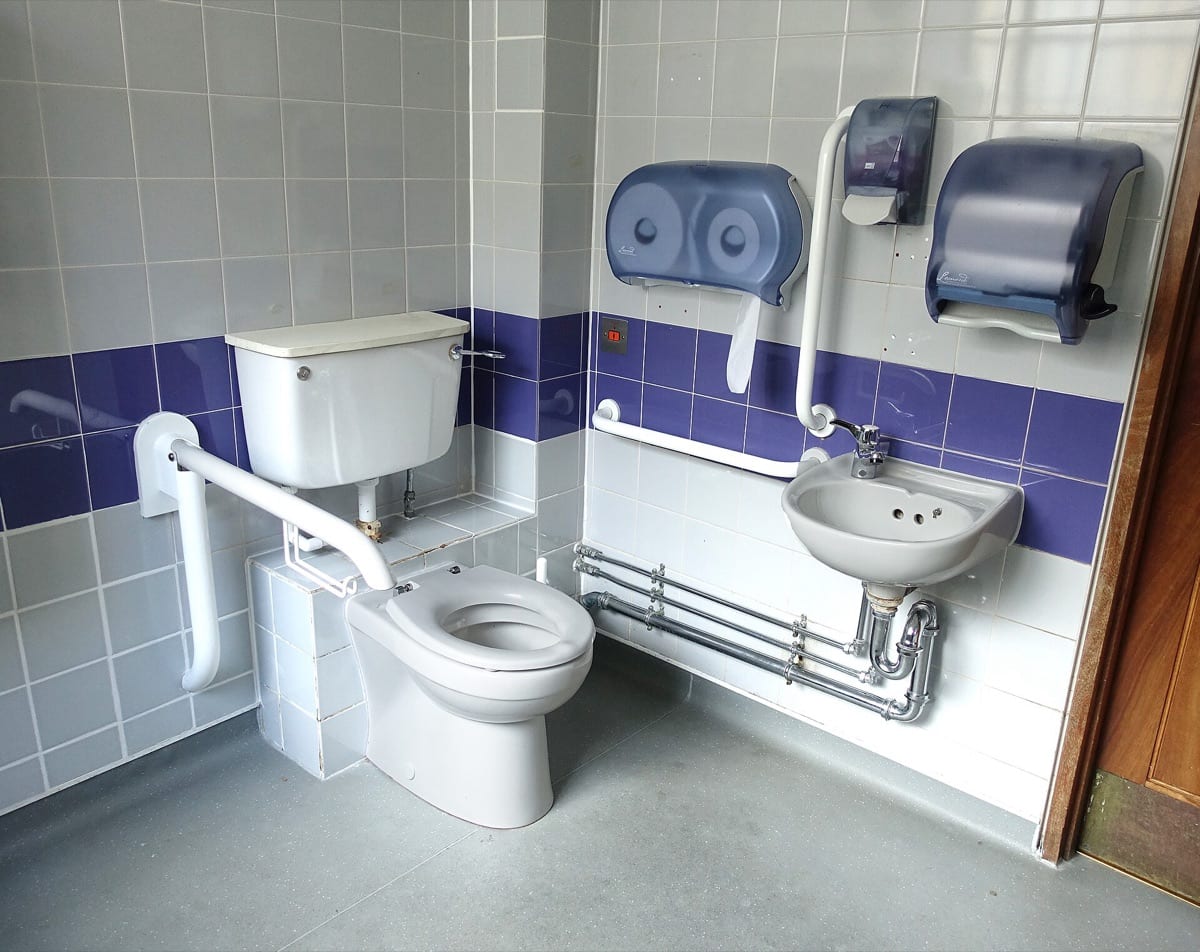 The fill valve sits on the left inside this tank, with the supply line entering underneath. Photo by Tiia Monto via Wikimedia Commons, CC BY-SA 3.0, resized.
Disconnect the supply line
Put a towel under the tank. Unscrew the supply line from the bottom of the old fill valve. A small amount of water will drip out. If the line is stiff, cracked, or kinked, replace it with a braided stainless toilet supply line while everything is apart.
Remove the old fill valve
Under the tank, loosen the plastic locknut that holds the fill valve in place. Lift the old valve out from inside the tank. Wipe the inside surface around the hole so the new rubber washer sits flat.
Set the new valve height
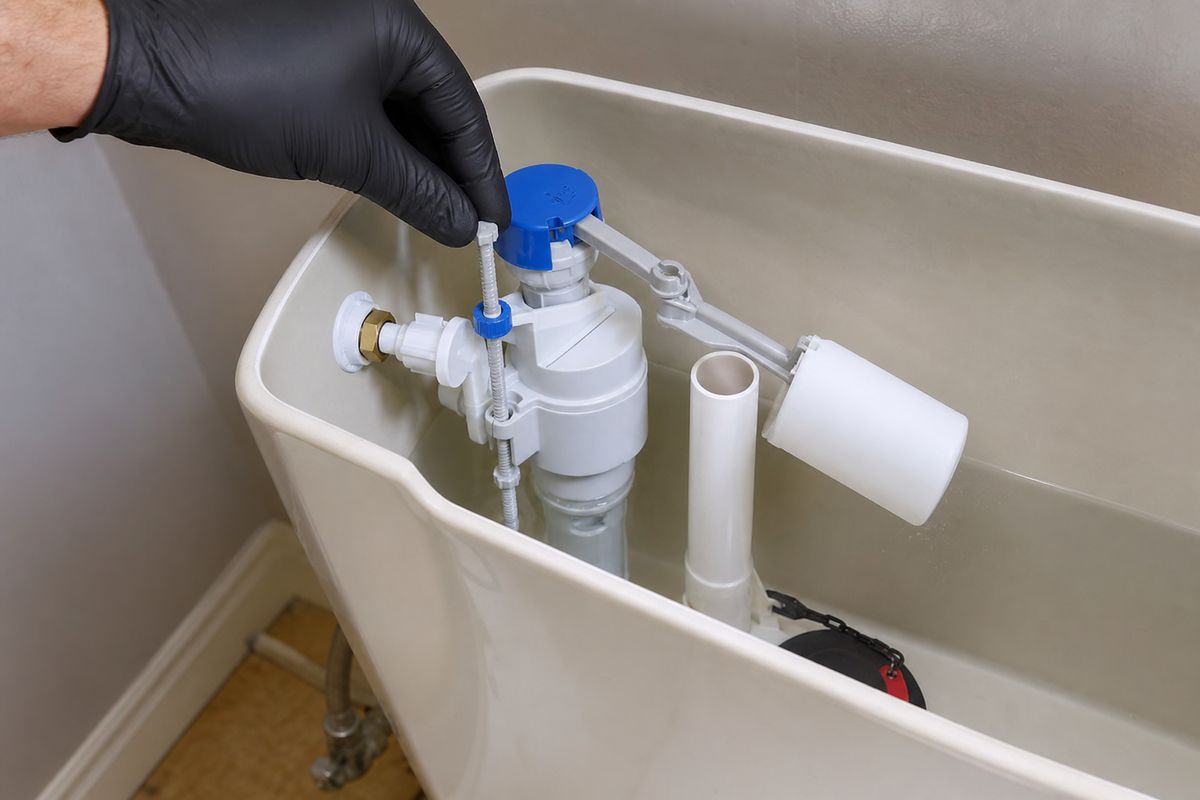
Adjust the new valve so its critical level mark sits about one inch above the top of the overflow tube. Most universal valves twist or slide taller before installation. Set this before tightening the locknut, because it is harder once the tank is full.
Tighten by hand and reconnect
Drop the valve through the tank hole with the rubber washer inside the tank. Tighten the locknut from below hand tight, then add a small extra turn if needed. Reconnect the supply line. Do not crank on porcelain.
Refill and test
Open the shutoff valve and let the tank fill. Set the float so the final water level is about one inch below the overflow tube. Flush twice. The valve should refill cleanly, shut off without hissing, and stay quiet.
Time and Cost
| Fix | Time | Cost |
|---|---|---|
| Fill valve replacement | 30 min | $12–$20 |
| Fill valve plus supply line | 35–45 min | $20–$35 |
| Plumber doing the same job | Service call | $150–$300 |
Why This Works
The fill valve has a small internal seal that opens after a flush and closes when the float reaches the set height. Once that seal wears, the valve may hiss, refill slowly, or let the tank level creep upward. If water spills into the overflow tube, the toilet acts like it is running even though the flapper may be fine. That is why a dye test helps separate a drain side leak from a fill side problem.
Mistakes to Avoid
- Working with a bad shutoff valve. A shutoff that will not close turns a 30 minute job into a leak risk.
- Setting the valve too low. The refill tube needs to send water into the overflow tube, not sit below it or spray outside it.
- Overtightening the locknut. Porcelain cracks before plastic threads need force. Hand tight is the rule.
- Skipping the final water level check. The tank should stop about one inch below the overflow tube every time.
If the tank still loses water after the new valve shuts off, go back to how to fix a running toilet and run the flapper dye test.
FAQ
How do I know if my toilet fill valve is bad?
A bad fill valve may hiss after the tank is full, refill very slowly, or fail to hold the same water level after each flush. If adjusting the float does not keep the water about one inch below the overflow tube, replacement is the clean fix.
Can I replace a toilet fill valve myself?
Yes. Turn off the shutoff valve, empty the tank, disconnect the supply line, remove the plastic locknut, and install the new valve hand tight. The job usually takes about 30 minutes.
Do I need to replace the flapper at the same time?
Only if it fails a dye test or looks warped. The fill valve controls water entering the tank, while the flapper seals water inside it. They fail for different reasons.
Related fixes
Bathroom
How to Fix a Running Toilet in 15 Minutes (No Plumber)
A running toilet is usually a worn flapper or misadjusted float. Diagnose it with a dye test and fix it yourself in 15 minutes for under $12.
Time15–30 min Cost$5–$18 easy
Bathroom
Toilet Flapper Replacement: Get the Right Size the First Time
Most toilets take a 2-inch flapper, while newer high-efficiency models need 3-inch. Tell which yours needs and install it in 10 minutes flat.
Time10 min Cost$5–$15 easy

Bathroom
Why Your Toilet Refills Randomly, and How to Stop It
A toilet that refills on its own is leaking tank water into the bowl. Run a dye test, fix the flapper or water level, and stop the phantom flush.
Time10–20 min Cost$0–$15 easy