Ceiling Fan Direction in Summer: Set It in 2 Minutes
If this fix touches water, gas, or power, the guide starts with the shutoff step and says when a licensed pro should take over.
Product links in this guide are affiliate links. If you buy through one, we may earn a small commission at no extra cost to you. It never changes which products we recommend.
Ceiling fans help most in summer when the blades push air down, not when they quietly stir air near the ceiling. If the room feels stuffy even with the fan running, check direction before you blame the AC.
Quick Answer
The right ceiling fan direction in summer is counterclockwise when you look up from below. Set the fan on medium or high, stand under it, and confirm you feel a steady downdraft. This takes 2–5 minutes, costs $0, and can make the room feel about 4 degrees cooler on your skin. If the room is still hot after the fan is set correctly, use the full fan cooling setup or check whether the AC is struggling.
What You’ll Need
- Step stool or sturdy ladder, only if the switch is on the fan body
- Remote or wall control, if your fan uses one
- Flashlight, optional
Step-by-Step
Turn the fan off first
Switch the fan off and wait until the blades stop completely. Do not reach near moving blades. If you need a ladder, place it on a flat floor and keep one hand free.
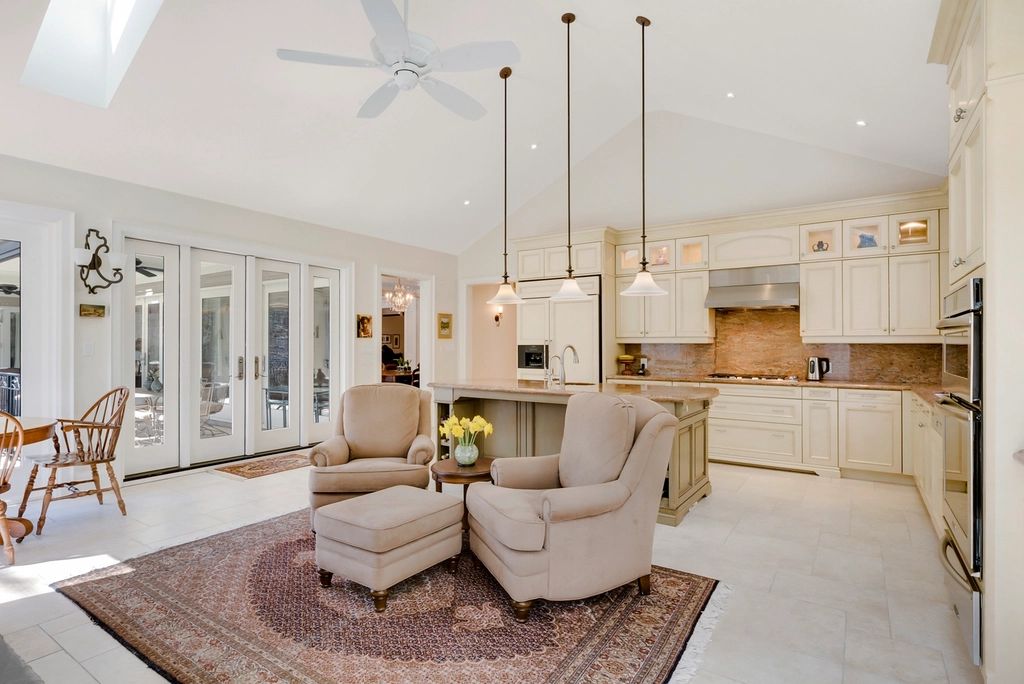
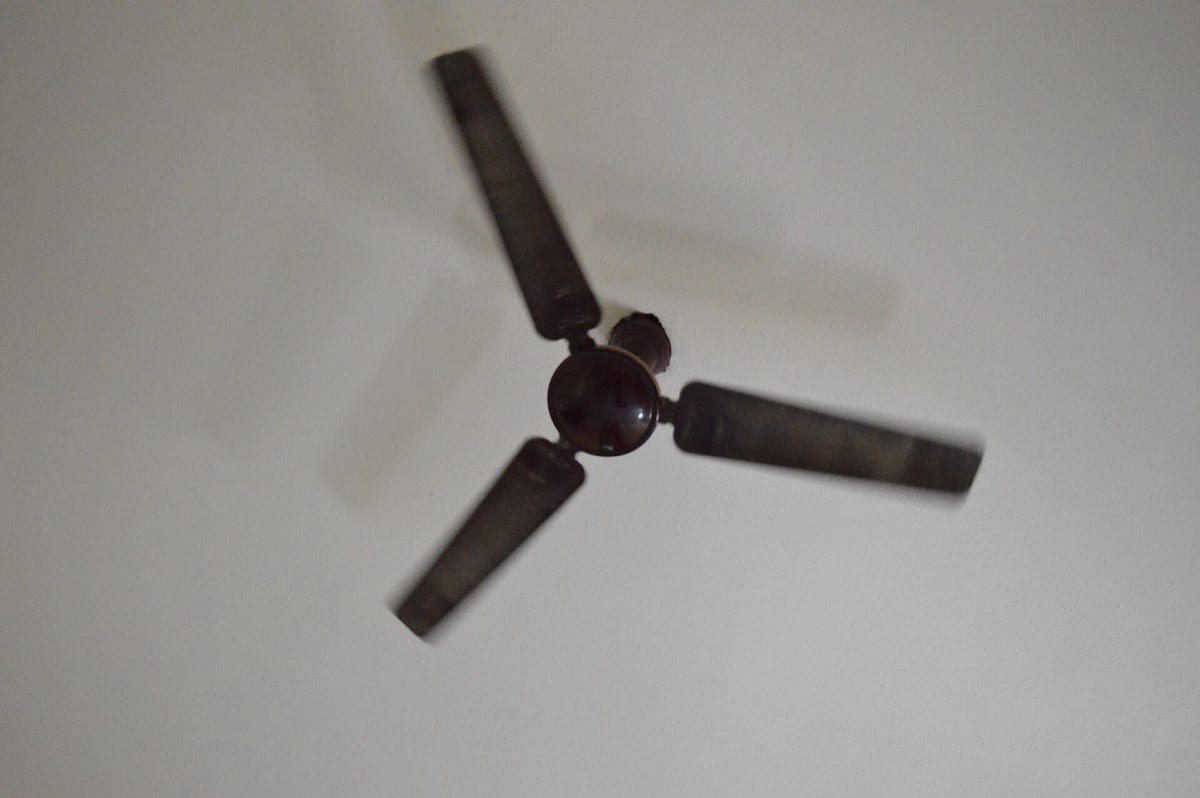 Stand underneath. If you feel the air pushing down on you, it is set for summer. Photo by Veera.sj via Wikimedia Commons, CC0, resized.
Find the direction control
Look for a small sliding switch on the side of the fan motor housing. Some fans use a remote, wall control, or app instead. If you do not see a switch, check the remote for a reverse button or fan-direction icon.
Set it counterclockwise
Set the fan so the blades move counterclockwise when viewed from below. If the switch is unlabeled, flip it, turn the fan back on, and use the feel test in the next step.
Stand under the fan
Run the fan on medium or high. You should feel air pushing down on your face and arms. If the air feels weak or seems to pull upward, turn the fan off and reverse it again.
Use it only when people are there
Leave the fan on while someone is in the room. Turn it off when the room is empty. A ceiling fan does not cool walls, furniture, or air. It cools skin.
Time and Cost
| Fix | Time | Cost |
|---|---|---|
| Change fan direction | 2–5 min | $0 |
| Replace a missing remote | 10–20 min | $15–$35 |
| Electrician for a faulty fan control | 30–60 min | $100–$200 |
Why This Works
A summer fan setting pushes air down so sweat evaporates faster and your body sheds heat. That is why the room feels cooler even when a thermometer reads the same number. The fan also helps mix air near your body, which pairs well with cooling one room with fans while the AC catches up.
Mistakes to Avoid
- Changing direction while the blades move. Wait until the fan stops, then flip the switch.
- Running the fan in an empty room. It wastes electricity because the fan cools people, not air.
- Using low speed in a hot room. Low speed may be too gentle to create a useful breeze in summer.
- Blaming the fan for a hot upstairs room. If the whole upper floor is hot, check airflow, windows, and attic heat in why upstairs is so hot.
If the fan is right but the AC still runs nonstop, start with AC running but not cooling before you spend money on parts.
FAQ
Should a ceiling fan go clockwise or counterclockwise in summer?
In summer, a ceiling fan should usually spin counterclockwise when viewed from below. That pushes air down and creates a breeze across your skin, which makes the room feel cooler even though the temperature does not drop.
How do I know if my ceiling fan is going the right way?
Stand under the fan on medium or high speed. If you feel air pushing down on you, the fan is set for summer. If you barely feel a breeze, turn the fan off, wait for the blades to stop, and flip the direction switch or use the remote.
Does a ceiling fan cool a room if no one is in it?
No. A ceiling fan cools people by moving air across skin. It does not lower the room temperature, so turn it off when the room is empty.
Related fixes
Heating & Cooling
AC Running but Not Cooling? Check These First
If your AC runs but blows warm air on a hot day, check the thermostat, filter, breaker, ice, and outdoor condenser before calling HVAC service.
Time30–60 min Cost$0–$25 moderate
Heating & Cooling
Why Is Upstairs So Hot? Fix the Heat Traps First
An upstairs room gets hot from roof heat, sun, weak airflow, and attic leaks. Block heat, move air, and know when HVAC balancing is worth it.
Time20–60 min Cost$0–$60 easy

Heating & Cooling
How to Cool a Room With Fans When the AC Can't Keep Up
Use fans to push hot air out, pull cooler night air in, and make one room feel 4–6 degrees cooler while your AC catches up in a summer heat wave.
Time10–20 min Cost$0–$60 easy