Toilet Leaking at the Base? Replace the Wax Ring
If this fix touches water, gas, or power, the guide starts with the shutoff step and says when a licensed pro should take over.
Product links in this guide are affiliate links. If you buy through one, we may earn a small commission at no extra cost to you. It never changes which products we recommend.
A damp ring on the bathroom floor, a toilet that rocks a little when you sit, a faint sewer smell near the base. Those are the signs of a failing wax ring, the seal that sits between the toilet and the drain. It costs about $6 and the repair is mostly lifting a heavy fixture, so the hardest part of this job is finding a helper.
Quick Answer
A toilet leaking at the base is usually a failed wax ring or loose closet bolts. Dry the floor, then tighten the bolts a quarter turn at a time. If the floor is still wet the next day, shut off the supply, flush the tank empty, disconnect the supply line, and lift the toilet straight up off the bolts. Scrape off the old wax, check the flange for cracks, fit a new ring, and set the toilet straight down without twisting. It’s 45 to 90 minutes and $8 to $30. A rotted or soft subfloor, a cracked flange sitting below floor level, or a cracked bowl is where a plumber takes over.
What You’ll Need
- A toilet wax ring, $6–$12, ideally with new closet bolts
- A putty knife and rags for the old wax
- A bucket and a sponge to empty the bowl and tank
- An adjustable wrench and a hacksaw if the old bolts are too long
- A flange repair ring, $8–$15, only if the flange is cracked
- Disposable gloves, and a helper for the lift
Step-by-Step
Find the real source of the water
Dry the base, the tank, and the supply line with a towel. Lay strips of dry paper towel around the base and along the supply line and tank bolts. Flush once and wait 15 minutes. Wet towels at the base only mean the wax ring. Wet towels at the supply connection point to a loose nut. Beads on the outside of the tank are condensation, not a leak. Rock the toilet gently: any movement means the bolts are loose and the seal is probably broken.
Try tightening the closet bolts
Pop off the caps at the base, and snug each nut a quarter turn, then switch sides. Stop the moment the toilet stops rocking. This fixes a surprising number of leaks because a loose toilet breaks the seal every time someone sits. If it’s dry after a day, you’re done. If you needed more than half a turn to feel resistance, or the bolts spin freely, replace the wax ring.
Empty the toilet and disconnect the water
Close the shutoff valve under the tank by turning it clockwise, flush, and hold the handle down to drain the tank. Sponge out the remaining water in the tank and bowl. A wet-dry vacuum does this fast. Disconnect the supply line from the tank with the wrench, holding the valve steady so you don’t twist it. Put a rag under the line to catch drips.
Lift the toilet and clean the flange
Remove the nuts from the closet bolts, rock the toilet gently to break the seal, and lift it straight up. It weighs 40 to 70 pounds, so use your legs, or get help. Set it on a towel or cardboard, upside down on its side. Scrape the old wax from the flange and the horn on the toilet. Check the flange, the metal or plastic ring bolted to the floor. It should sit flat and level on or just above the finished floor. A cracked flange needs a repair ring, a $10 fix.
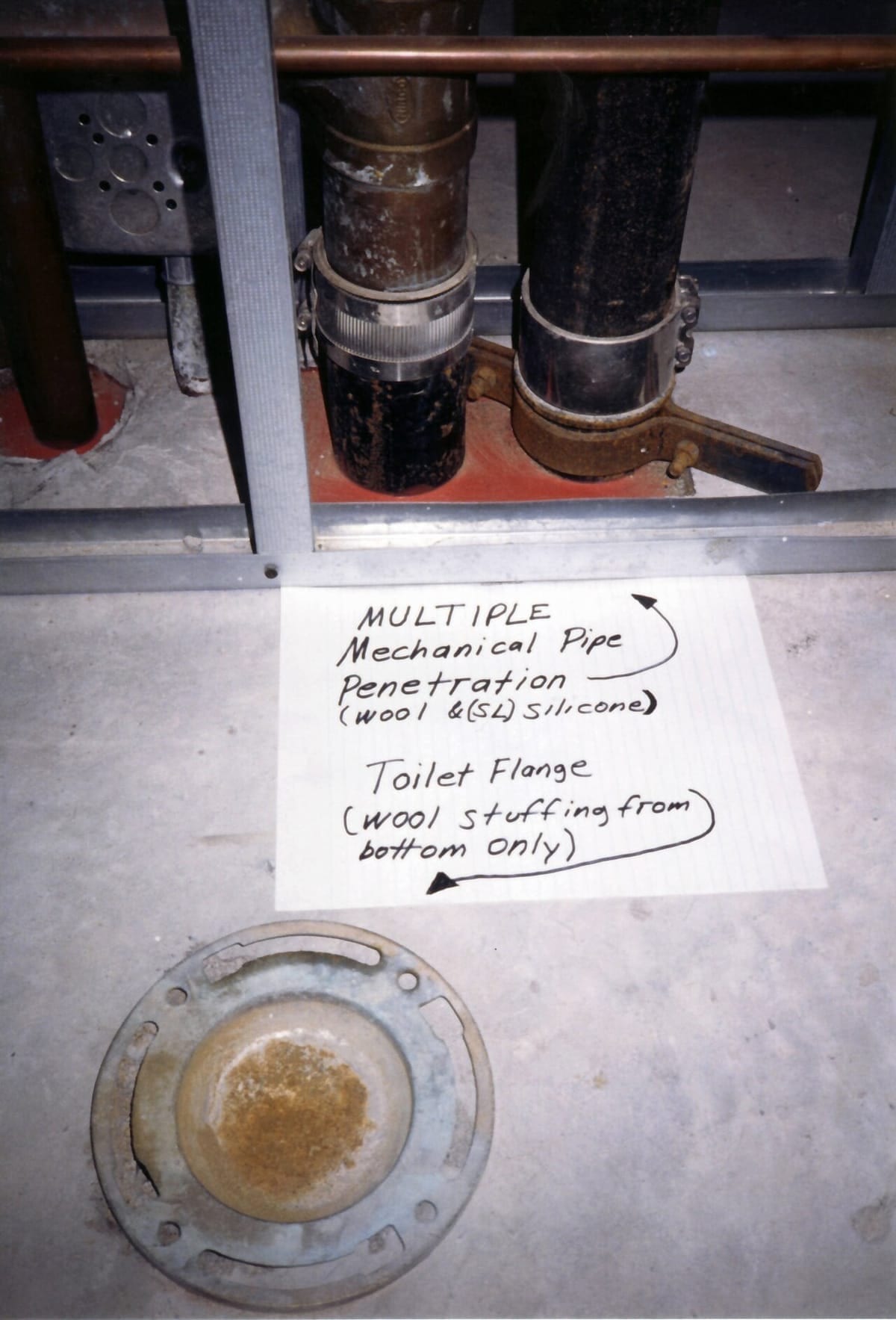 A bare closet flange. It should sit flat and level on the finished floor, with no cracks around the bolt slots. Photo by Achim Hering via Wikimedia Commons, public domain, resized.
Set the new ring and lower the toilet straight down
Fit new bolts in the flange slots if the old ones are bent or corroded. Place the new wax ring on the toilet horn (the outlet) or on the flange, per the package. Lower the toilet straight down over the bolts and press down with your weight, without twisting or sliding. A twisted ring leaks. Add the washers and nuts, tightening alternately a quarter turn at a time until the base is firm and level. Trim long bolt ends with a hacksaw and snap on the caps.
Reconnect and test for 24 hours
Re-attach the supply line, open the valve, and let the tank fill. Flush five times and check the base for any dampness. Lay dry paper towels around the base again, and check them the next morning. If they are dry, you’re done. If water appears, lift the toilet and look for a pinched ring or a flange that sits too low. A toilet that runs after the tank fills is a separate fix.
Time and Cost
| Fix | Time | Cost |
|---|---|---|
| Tighten the closet bolts | 5 min | $0 |
| Replace the wax ring | 45–90 min | $8–$30 |
| Add a flange repair ring | 15 min | $8–$15 |
| Plumber replaces a wax ring | — | $150–$350 |
Why This Works
A toilet doesn’t sit on the drain, it plugs into it. The wax ring is a soft gasket that compresses between the bottom of the bowl and the flange, forming a watertight and gas-tight seal around the outlet. Every flush pushes water and air through that seal, and any movement of the toilet, from a loose bolt or a spongy floor, tears the wax a little more. Once the seal is open, water from each flush leaks out around the base, and sewer gas leaks in. Fitting a new ring restores the seal, and level, firm bolts keep it from breaking again.
Mistakes to Avoid
- Tightening the bolts as hard as possible. Porcelain is brittle, and a cracked toilet base can’t be repaired. Stop when the rocking stops.
- Reusing the old wax ring. Wax that has been compressed once doesn’t reseal. A new ring is $6, and the labor of doing the job twice is not.
- Twisting the toilet as you set it. The ring folds and leaves a channel. Lower it straight down and press.
- Ignoring a soft floor around the base. If the subfloor flexes or smells of rot, the leak has been going on for months. Pull the toilet, inspect the wood, and call a pro if it’s damaged.
While the toilet is off, it’s a good moment to check the fill valve, the part most likely to fail next. And if a clog started this, unclogging a toilet comes first.
FAQ
Why is water leaking around the bottom of my toilet?
A leak at the base usually comes from the seal between the toilet and the floor, the wax ring, which has failed or was never seated right. Other sources look the same: a leaking supply line, a sweating tank, or a cracked bowl. Dry everything, then lay paper towels around the base and watch which spot gets wet first.
Can I just tighten the toilet bolts to stop the leak?
Sometimes, if the bolts have loosened and the toilet rocks. Tighten each nut a quarter turn at a time, alternating sides, until the toilet no longer moves. Do not crank them. Porcelain cracks under force, and a cracked base is a new toilet. If tightening does not stop the leak within a day, the wax ring needs replacing.
How much does it cost to replace a toilet wax ring?
The ring is $5 to $10, a flange repair ring or new bolts another $5 to $15, so $8 to $30 total if you do it yourself. A plumber charges $150 to $350, mostly for the visit. The job is mainly lifting the toilet, which weighs 40 to 70 pounds, so ask a helper.
Is a toilet leaking at the base an emergency?
Not at once, but do not ignore it. A slow leak soaks the subfloor, rots the wood, and breeds mold, which turns a $10 repair into a $1,000 one. Stop using the toilet if water is running onto the floor, shut off the supply valve, and repair it within a day or two.
Related fixes
Bathroom
How to Fix a Running Toilet in 15 Minutes (No Plumber)
A running toilet is usually a worn flapper or misadjusted float. Diagnose it with a dye test and fix it yourself in 15 minutes for under $12.
Time15–30 min Cost$5–$18 easy
Bathroom
How to Replace a Toilet Fill Valve in 30 Minutes
A bad toilet fill valve hisses, refills slowly, or will not hold the water level. Shut off the supply, swap the valve, set the height, and test it.
Time30 min Cost$12–$20 moderate

Bathroom
How to Unclog a Toilet Fast, With or Without a Plunger
Most clogged toilets clear with a flange plunger in five minutes. No plunger? Dish soap and hot water can do it while you wait in another room.
Time5–30 min Cost$0–$25 easy