Christmas Lights Keep Tripping the Breaker? Fix It Tonight
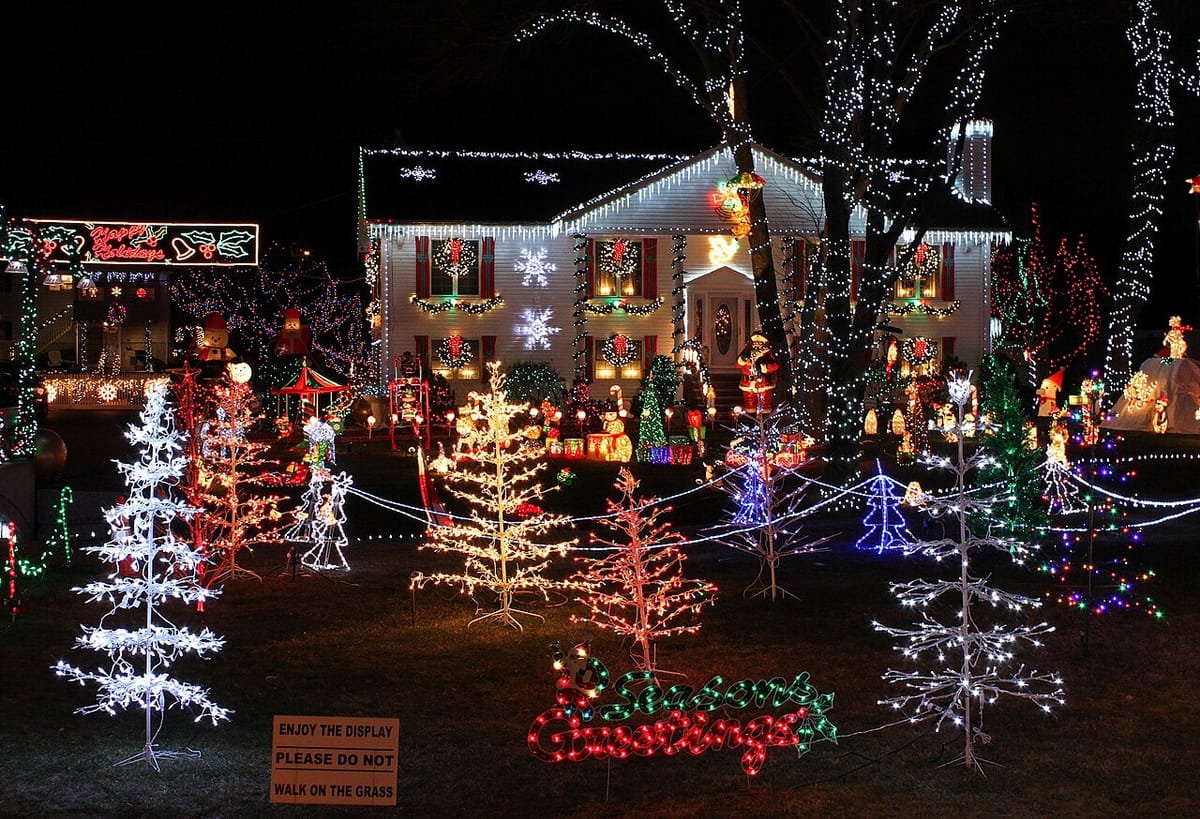
Cover photo by Anthony92931 via Wikimedia Commons, CC BY-SA 3.0, resized.
If this fix touches water, gas, or power, the guide starts with the shutoff step and says when a licensed pro should take over.
Product links in this guide are affiliate links. If you buy through one, we may earn a small commission at no extra cost to you. It never changes which products we recommend.
You plug in the last string, the house lights up, and thirty seconds later everything goes dark. The breaker flipped, or the outdoor outlet’s reset button popped. Holiday lights trip circuits for three reasons, and you can find which in one evening by adding up numbers and plugging things in one at a time.
Quick Answer
When Christmas lights keep tripping the breaker, the cause is almost always one of three things: too many watts on one circuit, moisture in an outdoor connection that trips a GFCI, or one damaged strand. Unplug everything and reset the breaker. Add up the wattage printed on each light string and keep the total under 1,440 watts for a 15-amp circuit. Then plug the strands back in one at a time, outdoor-rated cords only, with connections off the ground in a weatherproof cover. The strand that trips it alone is the bad one, so throw it out. It takes 20 to 40 minutes and costs under $30. A breaker that trips with nothing plugged in, or an outlet that’s hot or smells of burning, is the point to call an electrician.
What You’ll Need
- A pen and paper, or your phone calculator, to add up wattage
- Outdoor-rated extension cords, $12–$25, sized for the load
- A weatherproof cord connection cover, $6–$10
- LED replacement strings, $10–$20 each, for old incandescent ones
- A timer, so the lights run only when you want them
- A voltage tester is optional, for checking the outlet
Step-by-Step
Find which breaker or GFCI is tripping
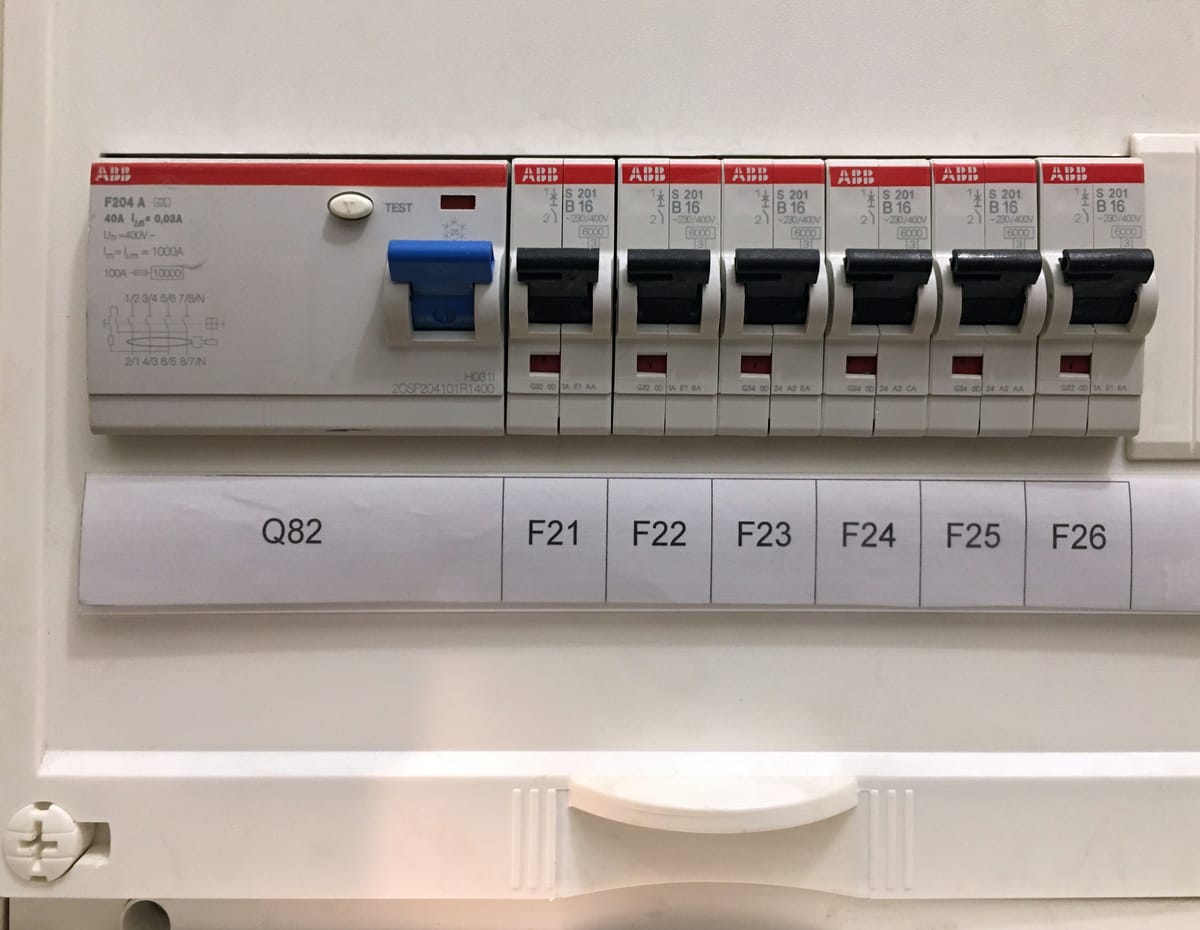
Check the panel for a breaker sitting in the middle position, and look at outdoor, garage, and bathroom outlets for a popped reset button on a GFCI. The GFCI that protects one outdoor outlet can also feed others on the same run. Reset it. If everything works with nothing plugged in, you’re past the first test. If it trips with nothing connected, stop here and call an electrician, since it’s a wiring or outlet fault, not the lights.
Add up the watts
Every light string has a tag near the plug with its wattage, or amps. Multiply amps by 120 to get watts. A 100-bulb incandescent mini string is about 40 watts. A 25-bulb C9 string is about 175 watts. A 100-bulb LED string is 4 to 7 watts. A 15-amp circuit tolerates 1,440 watts continuous (80 percent of 1,800), a 20-amp circuit 1,920. Add every inflatable, extension cord, and anything else on the same circuit. If you’re over, move half the load to another circuit, usually a different room’s outlet.
Plug in one strand at a time
Unplug everything, then add strands back one by one, waiting a minute after each. The load will build up until it trips, and you’ll see how many strands the circuit carries. If it trips on one particular string by itself, that strand has a short. Look for cracked sockets, exposed wire, or a damaged plug, and discard it. Don’t tape over damage on a string that powers dozens of bulbs.
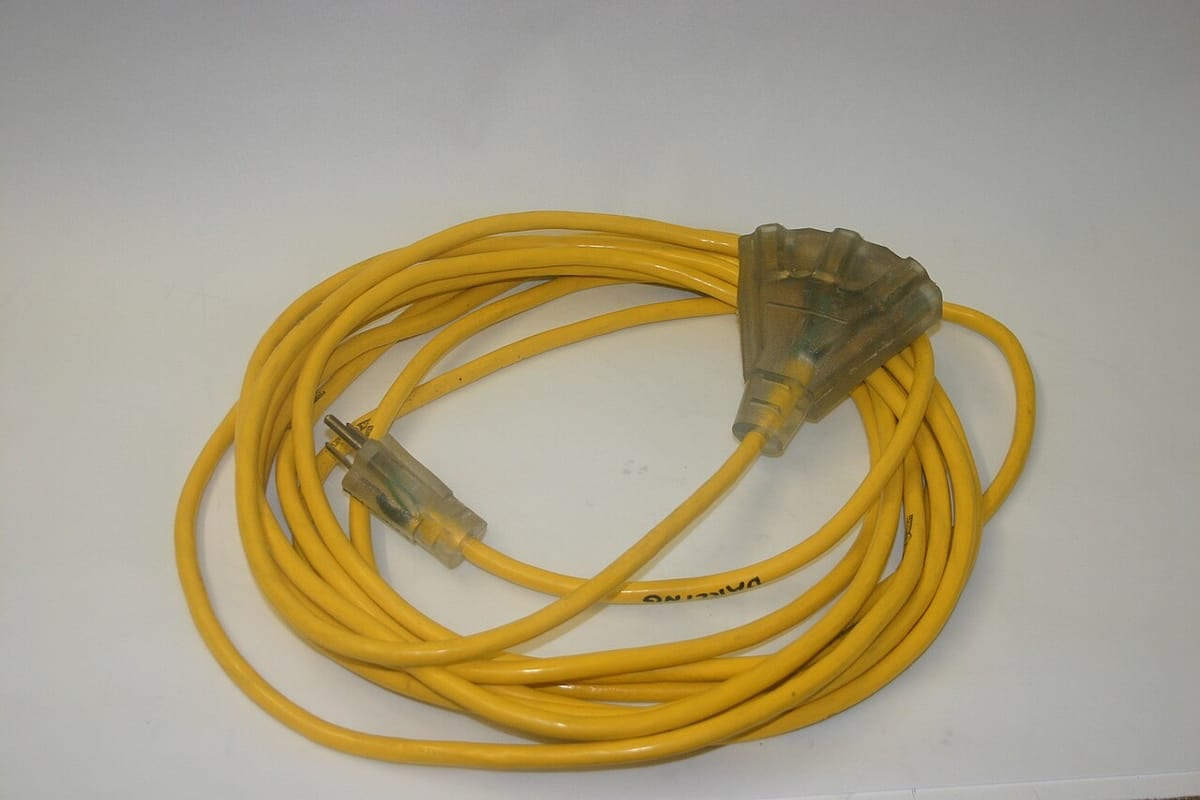 A heavy-duty cord with a three-outlet end. Check the tag for its amp rating before you plug a whole display into it. Photo by Taylor Cedarmas via Wikimedia Commons, CC BY-SA 3.0, resized.
Keep connections dry
For outdoor lights, every plug-to-plug connection is where water enters. Lift the connections off the ground, onto a hook or a stake, and put them inside a weatherproof cover, or wrap each one with outdoor-rated tape. Use only extension cords labeled for outdoor use, sized for the wattage, since a thin indoor cord overheats. A GFCI trips when it senses current leaking to ground, and wet connections are the usual leak. If it only trips when it rains, this is the cause. See GFCIs that won’t reset for the reset fixes.
Swap old strings for LED and use a timer
An incandescent string is the biggest load you can remove. Replacing five old strings with LED cuts the load from 200 watts to about 20, and makes a trip nearly impossible. Put the display on a timer, so the lights run five or six hours in the evening and not all night. That also keeps the strands cooler and extends their life.
Time and Cost
| Fix | Time | Cost |
|---|---|---|
| Add up watts and rebalance circuits | 15 min | $0 |
| Find and discard the bad strand | 10 min | $0–$20 |
| Weatherproof covers and outdoor cords | 20 min | $18–$35 |
| Electrician diagnoses a tripping outlet | — | $100–$250 |
Why This Works
A circuit breaker is a heat-sensing switch rated for a maximum current. It opens when the load draws more than the wire behind it can carry safely, so adding strands adds watts until the limit is reached. A GFCI works differently. It compares the current going out with the current returning, and trips in milliseconds if even a few thousandths of an amp go missing, as they do when water offers current a path to ground. A short in a damaged strand trips the breaker at once because it draws a surge. Each of the three causes has a different signature, which is why plugging in one strand at a time tells you which you have.
Mistakes to Avoid
- Daisy-chaining past the tag. Each package lists how many strings can connect end to end. Beyond that, the first plug carries the sum of all of them and overheats.
- Using an indoor extension cord outside. The insulation is thin and the plug isn’t sealed. It trips the GFCI in rain and can start a fire.
- Plugging a power strip into a power strip. Every added strip adds resistance and a place to overload. Use a single rated cord, as with any overloaded outlet.
- Resetting the breaker again and again. If it trips right away each time, something is wrong. Find the cause instead of fighting the breaker.
If an outlet stays dead after the lights are gone, check fixing a dead outlet before you assume the lights are to blame.
FAQ
How many Christmas lights can you plug into one outlet?
It depends on watts, not strands. A standard 15-amp circuit tolerates about 1,440 watts for hours at a time, shared with everything else on that circuit. A 100-bulb incandescent mini string uses about 40 watts, so 30 of them hit the limit. LED strings use about a tenth of that. Add up the wattage on the labels.
Why do my outdoor Christmas lights trip the GFCI?
Moisture. Rain or snow reaches a plug connection, a damaged cord, or a cheap extension cord, and leaks a small current to ground. The GFCI trips in a fraction of a second to protect you. Keep connections off the ground in a weatherproof cover, replace cracked cords, and avoid daisy-chaining past what the tag allows.
Are LED Christmas lights better for circuits?
Yes. A 100-light LED mini string draws roughly 4 to 7 watts compared with about 40 for incandescent. That means a single outlet can run dozens of strings. Swapping the old strings is the easiest way to end repeated trips.
Can a breaker keep tripping because of a bad light strand?
Yes. A frayed wire, a cracked socket, or a damaged plug can short, and the breaker trips instantly. Plug each strand in alone. The one that trips the breaker or the GFCI by itself is the bad one, and you should throw it out, not repair it.
Related fixes
Electrical
How to Fix a Dead Outlet Before Calling an Electrician
A dead outlet is often a tripped GFCI, breaker, or switched receptacle. Check the safe resets first, then know when wiring needs a pro visit.
Time5–15 min Cost$0–$12 easy
Electrical
GFCI Won't Reset? What It's Telling You
A GFCI that won't reset is usually protecting you from a real fault. Unplug the circuit, press Reset firmly, and learn when the outlet has worn out.
Time10–20 min Cost$0–$20 easy


Electrical
How to Reset a Tripped Breaker the Right Way
A tripped breaker often looks like it's still on. Push it fully to off first, then back on, and learn the difference between a nuisance trip and overload.
Time5–10 min Cost$0–$15 easy