How to Clean Gutters Without Falling Off the Ladder
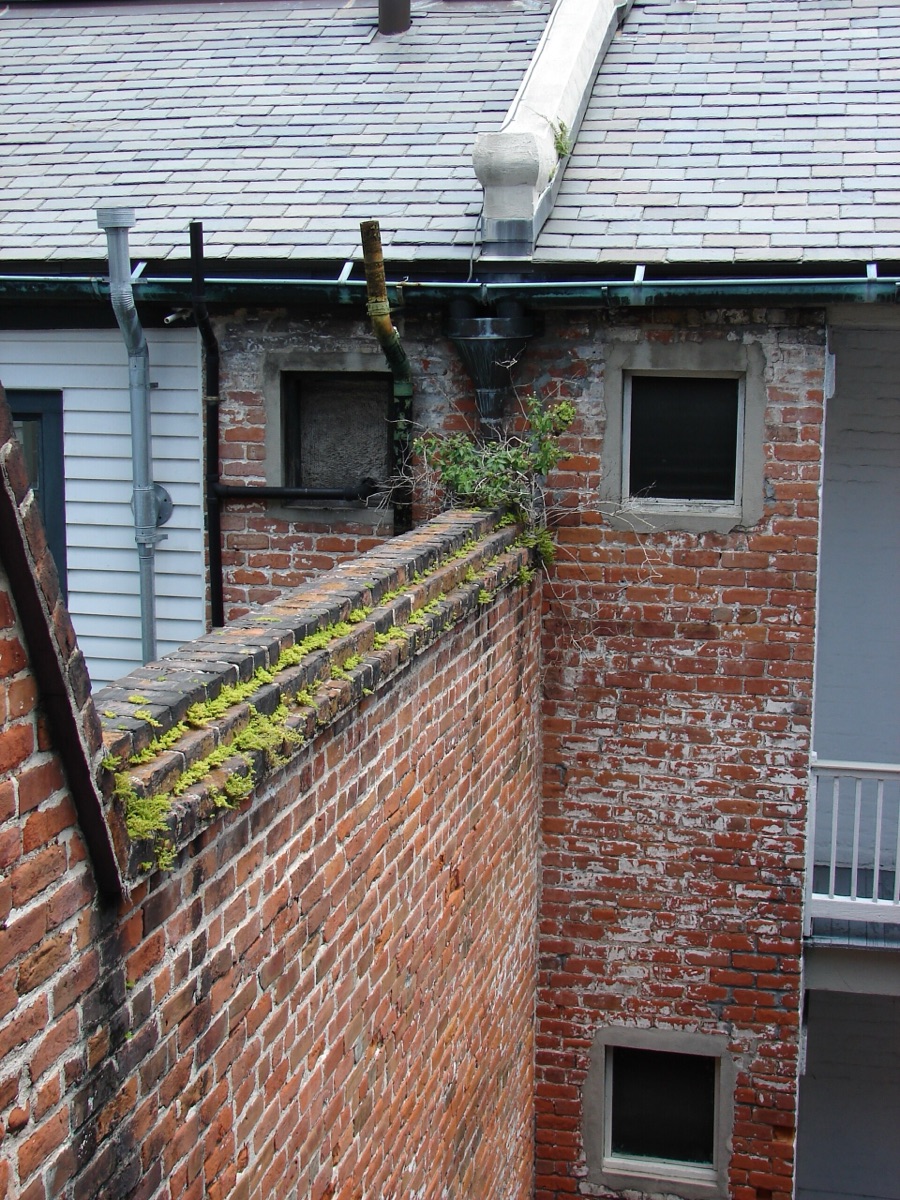
Cover photo by Howie Luvzus via Wikimedia Commons, CC BY 2.0, resized.
If this fix touches water, gas, or power, the guide starts with the shutoff step and says when a licensed pro should take over.
Product links in this guide are affiliate links. If you buy through one, we may earn a small commission at no extra cost to you. It never changes which products we recommend.
Gutter cleaning is the maintenance job people put off longest, partly because it’s unpleasant and mostly because it happens on a ladder. Late summer is the right moment to plan it, before the leaves come down and while the weather still cooperates. The cleaning itself is simple. The ladder is the part that deserves the actual attention.
Quick Answer
To clean gutters, set the ladder at a 4:1 angle on level ground with a stabilizer standoff so it rests on the roof rather than the gutter, then scoop debris into a hanging bucket working from the end farthest from the downspout. Flush the run with a hose, watch the downspout swallow the water, and clear it separately if it backs up. Move the ladder every few feet instead of reaching. The whole job costs nothing if you own a ladder, about $50 for a scoop and standoff, or $150 to $400 to hire out on a two-story house.
What You’ll Need
- An extension or step ladder rated for your weight plus the bucket, in good condition
- A ladder stabilizer standoff, $35–$50, the single best purchase in this list
- A gutter scoop, around $10, or a plastic kitchen spatula
- Leather work gloves and safety glasses
- A bucket with an S-hook to hang it from a ladder rung
- A garden hose, ideally with a spray nozzle
Step-by-Step
Set the ladder properly before you climb
This is the whole safety story in one step. Put the base on firm, level ground, one foot out from the wall for every four feet of height. If you’re going onto the roof, the ladder must extend three feet past the edge. Never stand on the top two rungs. And never lean the ladder directly against the gutter: it’s thin aluminum hung on clips, it dents instantly, and it is not built to hold your weight. A stabilizer standoff spans the gutter and rests on the roof or wall instead, which also gives you a wider, steadier ladder and room to work.
Hang the bucket and scoop from the far end
Hook the bucket on a rung so both hands stay free. Start at the point farthest from the downspout and scoop toward it. Wet leaf sludge comes out in satisfying handfuls. Dry packed debris may need to be broken up first. Work only the section directly in front of you, then climb down and move the ladder. The urge to stretch sideways for one more foot of gutter is exactly the thing that puts people in the hospital, and it saves about forty seconds.
Flush the run with a hose
Once the bulk is out, run water from the far end and watch it travel. It should move steadily toward the downspout and disappear. Water that pools in the middle means that section has sagged or the gutter was never pitched correctly, since a gutter needs to drop roughly a quarter inch every ten feet. Water spilling over the front edge means there’s still debris packed in the trough.
Test and clear the downspout
This is the step most people skip, and it’s where clogs actually live. If water backs up in the gutter instead of draining, the downspout is blocked. Tap along its length with your knuckles, listening for the dull thud of a packed section. Try feeding the hose up from the bottom opening with the water on, which pushes the plug back up and out. If that fails, take the lower elbow apart, since the bend is where blockages settle.
 Clearing the hopper where the gutter feeds the downspout, which is exactly where blockages settle. Work directly in front of you and move the ladder rather than reaching sideways like this. Photo by CORGI HomePlan via Flickr, CC BY 2.0, resized.
Check the hangers and the fascia while you’re up there
Look at the clips or spikes holding the gutter to the house. Loose ones let the gutter sag, which creates the low spot that collects the next clog. Push gently on the fascia board behind the gutter: soft or spongy wood means water has been overflowing here long enough to cause rot, and that’s a repair to schedule before the gutter gets rehung.
Send the water away from the house
Down at ground level, make sure the downspout discharges at least four to six feet from the foundation. A downspout that dumps straight down at the wall undoes the entire point of having gutters. An extension costs about $10 and prevents the basement problem you were trying to avoid.
Time and Cost
| Fix | Time | Cost |
|---|---|---|
| Clean gutters yourself, single story | 2–4 hrs | $0–$60 in tools |
| Add a downspout extension | 15 min | $10 |
| Professional cleaning, single story | 2–3 hrs | $150–$250 |
| Professional cleaning, two story | 3–4 hrs | $250–$400 |
| Foundation repair from years of overflow | days | $2,000+ |
Why This Works
A gutter has one job: catch what the roof sheds and move it somewhere harmless. It works entirely on gravity and a very shallow slope, which means it has almost no tolerance for obstruction. A few inches of packed leaves is enough to turn the trough into a dam, and once water goes over the front lip it lands in a concentrated line right at the base of the wall. That’s why the damage from clogged gutters shows up in the basement rather than on the roof. Clearing the trough restores the slope, and clearing the downspout restores the exit, and both have to be open for either to matter.
Mistakes to Avoid
- Leaning the ladder on the gutter. It bends the gutter, it shifts under load, and it’s the most common bad habit in this entire job.
- Reaching sideways to save a trip down. Keep your belt buckle between the ladder rails. Every time. Moving the ladder is boring and it is the whole safety margin.
- Pressure washing the gutters. It blasts sludge under the shingles and up the roof, loosens the hangers, and turns a contained mess into a coating on the siding.
- Cleaning the trough and ignoring the downspout. A perfectly clean gutter with a plugged downspout overflows exactly as badly as a filthy one.
- Going up on a wet or windy day. Wet leaves on ladder rungs are as slick as ice, and there is no version of this job that can’t wait for better weather.
While you’re working around the outside of the house, it’s an efficient moment to check the door seals for the coming cold, since that job pairs naturally with replacing a worn door sweep before winter.
FAQ
How often should gutters be cleaned?
Twice a year for most homes: once in late fall after the leaves have finished dropping, and once in late spring after seeds and blossoms come down. If you have pines or maples directly overhanging the roof, make it three times, because needles and helicopter seeds pack into a mat that water cannot pass through.
What happens if you never clean your gutters?
Water overflows the front edge and lands right against the foundation, which is the single most common cause of a damp basement. Standing water also rots the fascia board the gutter hangs from, and in cold climates it refreezes at the roof edge and forms ice dams that push water back under the shingles.
Can you clean gutters from the ground?
Partly. A curved hose attachment or a leaf blower extension can clear dry, loose debris from a single-story gutter without a ladder. Neither one clears wet packed sludge, and neither lets you check the downspout or spot a loose hanger. Treat ground tools as a way to stretch the interval, not to replace the job.
When should I hire someone instead?
Two-story gutters, a steep or wet roof, a house on a slope with no level ladder footing, or any point where you find yourself planning to lean out to reach. Pros charge roughly $150 to $400 depending on the size and height of the house, and they carry the insurance for the part that goes wrong.
Related fixes

Outdoors & Seasonal
Fix a Drafty Door in an Hour (Weatherstripping That Lasts)
That draft under the front door costs real heating and AC money. Find the gaps with a flashlight, then seal them with $15 of weatherstripping and a sweep.
Time45–60 min Cost$10–$25 easy


Outdoors & Seasonal
How to Replace a Worn Door Sweep Before Winter
If cold air comes in under the door, the sweep is probably torn or missing. Replace it in 20 minutes for $8–$15 and stop the floor-level draft.
Time20 min Cost$8–$15 easy