Dryer Takes Too Long? It's Almost Always Airflow
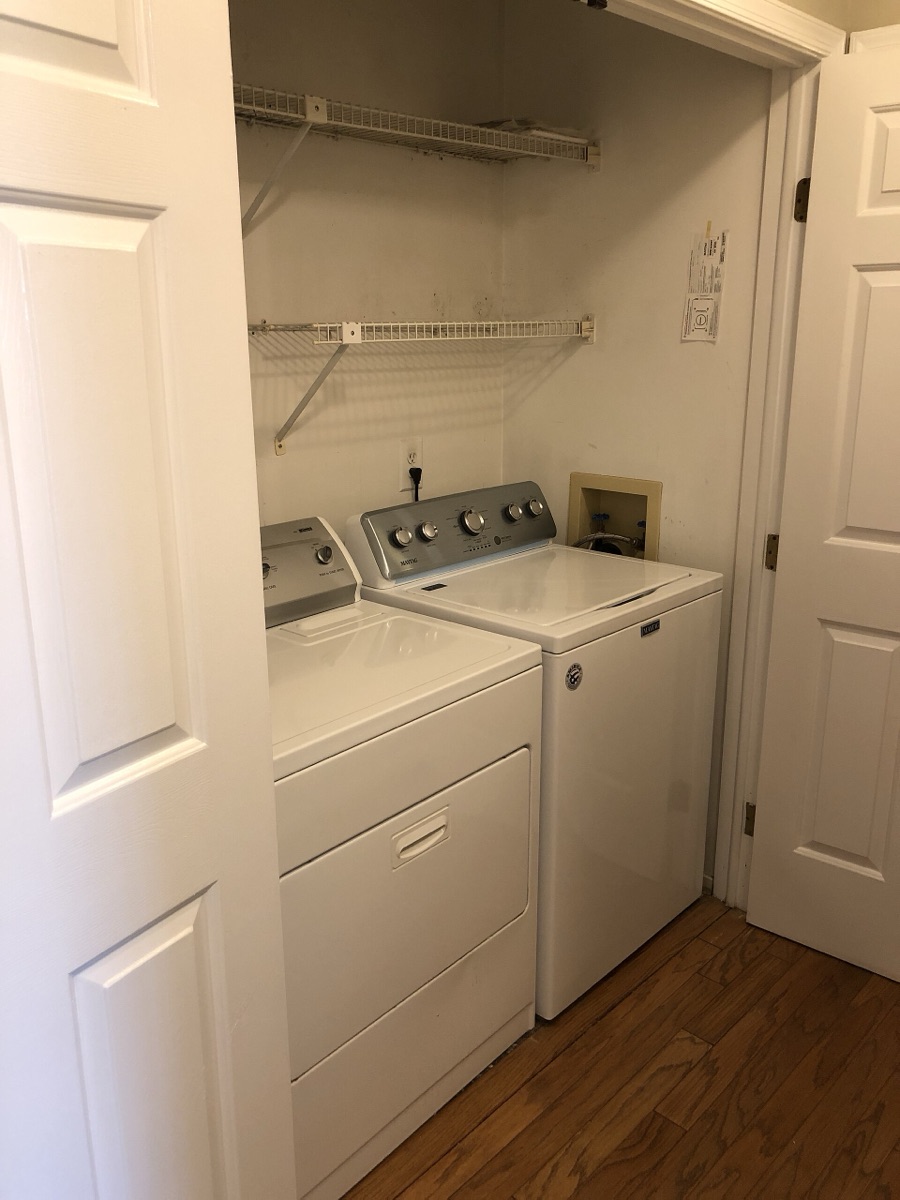
Cover photo by Famartin via Wikimedia Commons, CC BY-SA 4.0, resized.
If this fix touches water, gas, or power, the guide starts with the shutoff step and says when a licensed pro should take over.
Product links in this guide are affiliate links. If you buy through one, we may earn a small commission at no extra cost to you. It never changes which products we recommend.
One load, two cycles, and the towels are still faintly damp in the middle. The instinct is to blame the heating element, and that’s the expensive guess. A dryer that runs long is almost never short on heat. It’s short on air, and the blockage is usually in a place you can reach with a vacuum and forty minutes.
Quick Answer
A dryer takes too long to dry when moist air can’t get out, so start at the lint screen and work outward. Pull the screen and hold it under a running tap: if water pools instead of pouring through, dryer sheet residue has sealed the mesh and a scrub with dish soap fixes it. Then vacuum the screen housing, pull the dryer out and clear the duct from both ends, and check that the exterior vent hood flap actually opens. The whole job costs nothing if you own a vacuum, or about $25 for a duct brush kit, against $120 to $200 for a professional vent cleaning.
What You’ll Need
- A vacuum with a crevice tool, and a shop vac if you have one
- A dryer vent cleaning brush kit, $15–$25, for duct runs longer than an arm
- Dish soap and a scrub brush for the lint screen
- A screwdriver and a nut driver for the duct clamps
- Rigid or semi-rigid metal duct, $15–$30, if yours is the crushable foil kind
Step-by-Step
Unplug the dryer, and shut the gas off if it’s gas
Pull the plug before anything comes apart. If it’s a gas dryer, close the shutoff valve on the supply line too. Moving a gas dryer with the line still open is how a flexible connector gets kinked, and gas connections are the one part of this job where a licensed plumber or appliance tech should handle any reconnection you’re not fully sure about.
Do the water test on the lint screen
Clear the lint the way you always do, then take the screen to a sink and run water directly onto the mesh. Clean mesh lets water fall straight through like it isn’t there. If water beads, pools, or runs off the side, fabric softener has laid down a waxy film that blocks air while looking spotless. Scrub both sides with dish soap and a brush, rinse until water passes freely, and dry it before it goes back in. Most people have never done this once.
Vacuum the screen housing
With the screen out, push the vacuum crevice tool down into the slot it came from. A surprising wad of lint lives in that cavity, below where the screen catches anything. Some models have two screws at the base of the housing that let you pull a panel and reach further. Get what you can.
Clear the duct from both ends
Pull the dryer far enough out to reach behind it and loosen the clamp where the duct meets the machine. Vacuum the dryer’s outlet port and the first stretch of duct, then feed the brush kit in and work it through with a twisting motion, pulling debris back toward you. Go outside and do the same from the vent hood inward. Meeting in the middle matters, because the densest lint packs where the duct turns.
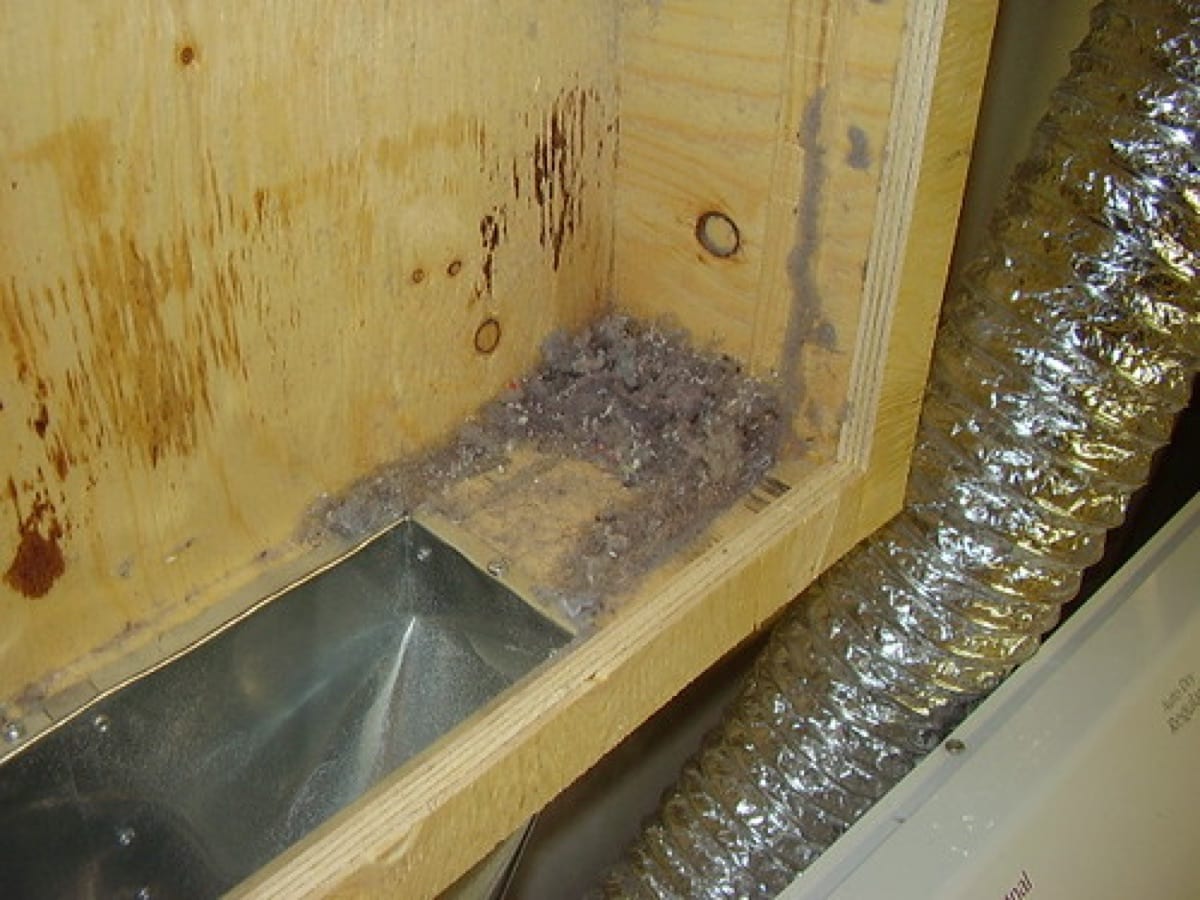 Lint collected behind the dryer where the foil duct meets the wall. This is the restriction that turns one cycle into two. Photo by ehud42 via Flickr, CC BY 2.0, resized.
Check the exterior vent hood
Look at the flap on the outside of the house while the dryer runs. It should swing open under steady pressure and fall closed when the cycle stops. Flaps get painted shut, jammed with lint, or claimed by birds building a nest in spring. Some vent hoods come with a wire cage that clogs almost immediately, and removing that cage is usually an improvement.
Replace foil duct with metal
If the duct behind your dryer is the flexible white or silver accordion type, swap it. That style crushes flat behind the machine, and its ridged interior catches lint by design. Rigid or semi-rigid metal duct costs about $20, keeps its shape, and cuts drying time on its own. Keep the run as short and straight as you can, since every 90-degree elbow adds roughly the resistance of five extra feet of pipe.
Time and Cost
| Fix | Time | Cost |
|---|---|---|
| Scrub the lint screen | 10 min | $0 |
| Vacuum housing and duct | 30–45 min | $0 |
| Duct brush kit | shopping trip | $15–$25 |
| Replace foil duct with metal | 30 min | $15–$30 |
| Professional vent cleaning | 1–2 hrs | $120–$200 |
| New heating element, if it really is that | 1–2 hrs | $40–$90 |
Why This Works
A dryer doesn’t bake clothes dry, it evaporates water into moving air and throws that air outside. Heat only does half the job. The other half is volume: enough air per minute to carry moisture away before it condenses back into the load. Lint narrows the duct gradually, so the machine keeps running its normal cycle while moving less and less air, and the clothes come out damp because the moisture never actually left the drum. That’s also why a restricted dryer feels hot to the touch and heats the laundry room. The heat is staying in, and on many models the high-limit thermostat starts cutting the burner off and on, which stretches the cycle even further.
Mistakes to Avoid
- Buying a heating element first. A dryer with a dead element blows cold and dries nothing. A dryer that runs hot and takes two cycles has an airflow problem, and those are two different symptoms.
- Cleaning only the lint screen. It catches maybe two-thirds of the lint. The rest is in the housing, the duct, and the vent hood, which is where the real restriction builds.
- Leaving crushed foil duct behind the machine. Pushing the dryer back against the wall flattens it, and you undo the cleaning you just did in about four seconds.
- Running the dryer with the duct disconnected “just for now.” That dumps humid, lint-heavy air straight into the room, and in a gas dryer it dumps combustion byproducts with it.
While the machine is pulled out, it’s a good moment to check the washer beside it. A load that goes into the dryer too wet makes any dryer look slow, and that usually traces back to a washer that isn’t draining or spinning properly.
If the dryer has gone from slow to cold, the blocked vent has probably blown the thermal fuse, and dryer not heating picks up from there.
FAQ
Why does my dryer take two cycles to dry one load?
Restricted airflow, nine times out of ten. A dryer works by pushing heated air through the clothes and carrying the moisture outside, so when the duct is packed with lint the hot air just circulates and the clothes stay damp. Clear the lint screen housing and the full duct run before you suspect the heating element.
How do I know if my dryer vent is clogged?
Go outside while the dryer runs and hold your hand at the exterior vent hood. You should feel a strong, warm push of air that could flutter a tissue. Weak or barely-there airflow means the duct is blocked. Other signs: the laundry room gets hot and humid, the dryer exterior is hot to the touch, and loads come out smelling scorched.
Can dryer sheets make a dryer dry slower?
Yes, indirectly. Fabric softener sheets leave a waxy film on the lint screen mesh that blocks air while still looking perfectly clean. Test it by holding the screen under a running tap: water should pour straight through. If it pools or beads on the mesh, scrub the screen with dish soap and a brush, then rinse and dry it.
How often should a dryer vent be cleaned?
Once a year for a typical household, twice if you run several loads a day, have a long duct run, or own pets that shed. Lint buildup in the duct is the leading cause of clothes dryer fires, so this is maintenance with a real safety payoff rather than just an efficiency one.
Related fixes

Laundry & Cleaning
How to Clean a Front Load Washer Gasket That Smells
A smelly washer gasket is mold and detergent film in the rubber fold. Wipe it out, clear the drain holes, and stop that musty smell for under $5.
Time15–20 min Cost$0–$5 easy

Laundry & Cleaning
Washing Machine Smells? Clean These 3 Spots (Gasket, Drum, Filter)
A musty front-loader means mold in the door gasket and a clogged drain filter. Clean all three problem spots in 30 minutes and keep the smell away.
Time30 min + one wash cycle Cost$0–$10 easy

Laundry & Cleaning
Dryer Not Heating: What to Check Before Calling a Repair Tech
A dryer that runs cold has a tripped breaker leg, a clogged vent, a blown thermal fuse, or a dead element. Check them in order. Most fixes cost under $30.
Time30–90 min Cost$0–$60 moderate