Dryer Not Heating: What to Check Before Calling a Repair Tech
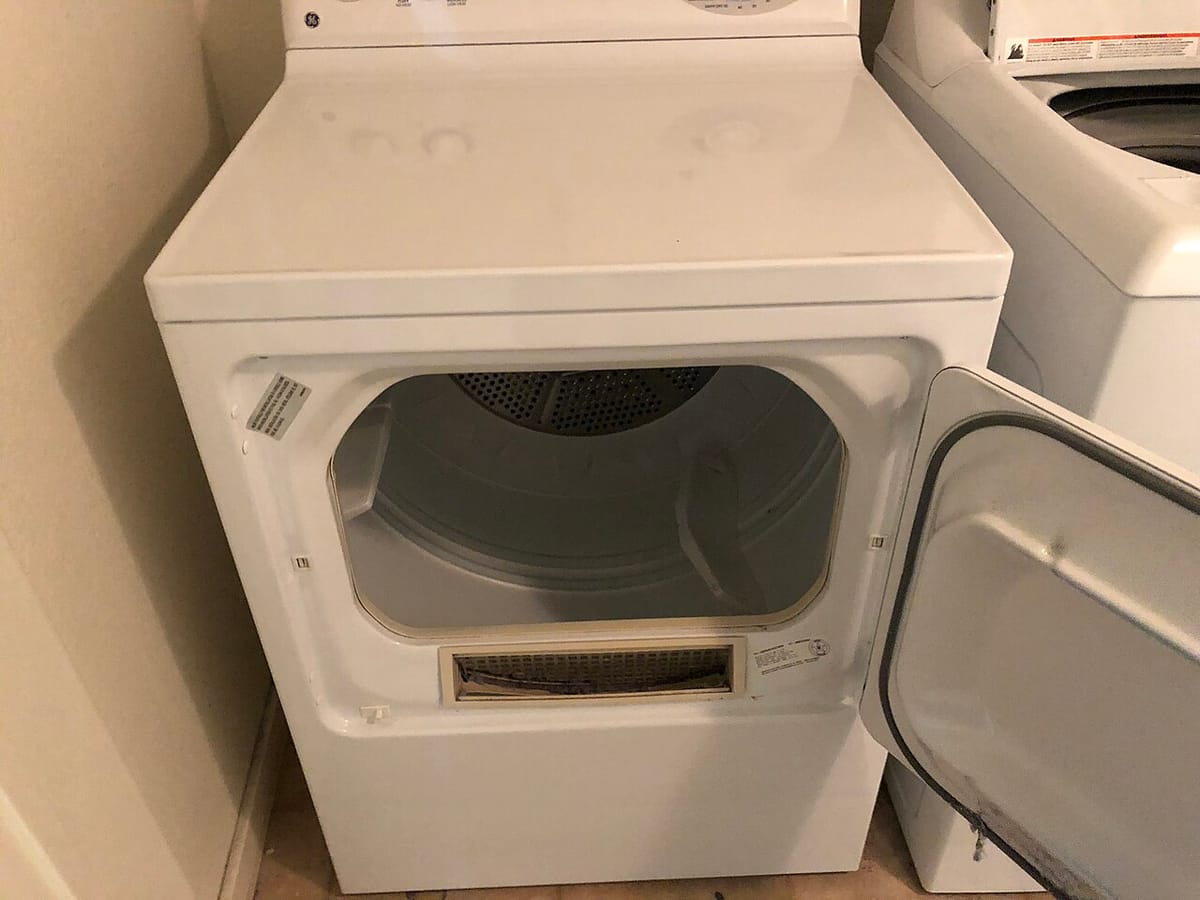
Cover photo by FASTILY via Wikimedia Commons, CC BY-SA 4.0, resized.
If this fix touches water, gas, or power, the guide starts with the shutoff step and says when a licensed pro should take over.
Product links in this guide are affiliate links. If you buy through one, we may earn a small commission at no extra cost to you. It never changes which products we recommend.
The dryer tumbles for a full hour and the towels come out cold and damp. The drum works, the timer works, the buzzer works, and the only thing missing is heat. That pattern narrows the problem down fast, because the motor and the heater are powered and protected separately. You can find the cause in under an hour with a multimeter and a nut driver, and most of the fixes cost less than a repair company’s trip fee.
Quick Answer
A dryer not heating while the drum still turns has one of five causes, and you check them cheapest first. One: the cycle is set to air fluff or an eco setting with low heat. Two: on an electric dryer, one leg of the double 30-amp breaker has tripped, which kills the heater and leaves the motor running. Three: the vent is clogged, which overheats the heater box and trips the safeties. Four: the thermal fuse has blown, a $10 part that tests with a multimeter. Five: the heating element on electric, or the igniter on gas, has failed, $25 to $60 in parts. Everything through the fuse is an easy fix with the dryer unplugged. A gas dryer that glows but never lights is where to stop and get a quote, because the gas valve coils are next.
What You’ll Need
- A multimeter, $15–$25, to test the fuse and element
- A 1/4-inch and a 5/16-inch nut driver, which is what most dryer panels use
- A dryer vent cleaning brush kit, $15–$25
- A replacement thermal fuse matched to your model number, $8–$15
- A flashlight and a vacuum with a crevice tool
Step-by-Step
Check the cycle and the breaker first
Look at the control panel. “Air fluff”, “air dry”, “wrinkle release”, and some eco modes run with no heat or very little, and they’re easy to select by accident. Set a timed cycle on high and feel the exhaust after five minutes. Still cold on an electric dryer? Go to the panel. A dryer breaker is a double, two handles joined. One half can trip and sit slightly off-center while the other stays on. Flip the whole thing firmly off, then on. If heat returns and the breaker trips again, the element is shorting to its housing, which is step four. Breakers that keep tripping are a fault, not a nuisance.
Clear the vent before you touch a part
Unplug the dryer (close the gas valve too, on gas). Pull it out, disconnect the duct from the back, and run the brush through the full length to the outside hood. Clean the lint screen, then vacuum the screen’s slot down into the blower housing, which collects a felt of lint nobody ever sees. Outside, make sure the flap on the hood opens freely. A dryer that was already taking two cycles before it quit heating was telling you this. Reconnect, plug in, and test. If the heat comes back, the vent was starving the dryer and tripping the high-limit thermostat, which resets itself once things cool.
Test the thermal fuse
If it’s still cold, the thermal fuse is the next suspect. Unplug again. On most dryers the rear panel or the lower front panel comes off with a few 1/4-inch screws, and the fuse is a small plastic oval with two wires, mounted on the blower housing or the heater box. Pull both wires, set the multimeter to continuity, and touch the probes to the two terminals. A beep or a reading near zero means the fuse is fine. No beep means it’s open, and the dryer will never heat until it’s replaced. Match the part to your model number, fit it, and understand that it blew for a reason. The vent you just cleaned was that reason.
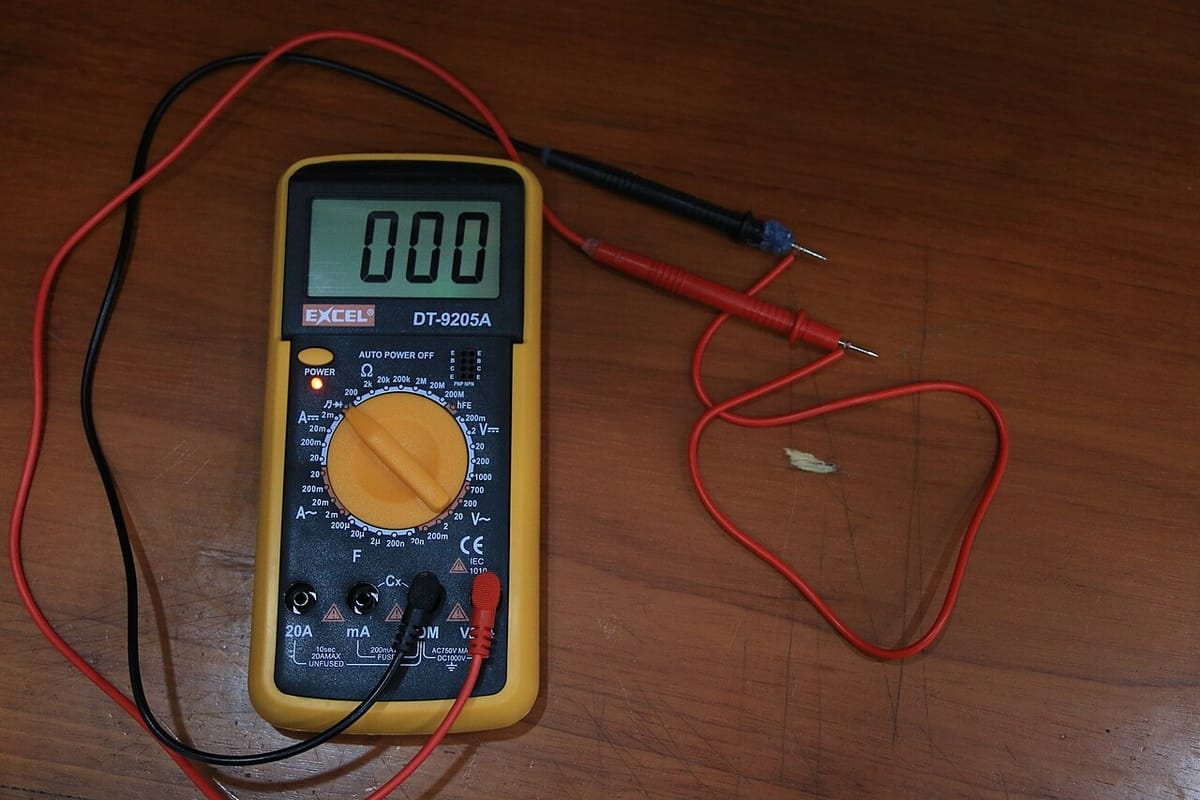 A digital multimeter. Set the dial to continuity, touch the probes together to hear the beep, then test across the fuse terminals the same way. Photo by MinhVN123 via Wikimedia Commons, CC0, resized.
Test the heating element on an electric dryer
The element is a coil of wire inside a metal housing behind the drum. With the dryer unplugged and the wires pulled off the element terminals, test continuity across them. A good element reads roughly 8 to 15 ohms. Open means a broken coil, and that’s the fault. Also touch one probe to a terminal and the other to the bare metal housing: any continuity there means the coil has sagged and shorted to the housing, which is the “heats constantly” or “trips the breaker” version of this failure. Elements are $25 to $60 and swap out with the same screws you already removed.
Watch the burner on a gas dryer
On a gas dryer, remove the lower front panel, start a cycle, and watch the burner tube through the opening. Normal: the igniter glows orange within a minute, then gas lights with a soft whoomp, and a blue flame runs along the tube. No glow at all points at the igniter or the thermal fuse. Glow, then no flame, then the glow cycles again points at the flame sensor or the gas valve coils, which are $15 to $30 each and sit right on top of the valve. Changing coils is within reach if you’re careful, and it’s also a reasonable place to call for a quote. Any smell of gas with no flame means stop, close the gas valve, and ventilate.
Time and Cost
| Fix | Time | Cost |
|---|---|---|
| Reset the breaker | 2 min | $0 |
| Clean the vent | 30 min | $15–$25 |
| Replace the thermal fuse | 20 min | $8–$15 |
| Replace the heating element | 45 min | $25–$60 |
| Repair visit for the same work | — | $150–$300 |
Why This Works
An electric dryer’s motor runs on 120 volts, one leg of the circuit and the neutral, while the heating element runs on the full 240 volts across both legs. Lose one leg and the drum turns in a cold cabinet. On top of that, every dryer carries a chain of heat safeties: a cycling thermostat that regulates normal temperature, a high-limit thermostat that opens if the box runs hot, and the thermal fuse, a one-shot device that opens permanently when airflow fails badly enough. Lint restricts airflow, the heater box climbs, and the fuse does its job. That chain is why the fix order matters. A new fuse in a dryer with a blocked vent lasts one load.
Mistakes to Avoid
- Replacing the thermal fuse without cleaning the vent. It blew because the dryer overheated. Fit a new one into the same airflow and it blows again, now with a wasted part and a second teardown.
- Jumping the fuse with a wire “just to test.” The dryer will heat, and it’ll also have no overheat protection. That’s a fire hazard, not a diagnostic.
- Testing parts with the dryer plugged in. The element terminals carry 240 volts. Unplug, pull the wires, then test.
- Assuming a half-tripped breaker is on. A double breaker that shows both handles in the on position can still have one tripped internally. Cycle it fully off and on before you blame a part.
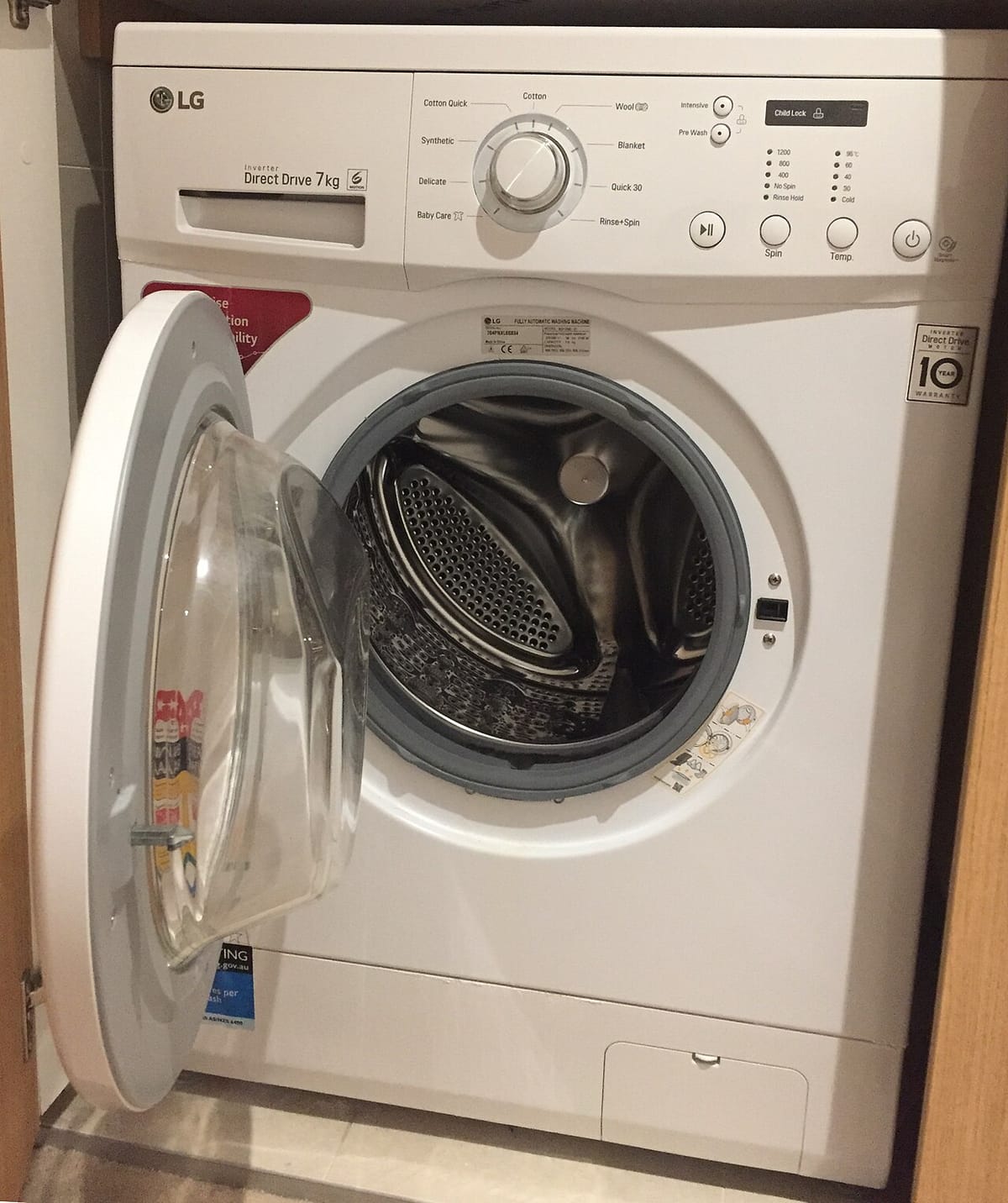
While the dryer is pulled out, it’s a good moment to level its feet and check that the washer next to it isn’t walking on spin, since the two share a floor and a wall.
FAQ
Why does my dryer run but not heat up?
The motor and the heater are on separate paths, so the drum can turn with the heat source dead. On an electric dryer the heater needs both legs of the 240-volt circuit, and one tripped breaker leg kills heat while the motor keeps spinning on the other. On gas, the drum runs off house 120 volts while the burner needs the igniter, the flame sensor, and the gas valve coils to all cooperate. Start at the breaker, then the vent, then the thermal fuse.
How do I know if my dryer thermal fuse is blown?
Unplug the dryer, find the small white or black fuse on the blower housing or heater box, pull its two wires, and touch a multimeter set to continuity across the terminals. A good fuse beeps or reads near zero ohms. An open fuse reads nothing. A blown thermal fuse means the dryer overheated, almost always from a blocked vent, so clean the vent before you fit the new fuse or you'll blow that one too.
Can a clogged vent cause a dryer to stop heating?
Yes, and it's the most common root cause. Restricted airflow lets the heater box get hot enough to trip the high-limit thermostat and eventually blow the one-time thermal fuse. Before that point you'll notice loads taking two cycles and the top of the dryer getting hot. Clean the lint screen, the duct behind the dryer, and the outside hood, then check the fuse.
How much does it cost to fix a dryer that won't heat?
Parts are cheap: a thermal fuse is $8 to $15, a heating element $25 to $60, a gas igniter $20 to $40. A repair visit runs $150 to $300 with parts in most US markets. A dryer over 12 years old that needs a $60 element and a vent cleaning is still worth fixing. One that needs a control board usually is not.
Related fixes
Laundry & Cleaning
Dryer Takes Too Long? It's Almost Always Airflow
A dryer that needs two cycles is starved for air, not short on heat. Test the lint screen with water, then clear the duct run from both ends.
Time45–90 min Cost$0–$40 moderate
Electrical
How to Reset a Tripped Breaker the Right Way
A tripped breaker often looks like it's still on. Push it fully to off first, then back on, and learn the difference between a nuisance trip and overload.
Time5–10 min Cost$0–$15 easy


Laundry & Cleaning
How to Stop a Washing Machine Shaking During Spin
A washer that bangs and walks on spin is unbalanced, unlevel, or still wearing its shipping bolts. Ten minutes with a wrench usually settles it.
Time20–40 min Cost$0–$30 easy