Refrigerator Leaking Water Inside? Check the Defrost Drain
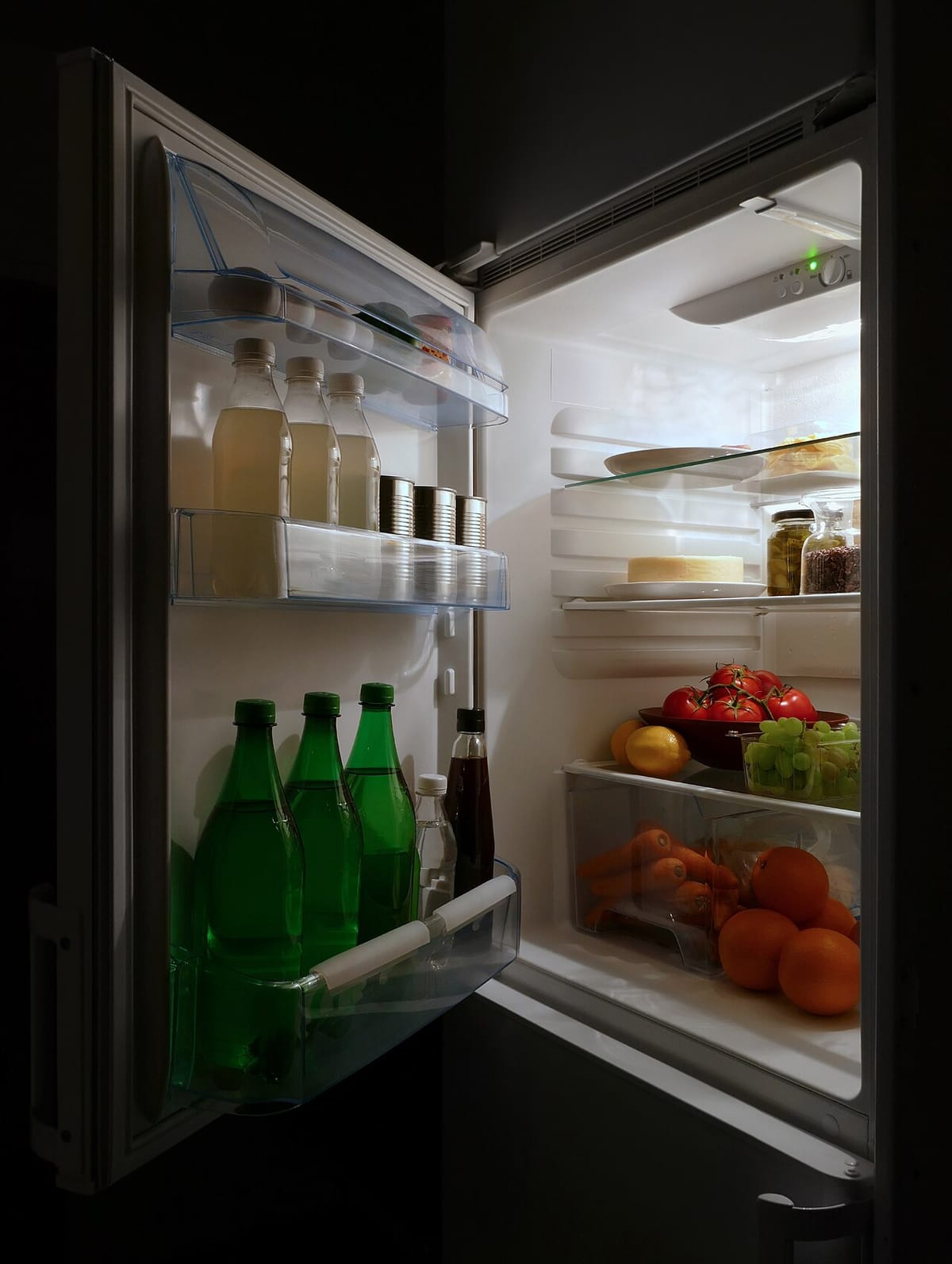
Cover photo by W.carter via Wikimedia Commons, CC BY-SA 4.0, resized.
If this fix touches water, gas, or power, the guide starts with the shutoff step and says when a licensed pro should take over.
Product links in this guide are affiliate links. If you buy through one, we may earn a small commission at no extra cost to you. It never changes which products we recommend.
There’s a puddle under the crisper drawers again, three days after you last wiped it up. No dripping from the ceiling of the compartment, nothing spilled, and yet the water keeps coming back. That slow, recurring pool at the bottom of the fridge has one overwhelmingly likely cause, and clearing it takes a turkey baster and half an hour.
Quick Answer
A refrigerator leaking water inside almost always has a clogged defrost drain: the small hole at the back low point of the compartment that carries meltwater to the evaporation pan underneath. Unplug the fridge, pull the crisper drawers, and flush the hole with warm water from a turkey baster until it swallows water as fast as you pour. If ice is the plug, warm water melts it through in minutes. Water on the kitchen floor instead of inside the box changes the diagnosis: check the evaporation pan for a crack and the ice maker supply line for a drip before blaming the drain. The fix is free, or $15 if you replace a cracked pan.
What You’ll Need
- A turkey baster or a small funnel with flexible tubing, $5–$10
- Warm tap water, around 100–120°F, never boiling
- A pipe cleaner or a straightened paper clip for debris plugs
- Towels and a shallow pan
- Baking soda for rinsing the drain line if it smells (optional)
Step-by-Step
Unplug the fridge and locate the puddle’s source
Pull the plug or flip the breaker before your hands go behind or under the machine. Then be precise about where the water actually is, because the location is the diagnosis. Inside the compartment under the drawers: defrost drain, keep going. On the floor outside the fridge: skip to the last two steps, because the drain isn’t the story.
Pull the drawers and find the defrost drain
Take out the crisper drawers and any shelf above them. Look for a small hole, sometimes under a snap-off plastic cover, at the lowest point of the back wall or compartment floor. In many freezer-on-bottom and side-by-side units the drain sits in the freezer section instead, behind a rear interior panel. If you can see standing water, mop it up first so you can watch whether the drain accepts new water.
Flush warm water through until it runs free
Fill the baster with warm tap water and push it into the drain hole in firm squirts. A clear drain swallows each squirt instantly. If water bounces back, the plug is either ice (most common, and it melts after a few rounds of warm water) or a slug of food debris and biofilm, which a pipe cleaner or stiff wire worked gently into the hole will break up. Finish with a half cup of water and a spoon of baking soda to rinse the line clean. The expected result is unambiguous: poured water disappears and, within a minute, drips audibly into the pan below.
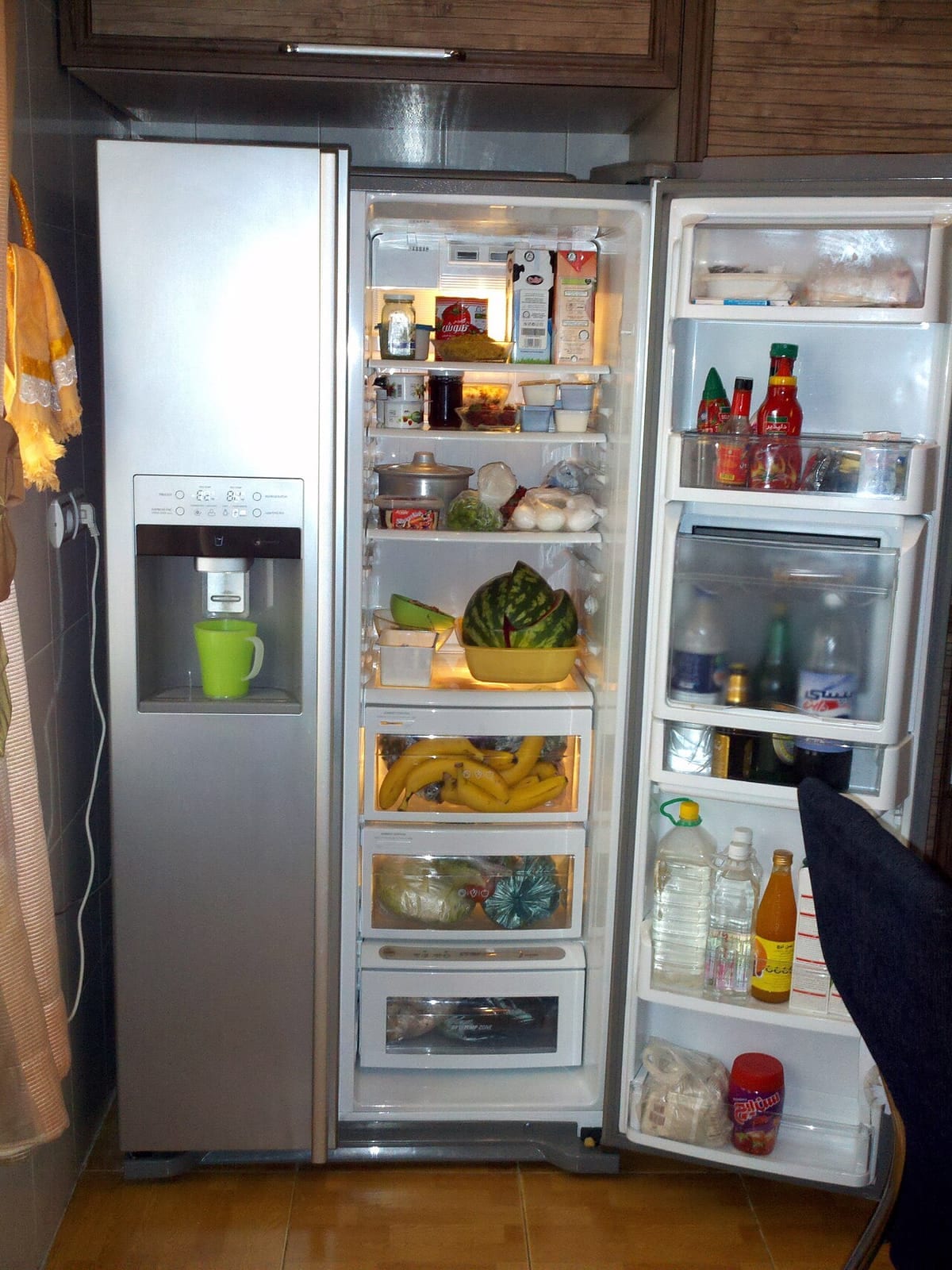 The drain hides at the lowest point behind the bottom drawers. Meltwater pools there when it clogs. Photo by Milad Mosapoor via Wikimedia Commons, free to use with attribution, resized.
Check the evaporation pan
The water you flushed has to land somewhere: a wide, shallow pan near the compressor, reached from the front bottom grille or the back lower panel. Slide it out carefully (it may hold water, which is normal) and look for cracks or tipping. A cracked pan drips onto the floor and costs $10–$15 to replace with the model-number part. While you’re down there, dust the coils. It’s not the leak, but it’s the cheapest efficiency gain in the kitchen.
Inspect the ice maker supply line
If the puddle is on the kitchen floor and the fridge has an ice maker or water dispenser, pull the unit forward and look at the quarter-inch line running up the back. Feel along it for moisture and check the fitting at the inlet valve. A weeping fitting sometimes needs only a quarter-turn snug. An actively dripping valve or a swollen, cracked plastic line is the stop point: close the shutoff valve feeding the line (usually under the sink or in the basement below) and have a tech or plumber replace the parts, because a failed line can flood the kitchen while you’re at work.
Time and Cost
| Fix | Time | Cost |
|---|---|---|
| Flush the defrost drain | 30 min | $0 |
| Replace a cracked evaporation pan | 20 min | $10–$15 |
| Snug a weeping supply fitting | 10 min | $0 |
| Tech visit for the same drain flush | 1 hr | $150–$300 |
| Supply line or inlet valve replacement by a pro | — | $100–$250 |
Why This Works
A frost-free refrigerator runs a heater over its cooling coils several times a day to melt frost, and that design only works if the meltwater has an exit. The drain hole is that exit, and it’s tiny, cold, and directly downstream of everything that crumbs off your food. When it plugs, the several ounces of water each defrost cycle produces have nowhere to go but the compartment floor, which is why the puddle returns on a schedule no matter how often you wipe. Warm water works on the clog from both directions: it melts an ice plug outright and softens a debris plug enough to push through. The baking soda rinse just keeps the drain line from becoming the next thing you smell.
Mistakes to Avoid
- Wiping up the puddle and calling it handled. The defrost cycle refills it within a day or two, and the slow soak under the unit is what ruins flooring.
- Using boiling water on the drain. The compartment liner and drain tube are plastic. Hot tap water clears ice just as surely without deforming a $200 liner.
- Forcing a metal skewer hard into the drain. The tube usually elbows a few inches in. Stab through the sidewall and the leak moves somewhere a DIY fix can’t reach. Gentle pressure with a pipe cleaner, and let warm water do the work.
- Ignoring a floor puddle because the inside is dry. Floor water with an ice maker in play means the pressurized supply line is suspect, and that one doesn’t stop at a few ounces. Shut the valve first, diagnose second.
A chronically damp evaporation pan is also a standing invitation to insects. If small flies have shown up in the kitchen at the same time as the leak, deal with the moisture first, then work through getting rid of fruit flies once the water source is gone.
FAQ
Why is there water under the crisper drawers in my fridge?
The defrost drain is clogged or frozen. Every frost-free refrigerator melts frost off its cooling coils several times a day, and that meltwater is supposed to run down a small drain hole at the back of the compartment into an evaporation pan underneath. When the hole plugs with ice or debris, the water backs up onto the floor of the fridge and collects under the drawers.
How do I unclog a refrigerator defrost drain?
Pull the crisper drawers, find the small drain hole at the low point of the back wall or floor, and flush it with warm (not boiling) water using a turkey baster until it runs through freely. If it's blocked with ice, keep flushing warm water and it clears in a few minutes. A pipe cleaner or a quarter-inch of flexible tubing helps push through a debris plug.
Is a leaking refrigerator dangerous?
The water itself is just defrost meltwater, but let it keep coming and it warps flooring, feeds mold under the unit, and can reach the compressor area. If the puddle is outside the fridge and the machine also runs constantly, stop and check whether the leak is from the water supply line to the ice maker, which can flood a kitchen and is worth shutting off at the valve immediately.
What does a repair tech charge to fix a leaking fridge?
Typically $150 to $300 for a defrost drain service, which is the same warm-water flush you can do yourself. Supply-line and inlet-valve repairs run $100 to $250 in parts and labor. Since the drain clog is the cause in most inside-the-fridge leaks, it's worth the 30-minute check before booking anyone.
Related fixes
Kitchen
Dishwasher Not Draining? Work This List in Order
Standing water in a dishwasher is usually the filter, the air gap, or a disposal plug nobody knocked out. Here is the order that finds it fastest.
Time30–60 min Cost$0–$25 moderate


Pests
How to Get Rid of Fruit Flies Overnight
Fruit flies breed in fermenting sugar, not just ripe fruit. Find the real source, set a vinegar trap tonight, and most kitchens are clear by morning.
Time15 min + overnight Cost$0–$10 easy