Patch Nail Holes in Drywall Before Move-Out (10 Minutes, $8)
If this fix touches water, gas, or power, the guide starts with the shutoff step and says when a licensed pro should take over.
Product links in this guide are affiliate links. If you buy through one, we may earn a small commission at no extra cost to you. It never changes which products we recommend.
Move-out weekend has a particular moment: the furniture is gone, the sun hits the empty wall, and every nail hole from three years of pictures stands out like a constellation. This is the easiest deposit money you will ever defend, and the entire skill can be learned on the first hole.
Quick Answer
Press lightweight spackle into each hole with a putty knife, scrape it flush, let it dry for about an hour, and give it one light pass with fine sandpaper. Dab on touch-up paint if you have it. Total kit cost is around $8 and it does every hole in the apartment; total active time is about ten minutes per room.
What You’ll Need
- Lightweight spackle, small tub, $5–$8 (look for “lightweight”; it barely shrinks and sands easily. Some are pink and dry white, a handy built-in timer)
- A 1.5–2 inch putty knife, $2–$4 (plastic is fine)
- A 220-grit sanding sponge, $3–$4
- A damp cloth for dust
- Touch-up paint and a small foam brush or cotton swab, if the landlord left a labeled can
Step-by-Step
Flatten the crater
Nails leave a tiny raised rim around the hole. Press it flat with the butt of the putty knife handle (a gentle push is enough). Skipping this leaves a bump under the patch no amount of sanding will hide.
Fill in two directions
Load a little spackle on the knife’s corner and press it across the hole at a firm angle, then make a second pass perpendicular to the first. The goal is packing the hole, not frosting the wall. The less excess, the less sanding.
Scrape flush and walk away
Final pass with the knife nearly flat against the wall, leaving the patch level with the surface. Then leave it alone for the drying time on the tub, typically 30–60 minutes for nail holes (pink-to-white spackle tells you itself).
Sand like you’re dusting
Two or three feather-light strokes with the 220 sponge, then wipe the dust off with the damp cloth. If your fingertip can’t find the patch with eyes closed, it’s done. Repeat a hole that dried with a dimple. A second thin coat beats one thick one.
Touch up the paint
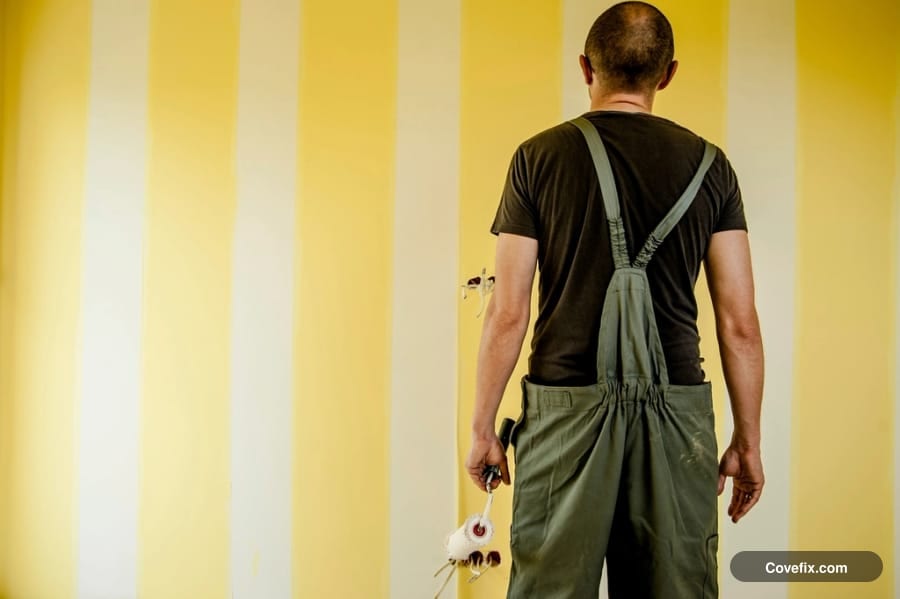 Feathering the edges is what separates an invisible patch from a shiny square.
Dab paint on the patch with a foam brush or swab, then feather outward with an almost-dry brush so there’s no hard edge. See the FAQ for why even perfect paint shows slightly. Feathering is what makes it disappear at conversation distance, which is the standard walls are judged by.
Time and Cost
| Scope | Active time | Cost |
|---|---|---|
| One room’s worth of holes | ~10 min + drying | — |
| Whole apartment | One afternoon | $8–$12 total |
| What “wall repair” runs on a deposit deduction | — | $100–$250, commonly |
Why This Works
Nail holes are cosmetic damage to the drywall’s paper face. There’s nothing structural to restore. Spackle is a light filler that keys into the hole and bonds to the paper; for anything under half an inch it needs no backing, no tape, and no skill beyond scraping flat. The lightweight formulas shrink so little that one pass usually finishes the job, which is the entire trick to it feeling easy.
Mistakes to Avoid
- Kitchen improvisations. Toothpaste and bar soap shrink, crack, and fool nobody, least of all the person holding your deposit.
- Overfilling into a mound. More spackle means more sanding and a visible bump in side light. Flush on the first scrape is the goal.
- Sanding before it’s dry. Gummy spackle tears out of the hole and you start over. Trust the color change or the label time.
- Skipping the dust wipe. Paint over sanding dust beads up and peels. Two seconds with the damp cloth first.
While the spackle dries, fix the other five-minute deposit item: the squeaky door hinge the landlord will hear on the walkthrough.
FAQ
What about holes bigger than a nail, like anchors and screw holes?
Pull the anchor out first (grab the collar with pliers, or push it fully through the wall for the stubborn ones). Holes up to about half an inch fill the same way, sometimes needing a second pass after the first coat shrinks. Bigger than that needs a mesh patch and joint compound, which is a different job.
Will my landlord charge me anyway?
A small number of nail holes is normal wear and tear in most jurisdictions, but a wall of them can be billed as damage. Patching removes the argument. Photograph every wall after patching. Dated photos are your deposit's best defense.
The paint touch-up is visible. Did I do something wrong?
No. Wall paint fades and gathers years of ambient grime, so even the original paint from the can reads slightly brighter than the wall around it. Feather the dab outward with a nearly dry brush to soften the edge. If it still bothers you, the clean fix is painting that wall corner to corner.
Does the toothpaste trick work?
It fills the hole today and fails within weeks, because toothpaste shrinks, cracks, and can yellow. Landlords have seen it a hundred times. A tub of real spackle costs five dollars and does every hole in the apartment properly.
Related fixes

Laundry & Cleaning
Washing Machine Smells? Clean These 3 Spots (Gasket, Drum, Filter)
A musty front-loader means mold in the door gasket and a clogged drain filter. Clean all three problem spots in 30 minutes and keep the smell away.
Time30 min + one wash cycle Cost$0–$10 easy
Walls, Doors & Floors
Fix a Squeaky Door Hinge for Good (WD-40 Isn't Enough)
WD-40 quiets a hinge for a week. Pulling the pin and coating it with silicone or lithium grease fixes it for years. Here is the 5-minute method.
Time5 min per door Cost$6–$8 easy