How to Stop Ants in the Kitchen
If this fix touches water, gas, or power, the guide starts with the shutoff step and says when a licensed pro should take over.
Product links in this guide are affiliate links. If you buy through one, we may earn a small commission at no extra cost to you. It never changes which products we recommend.
Ants in the kitchen are not random. They found food, water, or a reliable path inside, and they are leaving directions for the next wave. The fix is cleanup plus bait, not just smashing the ants you can see.
Quick Answer
To stop ants in the kitchen, wipe the trail with soapy water or diluted vinegar, remove crumbs and sticky spills, seal obvious entry gaps, and place ant bait near the trail but away from food prep. Do not spray the trail if you are using bait, because the workers need to carry it back to the colony. Expect 20–30 minutes of cleanup and $3–$12 for bait. If ants are coming through wet wood or a wall void, fix the moisture source too.
What You’ll Need
- Dish soap, sponge, and trash bag
- White vinegar diluted 1:1 with water, optional
- Indoor ant bait stations, $5–$12
- Caulk for obvious entry gaps, optional
Step-by-Step
Follow the trail
Watch where the ants enter, where they feed, and where they leave. Check under the sink, behind the trash can, around pet bowls, along window trim, and at the dishwasher edge. The entry point matters more than the spot where you first noticed them.
Remove the food source
Bag trash, rinse sticky containers, sweep crumbs, and move fruit or sweets into sealed containers. Wipe cabinet shelves if the trail goes into pantry food. If ants are feeding on grease near the sink, clean the disposal area the same way you would for a smelly garbage disposal.
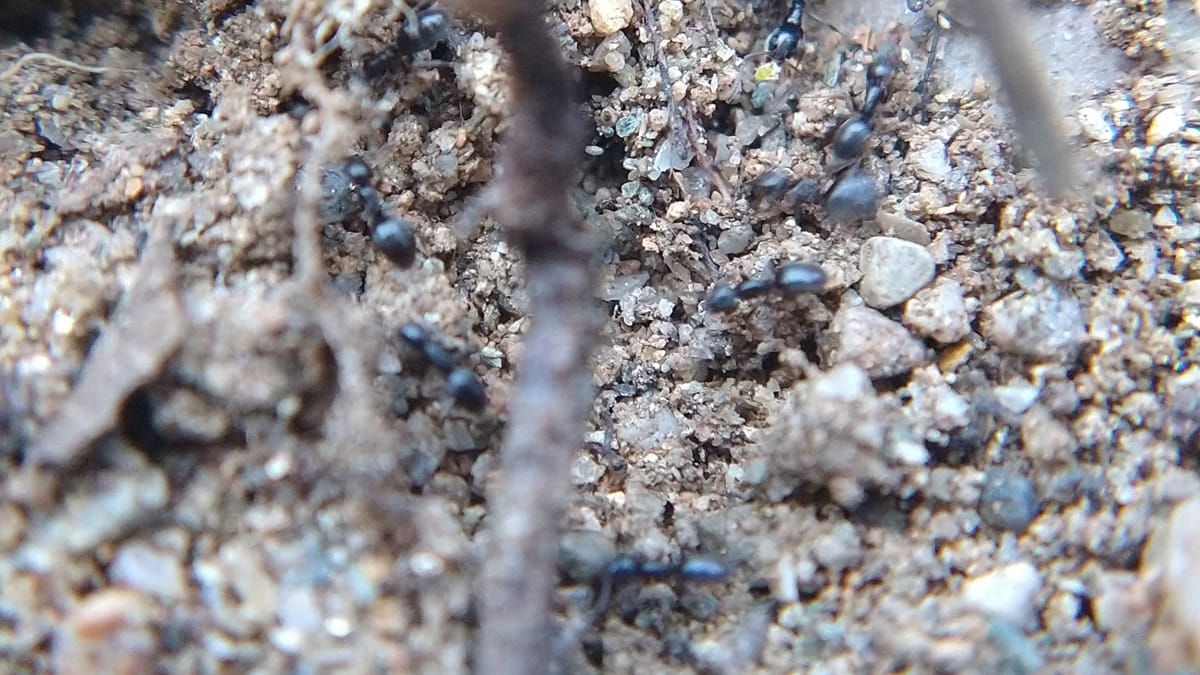
 Ant trails are directions. Break the trail, then bait near it.
Wipe the scent trail
Clean the whole route with dish soap and warm water, then use diluted vinegar if the surface can handle it. The point is to remove the pheromone trail, not perfume the room. Avoid vinegar on natural stone counters.
Place bait near the route
Put bait stations beside the trail, not in the middle of food prep. Let the ants feed for a day or two. This feels wrong because you will still see ants at first, but bait needs workers to carry it back.
Seal the easy entry
After traffic drops, seal tiny gaps at trim, pipe penetrations, window edges, or cabinet backs with caulk. The gap under an exterior door is an ant highway too, and a worn door sweep is a 20-minute fix. Do not seal while the trail is still heavy unless you know there are other exits, because trapped ants may fan out indoors.
Time and Cost
| Fix | Time | Cost |
|---|---|---|
| Clean trail and set bait | 20–30 min | $3–$12 |
| Add caulk to obvious gaps | 15–30 min | $4–$8 |
| Pest control visit | 30–60 min | $125–$300 |
Why This Works
Foraging ants recruit more ants with chemical trails. Cleaning removes the directions, while bait turns the workers into delivery. Spraying only the visible ants removes the mess in front of you but often leaves the nest and trail logic intact.
Mistakes to Avoid
- Spraying over bait. Spray can repel or kill the workers before they carry bait home.
- Leaving the food source. Bait will not win against open sugar, grease, or pet food.
- Ignoring water. Ants often trail to damp sink cabinets, dishwasher leaks, or wet wood.
- Sealing too early. Closing one gap while the colony is active can push ants to a new indoor path.
If the ants are gathering under the sink, check for moisture and slow drain issues with unclogging a bathroom sink drain as the same logic applies: remove the reason the problem keeps returning.
FAQ
Why do ants keep coming back after I wipe the counter?
Ants leave a scent trail that other ants follow, and plain water usually does not remove it. Clean the trail with soapy water or vinegar solution, remove the food source, and use bait near the trail so the colony is treated instead of only the ants you can see.
Should I spray ants or use bait?
Use bait for most kitchen ant trails. Spray kills the visible ants but can scatter the colony and leave the hidden nest untouched. Bait works slower, but the workers carry it back and share it.
How long does ant bait take to work?
Expect more ants at the bait for the first day or two; that is the bait working, not failing. Most kitchen trails thin out within 3 to 7 days as workers carry the bait back to the colony. If traffic has not dropped after two weeks, try a different bait type, since some colonies prefer sugar and others grease.
Does vinegar get rid of ants permanently?
No. Vinegar removes the scent trail so the next wave of ants loses its directions, but it does nothing to the colony. Use it to wipe the route, then rely on bait to reach the nest. Skip vinegar on natural stone counters, which the acid can etch.
Related fixes
Kitchen
Garbage Disposal Smells? Clean It in 10 Minutes (3 Steps)
A stinky disposal is rotting film on the splash guard and chamber walls, not a broken unit. Scrub, flush, and deodorize it with $2 of pantry staples.
Time10–15 min Cost$0–$5 easy
Bathroom
Unclog a Slow Bathroom Sink in 15 Minutes, No Chemicals
A slow bathroom sink is almost always hair caught at the pop-up stopper. Pull it, clear it with a $4 zip tool, and clean the P-trap if needed.
Time15–30 min Cost$3–$5 easy